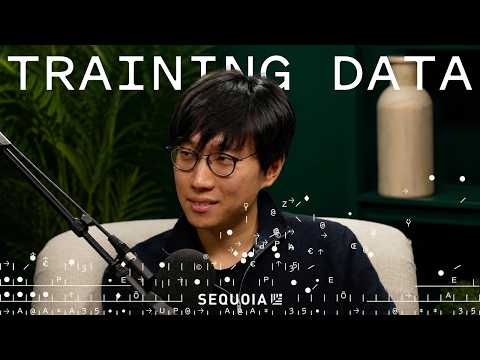
Simulating Humans at Scale: Simile's Joon Sung Park
Exploring the Future of Simulations in Society
Introduction to Simulation Concepts
- The speaker expresses inspiration from science fiction, noting that advanced societies often feature AGI and simulations as foundational elements.
- June, founder and CEO of Simile, discusses their mission to build an applied AI lab focused on simulating human behavior and societal interactions.
The Smallville Project
- Smallville was a project at Stanford aimed at exploring how large language models can encode human behaviors through training data from various sources.
- The experiment involved creating generative agents that simulate complex behaviors within a small town setting, allowing for emergent phenomena like social gatherings.
Insights from the Experiment
- A notable outcome was the simulation of a Valentine's Day party organized by an agent named Isabella, showcasing realistic social interactions among agents.
- The development process stemmed from early research into human psychology and technology's potential to create meaningful simulations.
Evolution of Models and Research
- The speaker reflects on their journey starting in 2020 with GPT-3's emergence, leading to insights about foundation models' capabilities in encoding human behavior.
- Social computing is highlighted as a field focused on enhancing technological platforms for better social interaction and collaboration.
Challenges in Testing Social Platforms
- Traditional testing methods involve real-world field tests which can be costly; simulations offer a way to explore potential outcomes without such risks.
- Previous work included the paper "Social Simulacra," which explored simulating online communities using personas to predict user interactions.
Advancements in Generative Agents
- With advancements since GPT-3, newer models allow for more complex reasoning about memory and behavior over time compared to earlier iterations.
Realizing Commercial Potential
- There is recognition that current models focus on rationality but may not accurately reflect the irrational aspects of human society necessary for effective simulations.
Transitioning from Research to Business
- June discusses the distinction between research (broad exploration with less focus on application) versus company operations (depth-focused with clear objectives).
Customer Engagement Examples
- CVS has partnered with Simile, seeking solutions for understanding market dynamics beyond traditional survey methods due to limitations faced by polling companies.
Data Collection Methodology
- Simile collects data grounded in real-world experiences through partnerships with polling companies like Gallup, ensuring generalizability across populations.
Bridging Attitudinal Gaps
- Addressing the say-do gap is crucial; many existing models rely heavily on attitudinal data rather than actual behavioral insights gathered through interviews or surveys.
Behavioral Data Utilization
- Simile utilizes randomized control trials (RCTs), aiming to encode behavioral signals into predictive models that can inform future experiments effectively.
Interview Techniques
- Interviews are conducted both verbally and through surveys; they aim to gather comprehensive life stories alongside factual information efficiently.
Model Development Strategy
- Simile aims to develop its own models focusing on diversity in values while leveraging existing frontier models for coordination purposes.
This structured summary captures key discussions around simulation technologies and their implications for understanding societal behaviors while providing timestamps for easy reference.
The Importance of Representative Data in Online Experiments
Challenges in Data Collection
- Only specific groups tend to respond to online experiments, leading to potential biases.
- The model being developed aims for representativeness by ensuring a diverse participant pool and accurate data collection.
- A significant concern for users is not just the questions asked but how to reach the desired population effectively.
Understanding Downstream Implications
- Beyond initial product testing, it's crucial to assess broader market perceptions and impacts on existing products.
- For example, launching an electric vehicle may alter consumer views on traditional vehicles, affecting overall brand perception.
Simulating Human Behavior and Predictive Modeling
Evaluating Predictive Accuracy
- Customers are interested in understanding long-term implications of decisions rather than just immediate feedback.
- There exists a theoretical limit to predictive modeling due to inherent randomness in human behavior.
Measurement Techniques
- Population-level measurements focus on response distribution using total variation distance (TVD).
- A TVD threshold of less than 0.15 is considered strong enough for decision-making across quantitative use cases.
Multi-Agent Simulations and Error Accumulation
Types of Simulations
- Two categories of simulations exist: converging simulations that tolerate some error and diverging simulations that do not.
- Converging simulations can still yield valuable insights even with minor errors if they lead towards a common outcome.
Examples of Convergence
- Network simulations often reveal consistent patterns like hub formation, similar to concepts seen in Google's PageRank algorithm.
Divergence in Simulation Outcomes
Confidence Evaluation
- In divergent scenarios, confidence levels are assessed by running multiple iterations of a simulation and analyzing result consistency.
Implications of Divergence
- Understanding divergence helps illustrate the range of possible outcomes from decisions made within the simulation context.
Mathematical Foundations Behind Simulation Behavior
Research Frontiers
- Developing robust mathematical frameworks for predicting convergence or divergence remains an active research area akin to inferential statistics.
Potential Applications Beyond Corporate Use Cases
Broader Societal Impact
- There’s potential for simulations to address complex societal issues such as macroeconomic behaviors or climate change challenges.
Historical Context
- Agent-based models have historically provided insights into social phenomena; modern advancements could enhance these explorations significantly.
Future Directions for Simulation Technology
Vision for Large-scale Simulations
- Envisioning future simulations that require substantial resources yet solve fundamental societal questions presents exciting possibilities.
Transformative Potential
- Running comprehensive simulations could revolutionize policy-making by revealing long-term effects beyond immediate impacts.
Inspiration from Science Fiction
Aspirations for Technological Advancement
- Inspired by science fiction narratives, there’s optimism about developing advanced simulation technologies that guide societal progress.
Turn any video into a summary like this
YouTube links, meetings, lectures. With transcripts, search, and chat.