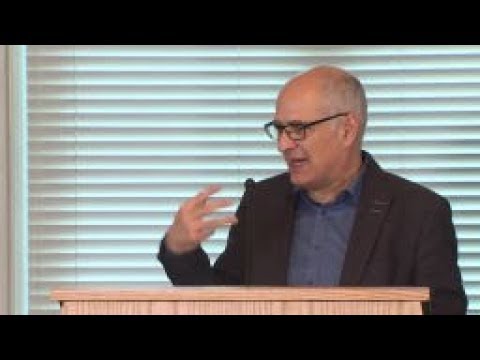
Racial Science in Nazi Germany
Introduction to the Event
Welcome and Introduction by Dr. Kimberly Bugg
- Dr. Kimberly Bugg welcomes attendees to the Library of Congress, emphasizing its rich collection and inviting exploration.
- She introduces Dr. Richard Wetzell, highlighting his research conducted at the library and the significance of German language items in their collection.
- The library houses over 8 million German language items, with five subject matter experts available for assistance.
About Dr. Richard Wetzell
- Dr. Wetzell is a research fellow at the German Historical Institute in Washington D.C., focusing on legal history, political history, and science history.
- His notable publications include works on Nazi Germany's racial policies and criminology from 1880 to 1945.
- He is currently researching racial science and penal reform in modern Germany.
Dr. Wetzell's Presentation Overview
Context of Research
- Dr. Wetzell expresses gratitude for the Library of Congress's resources that facilitated his research efforts.
- He discusses his edited volume "Beyond the Racial State: Rethinking Nazi Germany," which aims to advance historical writing on this topic.
Focus of Today's Talk
- The presentation will cover racial science in Nazi Germany, critiquing existing interpretations of it as a purely racial state.
- He plans to discuss historiographical developments regarding eugenics and medicine under National Socialism.
Controversies in Racial Science
Historical Silence Post-Nazi Regime
- For decades after WWII, discussions about medical professionals' roles during the Third Reich were largely absent from public discourse.
- Early post-war narratives focused primarily on Jewish victims while neglecting other groups targeted by Nazis like Sinti, Roma, homosexual individuals, and those with disabilities.
Trials and Accountability
- Some medical professionals involved in Nazi crimes faced trials (e.g., Nuremberg Doctors Trial), but accountability diminished by the mid-'50s.
Self-serving Narratives
- Many doctors claimed their work was misused by Nazis; they framed themselves as "bad apples" rather than acknowledging systemic complicity within their professions.
The Role of Medical Professionals in Nazi Germany
Historical Context and Research Emergence
- Research into the involvement of medical professionals and biological sciences in the Third Reich began seriously in the 1980s, primarily from outside traditional German historical circles.
- This research was spearheaded by younger German psychiatrists, leftist historians, disability rights activists, women's history pioneers, and historians based abroad.
Complicity of Medical Professionals
- Studies revealed that many doctors and scientists were not engaged in pseudo-science but rather collaborated with Nazi ideologies as part of mainstream German science.
- The term "biopolitics" is used to describe how these professionals regulated bodies at both individual and collective levels, encompassing public health policies to racial policies including the Holocaust.
Evidence of Collaboration
- Numerous prominent academics advised on eugenic policies; many physicians reported patients for forced sterilizations and served as judges in hereditary health courts.
- Leading anthropologists provided racial expertise to Nazi authorities; institutions like the Kaiser Wilhelm Institute trained SS officers in racial science.
- Psychiatrists participated in euthanasia programs targeting handicapped individuals, while some researchers conducted experiments on concentration camp inmates using human materials obtained from them.
Refutation of Apologetic Narratives
- The overwhelming evidence has refuted earlier apologetic accounts regarding science and medicine under Nazism that persisted until the 1980s. Today, it is widely accepted that many German physicians were complicit in Nazi eugenic policies leading up to the Holocaust.
Key Contributions from Critical Research
- Michael Burleigh and Wolfgang Wippermann's book "The Racial State" (1991) significantly influenced this field by framing Nazi persecution within a broader biopolitical agenda targeting various victim groups beyond just Jews.
- They argued that Nazi social policy was intertwined with racial policy, highlighting the complicity of medical professionals within these frameworks. Their arguments have made lasting contributions to historiography surrounding this topic.
Challenging Established Claims
- While agreeing with most points made by Burleigh and Wippermann regarding complicity, there is contention over their assertion that medical professionals created a conceptual framework for implementing Nazi racial policy—an idea seen as problematic by some historians.
- This claim suggests a cohesive field of racial science under Nazism which may oversimplify complex dynamics at play during this period; further exploration into this notion will be discussed later in the talk.
Contested Terrain of Racial Science in Nazi Germany
Competing Frameworks of Racial Science
- The concept of racial science during the Nazi era was marked by various competing frameworks, reflecting differing visions of Nazi racial policy.
- Conflicts and controversies arose due to these diverse interpretations of race and human heredity throughout the Nazi period.
Examination of Controversies
- The speaker plans to explore two significant controversies within eugenics and racial science, highlighting their implications for understanding Nazi bio-politics.
- A central question arises regarding the relationship between racial science and the policies enacted by the Nazis, given that no singular blueprint existed for these policies.
German Physical Anthropology
- The field known as German physical anthropology showcased a range of approaches to race, from Nordic theories to dynamic conceptions proposed by various scholars.
- Hans Gunther's Nordic racial theories were prominent, while other theorists argued for a more fluid understanding of races as dynamic entities.
Eugen Fischer's Controversial Position
- Eugen Fischer, a key figure in anthropology and genetics in Germany, occupied a moderate stance amidst extreme views on race during the early Nazi regime.
- In his public lecture shortly after Hitler's rise to power, Fischer posited that racial mixing could have beneficial effects on offspring, challenging prevailing notions about purity.
Reactions to Fischer's Lecture
- Fischer’s arguments about race mixing were controversial; he distinguished between long-resident German Jews and recent Eastern European Jewish immigrants in terms of biological impact on offspring.
- His lecture sparked backlash from proponents of strict Nordic superiority who viewed his views as transgressing acceptable discourse under the new regime.
Controversies in Racial Science: The Case of Professor Fischer
Fischer's Disapproval of Government Racial Policy
- Fischer expressed disapproval of the government's racial policies, stating they contradicted scientific findings. This highlights a tension between academic integrity and political pressure.
- The quote emphasizes the need for Fischer's legitimacy to maintain credibility within the regime, suggesting a complex relationship between science and politics.
Adjustments to Views Under Pressure
- Despite refusing to label Jews as inferior, Fischer described them as a "race different in kind," indicating a nuanced stance on race mixing with Nordic races. This reflects his attempt to navigate political pressures while maintaining some scientific integrity.
- His eventual concession on race mixing allowed him to retain control over the Dahlem Institute, which became central to racial science under Nazi Germany. This illustrates how personal compromises can lead to broader institutional impacts.
Negotiation Between Science and Politics
- The controversy surrounding Fischer demonstrates that characterizing him solely as an advocate for Nazi racial policy is misleading; his views diverged significantly from those of the regime. This indicates a more complex interplay between individual beliefs and state ideology.
- The negotiation process involved seeking support from the regime for research funding while providing scientific legitimacy to their policies, showcasing how scientists adapted their positions in response to political demands.
Boundaries of Acceptable Discourse
- Although there were limits on acceptable discourse regarding race under the Nazi regime, early years saw surprising diversity in academic discussions about race, reflecting ongoing debates within scientific communities about racial definitions and policies.
- Fischer’s case exemplifies both the reach of Nazi influence into academia and the willingness of scientists like him to conform under pressure while still holding differing views on key issues such as racial mixing.
The Concept of a German Race: A Second Controversy
Challenges Against Fixed Racial Types
- A significant debate arose around whether races could be defined as fixed types; anthropologists argued that races are malleable and influenced by genetic and environmental factors rather than absolute categories. This challenges traditional notions of racial classification prevalent at that time.
- Proponents argued for a dynamic understanding of race that acknowledges continuous transformation rather than static superiority or inferiority among groups, directly opposing Hans Gunther's theories which emphasized Nordic superiority.
Background on Key Figures
- One key figure had previously served in right-wing military units before joining the Nazi party but later distanced himself from it; this background adds complexity to his critiques against established racial theories like Gunther's during his tenure at Germany’s leading botanical research institute.
- Collaborating with another anthropologist who also criticized Gunther’s ideas led them both towards advocating for a more fluid concept of race, illustrating how intellectual alliances formed around shared dissent against dominant ideologies during this period.
The Dynamics of Racial Policy in Nazi Germany
Early Actions Against Jewish Scholars
- In October 1933, [foreign name] was dismissed from his position at the Biological [foreign name] Institute under a law aimed at removing Jews from civil service, highlighting the regime's discriminatory practices.
- The minister overseeing the institute was a Nordicist racial fanatic, which further complicated [foreign name]'s situation and reflects the intertwining of politics and racial ideology.
Prolific Publishing Amidst Oppression
- Despite the oppressive environment, [foreign name] and [foreign name] engaged in significant publishing efforts to promote their conception of a German race during the early years of Nazi rule. They published four books aimed at influencing Nazi racial policy.
Divided Reception Among Nazi Officials
- The reception of their concept among Nazi officials was mixed; while some Nordicists opposed it, others supported it, indicating internal divisions within the party regarding racial policy.
- Concerns arose that endorsing Nordic superiority could threaten national cohesion by alienating non-Nordic Germans, showcasing fears about social unity amidst radical policies.
Key Supporters and Opposition
- Major proponents of the German race concept included anti-Semite figures like [foreign name], who led racial research in the Interior Ministry, and Fritz [foreign name], head of Public Health. Their influence shaped public discourse on race within Nazi ideology.
- The debate between Nordicists and advocates for a German race was suppressed by [foreign name], head of Racial Policy, who sought to centralize control over racial propaganda and academic relations.
Attempts to Suppress Alternative Views
- In an October 1934 circular, [foreign name] criticized the notion of a German race as derived from Jewish intellectualism and warned against its implications for including Jews in this classification. His stance reflected ongoing tensions within Nazi ideology regarding race definitions.
- Despite attempts to ban discussions around a German race, support persisted among key party officials during a December 1934 meeting in Munich, indicating resilience against official suppression efforts.
Consequences for Dissenting Scholars
- Following growing concerns about dissenting views on racial theory, actions were taken against scholars like [foreign name], leading to his dismissal from teaching roles based on accusations that he harmed university reputation—demonstrating how dissent was systematically silenced under the regime's policies.
- Ultimately, despite initial setbacks for proponents of a German race concept due to political maneuvering within Nazi ranks, these ideas continued to circulate among influential circles even after formal denunciations were issued by party leaders.
Understanding Conflicts in Nazi Racial Science
The Trial of [Foreign Name] and Its Implications
- The conflict involving the founder of Knowledge of the Racial Soul highlights internal disputes within Nazi racial theories, culminating in a secret trial before the Supreme Nazi Party Court from 1941-42.
- Accusations against [foreign name] included collaboration with a Jewish academic and being deemed scientifically suspect, showcasing ideological rifts within the regime.
- This trial exemplifies ongoing disagreements in racial science even into the early 1940s, indicating that conflicts persisted beyond initial controversies.
Eugenics and Racial Policy Disputes
- Evidence suggests that debates over eugenics continued throughout the Nazi regime, particularly during wartime occupation policies in Poland, where definitions of who counted as German or Polish were contested.
- These conflicts reflect competing conceptions of race and highlight how racial policy was not monolithic but rather characterized by significant disagreement among officials.
Relationship Between Racial Science and Policy
- The controversies examined reveal how key Nazi officials influenced academic research while also demonstrating that racial science lacked a unified conceptual framework for policy implementation.
- This complexity indicates that while scientists were complicit in Nazi policies, it is misleading to assume a direct translation of scientific principles into practice without recognizing these internal conflicts.
Areas of Influence: Eugenic Policies
- Early on, right-wing elements within the German Eugenics Movement saw opportunities under the Nazi regime; psychiatric eugenicists played crucial roles in shaping eugenic policies aimed at addressing social issues like crime and vagrancy.
- Key figures such as [foreign name] significantly influenced sterilization laws, marking an area where scientific input was notably impactful during the regime's formative years.
Targeting Roma and Sinti Populations
- Racial scientists contributed to policies targeting Roma and Sinti populations through diagnoses labeling them as feebleminded; this led to their inclusion in sterilization efforts before escalating to mass murder.
- Research conducted by figures like [foreign name] directly informed these brutal policies against these groups, illustrating another domain where science had decisive influence on racial policy outcomes.
Limited Role in Anti-Semitic Policies
- In contrast to other areas, racial scientists' involvement in shaping anti-Semitic policy appears limited despite their complicity; they supported existing measures rather than initiating them.
- Notably, neither the Nuremberg Laws nor mass extermination strategies can be attributed to scientific influence but rather stemmed from directives issued by Nazi leadership itself.
The Role of Racial Scientists in Nazi Policies
Overview of Racial Screening and Germanization Policies
- The role of racial scientists in the racial screening of populations in Nazi-occupied Eastern Europe was significant but not always radicalizing.
- Some Nazi officials favored inclusive Germanization policies, attempting to classify as many local Poles as Germans or potential Germans, using racial science to support their stance against restrictive proposals.
Case Study: Hans Gunther's Influence
- [Foreign name] convinced Nordicist theorist Hans Gunther to conduct a field study on the local Polish population's racial composition.
- Gunther described the local population as an "inextricable mixture of races" but concluded that their offspring could be a welcomed addition to the German population.
- His findings provided scientific legitimization for a more inclusive Germanization policy, contrasting with more radical SS policies.
Complicity and Opportunism Among Scientists
- The complicity of scientists with the Nazi regime needs re-evaluation; it often stemmed from opportunism rather than alignment with Nazi ideology.
- Traditional views suggest that medical doctors and racial scientists aligned with Nazi ideology, leading to complicity in policies. However, this perspective oversimplifies complex relationships.
Understanding Moral Responsibility
- Many aspects of racial science contradicted Nazi policies; thus, complicity should be viewed through a lens of opportunism rather than ideological agreement.
- For instance, [foreign name]'s cooperation was driven by self-interest—retaining his position and securing funding for research—despite knowing the lack of scientific foundation behind certain policies.
Mapping Science and Politics in the Third Reich
- A nuanced understanding requires recognizing that neither racial science nor Nazi policy were monolithic; both were heterogeneous throughout the Third Reich.
- The trajectory of racial science does not mirror that of Nazi policy; thus, overstating science's role in radicalizing these policies is misleading.
Developing Intellectual and Political Maps
- An intellectual map detailing various research paradigms within racial science is necessary alongside a political map outlining competing agencies within the state regarding control over racial policy.
- Understanding how these maps interact can clarify alliances between scientists and policymakers at different times during the regime’s development.
Conclusion: Strategic Use of Race Concepts
- Recognizing how both scientists and officials employed competing conceptions of race strategically can enhance our understanding of the complexities within the Third Reich’s governance.
The Role of the Aryan Concept in Racial Science
The Absence of Aryan in Scientific Discourse
- The speaker notes that during their research, they found that the concept of the Aryan race was not utilized by racial scientists, particularly among German physical anthropologists and eugenicists.
- Despite its prominence in Nazi ideology, scientific discussions did not focus on Aryans; instead, there were various classifications of races based on different theories.
Public Perception vs. Scientific Understanding
- The speaker highlights a dichotomy where public discourse equated "Aryan" with non-Jewish identity, especially after legal measures like the Law on the Restoration of the Civil Service were enacted in 1933.
- This law primarily targeted individuals of Jewish descent within civil service roles, indicating that "Aryan" became synonymous with being non-Jewish rather than a scientifically defined category.
Legal Implications and Terminology
- To prove non-Jewish status, individuals had to trace their ancestry back to four grandparents, revealing that Jewish identification was often based solely on religious affiliation rather than biological criteria.
- As laws like those from Nuremberg restricted relationships between Jews and Gentiles, "Aryan" re-emerged as a significant term within legal contexts.
Evolution of Language Around Race
- The speaker argues for further exploration into how terms related to race evolved over time under Nazi rule and how language shaped public understanding.
- They suggest that metaphoric uses of terms like "blood" emerged as scientific inquiries into genetic differences failed to yield concrete results.
Constructs and Community Identity
- A question is raised about whether concepts such as racial science or imagined communities are merely constructs. The response emphasizes that these categories are indeed constructs but play significant roles in societal organization and identity formation.
Understanding Race in Nazi Germany
The Importance of Race in Nazi Ideology
- The speaker acknowledges that race was a significant factor in Nazi Germany, emphasizing that this is not up for debate.
- However, the speaker cautions against viewing race as the sole analytical category to explain all aspects of Nazi Germany; it requires deeper inquiry into what "race" meant within their context.
- The argument is made that while racial elements were present, not everything about Nazi ideology revolved around race or biology.
Cultural Arguments Beyond Racial Constructs
- The Nazis propagated ideas such as a "world Jewish conspiracy," which included contradictory elements like Wall Street and the Kremlin, indicating a complex cultural narrative rather than purely racial arguments.
- Despite claims of Jews being an inferior race, much rhetoric focused on portraying them as powerful figures—either capitalists or Bolsheviks—highlighting contradictions in anti-Semitic narratives.
Complexity of German Identity and Nationalism
- Several chapters argue that understanding Nazi anti-Semitism requires acknowledging both racial and cultural arguments; similar complexities exist regarding the concept of the German people.
- The term often translated as "racial community" may not accurately reflect its meaning; it encompasses longstanding nationalistic cultural arguments beyond just racial definitions.
Internal Conflicts Within Racial Ideology
- Early discussions among Nazis revealed tensions between defining the German nation by multiple races versus a singular superior race, leading to potential divisions within their ideology.
- Concerns arose about maintaining racial purity while also allowing for some malleability in definitions, reflecting fears about including undesired groups like Jews.
Broader Implications of Persecution Policies
- While early ideological conflicts existed, they became less pronounced over time. However, these issues resurfaced during policy-making in occupied territories like Poland.
- Ultimately, the escalation towards mass murder was driven by deeper ideological factors within the Nazi party rather than solely by scientific racism.
Racial Screening in Nazi Germany
The Process of Racial Screening
- Discussion on the racial screening process initiated by Nazi Germany, particularly focusing on populations from Poland and Russia. The aim was to determine who could be integrated into the German populace while deeming others, especially Slavs, as inferior.
- Mention of Soviet POWs and the varying positions taken during this racial screening process. Some officials advocated for inclusivity based on language and perceived loyalty to the German cause.
Inclusivity vs. Exclusivity
- Acknowledgment of Poland's mixed population, where some individuals were considered for inclusion if they spoke German or showed sympathy towards Germany. This reflects a more inclusive approach within certain factions.
- Example of Hans Gunther being called upon to provide an expert opinion supporting the inclusion of certain groups, showcasing a strategic use of scientific legitimacy in justifying racial policies.
Racial Criteria and Examinations
- Contrast between inclusive approaches and those taken by the SS, which employed strict racial criteria including physical examinations like skull measurements to determine eligibility for being classified as German.
- Critique of these arbitrary measures; despite attempts at scientific validation, such criteria were fundamentally baseless and lacked genuine scientific grounding.
Complexities with Other Ethnic Groups
- Exploration of Japan's relationship with Nazi Germany during WWII. Despite their alliance, there was anxiety among Japanese officials regarding their status within Aryan classifications due to public discourse surrounding race.
- Clarification that the notion of Japanese people being considered "honorary Aryans" is a myth; documentation reveals efforts by Japanese representatives seeking clarity on their racial standing with Nazi authorities.
Political Debates Surrounding Race
- Examination of how political debates influenced perceptions about race rather than any factual basis. Notable figures dismissed claims about Japanese equivalence to Aryans despite some attempts at legitimizing it through historical arguments.
- Final thoughts emphasizing that discussions around bloodlines were metaphorical rather than scientifically valid; research conducted did not yield meaningful conclusions regarding racial classifications.