¿Cómo funcionan los sensores? CAPACITIVO, INDUCTIVO Y ÓPTICO | Automatización
Capacitive, Inductive, and Optical Sensors Overview
Introduction to Sensor Types
- The video discusses the characteristics of capacitive sensors, inductive sensors, and optical sensors.
- It introduces the PNP type sensor connection: brown wire to 24 volts, black wire to PLC input, and blue wire to ground.
Capacitive Sensors
- Capacitive sensors detect materials (metallic or non-metallic) within their detection range; examples include plastic tokens or soft toys.
- Sensitivity can be adjusted to ignore thin walls of tanks while detecting water levels as they rise.
- When the tank is empty, the sensor does not detect anything until water volume increases sufficiently.
Inductive Sensors
- Inductive sensors specifically detect metallic objects at varying distances based on their sensitivity settings.
- There are two types: shielded (blindado), which detects only directly in front of it, and unshielded (no blindado), which can detect metals from the sides as well.
Optical Sensors
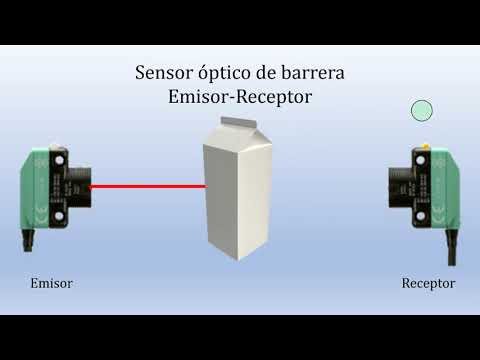
- Common types include barrier sensors (emitter-receiver separated), reflective barrier sensors (emitter-receiver in one body), and diffuse sensors.
- Barrier sensors send a signal when an object interrupts light between emitter and receiver; useful for detecting objects passing through a beam.
- Reflective barrier sensors work best with shiny surfaces that reflect emitted light; dark objects may not reflect effectively.
Diffuse Sensors
- Diffuse sensors have a greater detection range due to their ability to receive reflected light from various angles.
- They are suitable for detecting objects with different surface textures that scatter light in multiple directions.
Conclusion