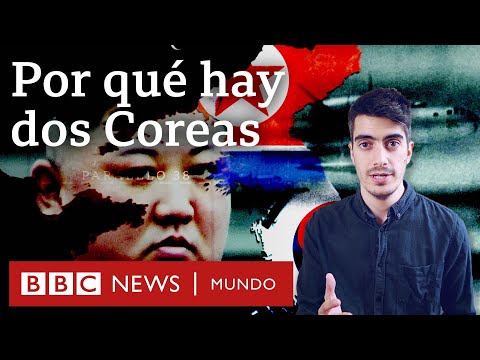
Cómo empezó la guerra de Corea y qué tuvo que ver EE.UU. en ese conflicto | BBC Mundo
The Korean War: A Cold War Conflict
Background and Causes of the Division
- The Korean War marked the first military confrontation of the Cold War, highlighting tensions between the communist bloc and the West.
- Following Japan's defeat in WWII, the USSR invaded Korea, which had been under Japanese control since 1910, establishing dominance in the northern region.
- The U.S. intervened by landing troops in southern Korea to prevent a complete Soviet takeover, leading to a division along the 38th parallel.
Emergence of Two Koreas
- In 1948, two independent states emerged: South Korea (First Republic of Korea), led by conservative Syngman Rhee, and North Korea (Democratic People's Republic of Korea), led by communist Kim Il-sung.
- Both nations claimed sovereignty over all of Korea, escalating tensions that culminated in North Korea's invasion on June 25, 1950.
International Response and Escalation
- The surprise attack from North Korea was supported by Stalin; this prompted U.S. intervention under President Harry Truman to curb communism's spread.
- With UN authorization, U.S. forces joined by troops from 15 other countries landed in September 1950 and initiated extensive bombing campaigns against North Korean cities.
Human Cost and Warfare Dynamics
- Over three years of conflict saw shifting frontlines with more than three million casualties, including at least two million civilians.
- The U.S. dropped approximately 635,000 tons of explosives on North Korea; civilian casualties were significant with an estimated 12% to 15% mortality rate among civilians due to bombings.
Aftermath and Ongoing Tensions
- An armistice was signed on July 27, 1953; however, no formal peace treaty was established—leaving both Koreas technically still at war after seven decades.
- Post-war governance diverged sharply: South Korea transitioned towards democracy while North Korea remained under a totalitarian regime led successively by Kim Il-sung and his descendants.
Economic Divergence and Current Relations
- South Korea experienced economic growth post-war becoming one of Asia’s "Tigers," while North Korea faced severe crises exacerbated by isolation and famine following the Soviet Union's collapse.
- Despite attempts at rapprochement since the late '90s regarding nuclear disarmament negotiations with international support, relations remain strained as both sides continue to grapple with their historical legacies.
Recent Developments
- In April 2018, leaders Kim Jong-un and Moon Jae-in aimed for peace through a treaty but tangible outcomes have yet to materialize.
2 millones de soldados y el sacrificio en la guerra
La pérdida de Mao Anying
- Se menciona que entre los 2 millones de soldados, se encontraba Mao Anying, el hijo mayor del líder chino.
- Mao Anying murió durante un bombardeo estadounidense, lo que resalta el costo humano de la guerra.
- Al ser informado sobre la muerte de su hijo, Mao Zedong declaró: "en la guerra hay sacrificios. Sin sacrificios no habrá victoria", enfatizando la inevitabilidad del sacrificio en conflictos bélicos.
- Esta declaración refleja una perspectiva común en líderes militares y políticos sobre la necesidad del sacrificio para alcanzar objetivos mayores.