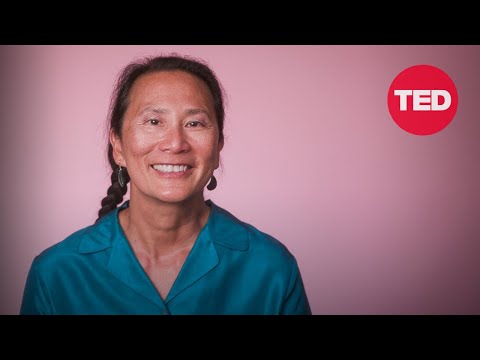
Nancy N. Chen: The inaccurate link between body ideals and health | TED
Introduction
The speaker introduces the topic of body ideals and how they shape our perception of ourselves and others.
Understanding Body Ideals
- Body ideals reflect social meanings about how we dwell in physical and cultural spaces.
- Bodies are often interpreted through categories such as gender, race, ethnicity, class, and belonging.
- The speaker, as a medical anthropologist, studies cultural concepts about bodies and their impact on health.
Historical Perspectives on Body Ideals
- Curvy bodies have been valued for millennia, as seen in ancient fertility figures.
- In agrarian societies, full-figured, curvy bodies were considered ideal for females due to their association with fertility.
- Low waist-to-hip ratios (hourglass figures) were also considered attractive from an evolutionary perspective.
Shift in Body Ideals
- Western societies started featuring thin-bodied female models in mainstream media during the 20th century.
- Marilyn Monroe represented the Western body ideal in the 1960s, but it shifted towards thinner models like Twiggy in the 1970s.
- Throughout the 1980s and 90s, there was a growing gap between the average size of regular women and the size of models.
Global Impact of Thin Body Ideals
The speaker discusses how thin body ideals have become pervasive on a global scale and the negative impact they can have.
Global Circulation of Thin Body Ideals
- Thin body ideals circulate globally, leading to body dysmorphia and eating disorders in various cultures.
- Thinness is associated with prestige and well-being in dominant portrayals.
- Orthorexia, an obsessive focus on healthy eating, emerged as a new category of eating disorder.
Influence of Social Media
- Social media has played a role in documenting weight loss journeys and promoting idealized body types.
- New forms of thinness, such as lean and muscular bodies, are now pursued across gender, age, income, and locations.
Cultural Variations in Body Ideals
- Not all societies fully embrace thin bodies as ideals; curves remain significant for many cultures and ethnic groups.
- Beauty standards differ across cultures and are not solely based on external features.
- Plump bodies may be considered desirable and healthy in certain cultural contexts.
Weight Stigma and Moving Beyond Harmful Ideals
The speaker explores the issue of weight stigma and suggests ways to move beyond harmful body ideals.
Changing Body Ideals Over Time
- With increased globalization, even rural areas experience changes in body ideals over time.
- Weight stigma and fat phobia are found not only in the Global North but also in the Global South.
Addressing Weight Stigma
- Public health campaigns to address overweight and obesity may inadvertently reinforce weight stigma.
- It is important to move beyond harmful body ideals for self-esteem and self-care.
Embracing Body Diversity
- Recognizing body diversity as a reflection of social diversity, equity, and inclusion is crucial.
- Body positive advocacy has led to more diverse representations in national and global ad campaigns.
Expanding Perspectives on Body Diversity
The speaker discusses the importance of expanding our perspectives on body diversity.
Looking Beyond Traditional Standards
- Enhancing body diversity involves expanding where we look for diverse bodies beyond traditional standards.
The transcript was already in English, so there was no need to respond in a different language.
New Section
The speaker discusses the concept of being uniformly thin or lean.
Rather than uniformly thin or lean
- The speaker emphasizes that it is better to focus on overall health and well-being rather than striving for a uniform thin or lean body.
- This means considering factors such as nutrition, exercise, mental health, and self-care.
- The goal should be to achieve a balanced and sustainable lifestyle rather than solely focusing on appearance.
- By prioritizing holistic health, individuals can improve their overall quality of life.
Turn any video into a summary like this
YouTube links, meetings, lectures. With transcripts, search, and chat.