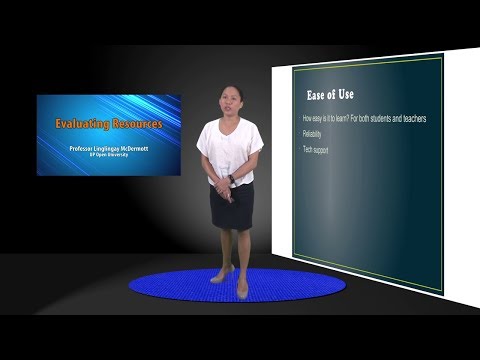
Evaluating Resources | Prof. Linglingay McDermott
How to Evaluate Teaching Resources
Overview of the Actions Model
- Tony Bates developed the Actions Model in 1995, which stands for Access, Cost, Teaching and Learning, Interactivity, Ease of Use, Organizational Issues, Novelty, and Speed.
- In 2003, Bates revised it to the Sections Model, changing "Access" to "Students" to better reflect student demographics. The new acronym includes Students, Ease of Use, Cost, Teaching and Learning, Interactivity, Organizational Issues, Networking and Security & Privacy.
Changes from Actions to Sections
- The revision separated Ease of Use into its own category due to its importance in evaluating tools. The original "Interactivity" was also split for clarity.
- "Novelty" was integrated into Ease of Use, while "Speed" was moved under Security and Privacy considerations. The other categories (Cost, Teaching and Learning, Organizational Issues) remained unchanged.
Evaluating Student Demographics
- When assessing tools for students: consider their demographics such as age and location; evaluate how they will access technology; assess their learning speed with tech tools.
Importance of Ease of Use
- Evaluate how easy the tool is for both students and teachers: reliability issues (e.g., breakdown frequency), maintenance requirements, and necessary tech support should be considered.
Comprehensive Cost Analysis
- Costs extend beyond purchase price: include equipment costs, maintenance expenses, staff training costs for tool development/delivery time required by teachers must also be factored in.
Teaching and Learning Considerations
- Assess forms of teaching methods used alongside content delivery; identify skills students need to learn along with appropriate assessment strategies that align with these goals. Interaction types are crucial here too: learner-content interaction must be evaluated alongside learner-teacher interactions' quality.
Organizational Support Factors
- Consider organizational support levels when using a tool: determine if adequate tech support is available or if you will have to manage independently without assistance from your organization.
Networking & Security Concerns
- For networking aspects: evaluate social media integration capabilities within the tool; assess collaboration opportunities among students.