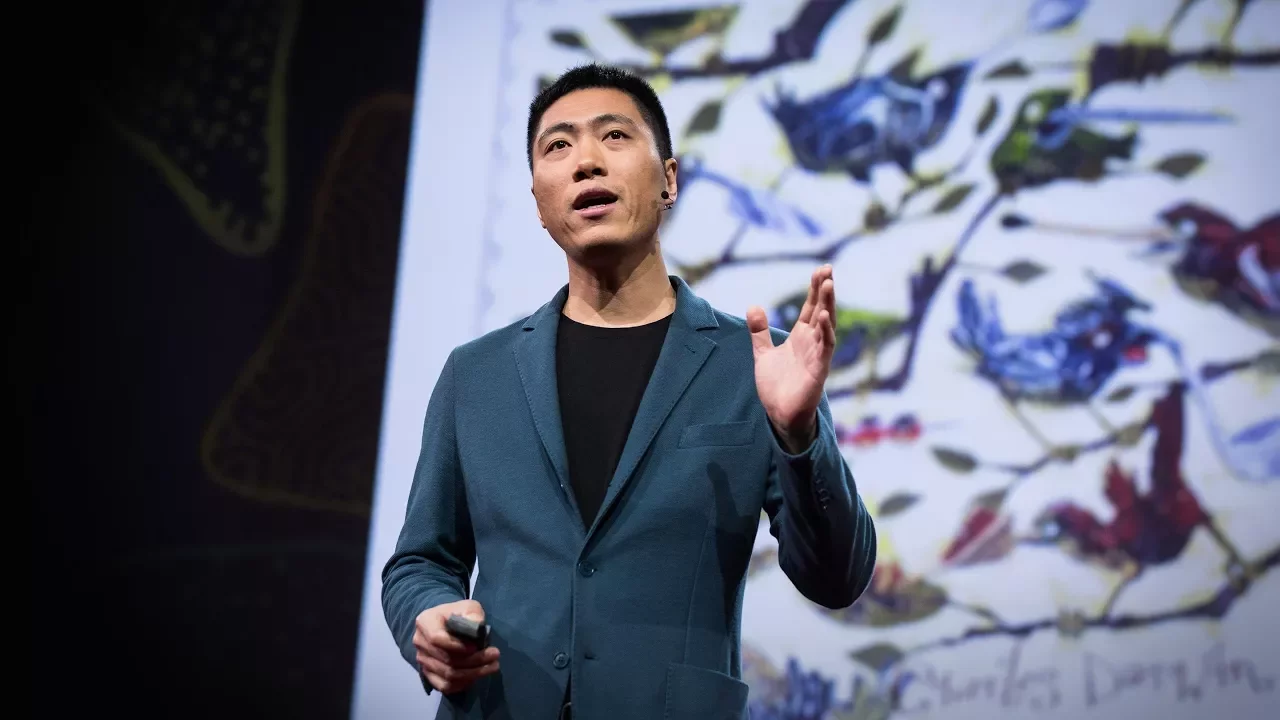
How digital DNA could help you make better health choices | Jun Wang
What is Life?
In this section, the speaker poses the question of what life is and shares their personal journey of studying and understanding life through genetics and genomics.
Life as a Learning Program
- The speaker reflects on their undergraduate thesis where they started teaching computers to learn while others saw them as mere calculators. They built digital lady beetles to study real lady beetles' search for food.
- The speaker highlights the similarity between the patterns observed in simple neural networks and genetic algorithms to real-life organisms.
- Life is described as a learning program, with every species having its own learning program encoded in its genome (DNA).
- Different genomes represent different survival strategies developed over millions of years of evolution.
Reading Genomes for Understanding
- The speaker co-founded an institute to read animal genomes, including the human genome, to understand history and the learning processes that genomes have undergone over millions of years.
- Reading a genome provides valuable information about birth defects, monogenetic disorders, and can even help diagnose diseases like cancer.
- By reading genomes, we can gain insights into how certain diseases develop and understand individual risk factors based on lifestyle choices.
Changing Dynamics: Genetics and Environment
- The prevalence of diabetes in China has increased significantly over 30 years despite genetics remaining unchanged. This suggests that factors such as diet, environment, lifestyle choices, and stress play a significant role in disease development.
- Even identical twins can develop differently due to various external factors influencing gene behavior under stress.
Life's Journey: Making Choices
- Life is described as a journey where genes serve as starting points rather than determinants of outcomes.
- Every day, individuals make choices that can increase or decrease their risk of certain diseases.
- Understanding one's position on the curve of disease risk requires knowledge of past decisions made and awareness of current decision-making processes.
Time and Decision-Making
- Time is the only thing that cannot be changed or reversed, but decisions made in the past can shape one's trajectory.
- The speaker poses the question of whether something can be done to alter past decisions and their consequences.
The Language of Life
In this section, the speaker delves deeper into the language of life encoded in DNA and highlights the importance of reading genomes to understand history and evolutionary processes.
Unraveling Genetic Information
- Reading genomes provides valuable information about an organism's history, learning processes, and adaptations over millions of years.
- Genomes hold clues about integration events with other species (e.g., Denisovans) that have influenced genetic diversity and adaptation.
Practical Applications of Genome Reading
- Reading a genome can provide insights into bugs in the genome, birth defects, monogenetic disorders, and even help diagnose diseases like cancer.
- The speaker emphasizes the need to read genomes to understand historical processes and how learning programs have evolved over time.
Genetics, Environment, and Disease
This section explores the complex interplay between genetics, environment, lifestyle choices, and disease development.
Changing Disease Prevalence
- Despite genetics remaining unchanged over 30 years in China, there has been a significant increase in diabetes prevalence. This suggests that factors such as diet, environment, lifestyle choices, stress levels contribute to disease development.
Individual Variations
- Even identical twins can develop differently regarding obesity or cancer due to various external factors influencing gene behavior under stress.
Life's Journey: Making Choices
This section focuses on individual decision-making processes throughout life's journey.
Choices Impacting Disease Risk
- Every day individuals make choices that can either increase or decrease their risk of certain diseases.
Understanding Personal Trajectory
- To understand one's position on the curve of disease risk, it is essential to reflect on past decisions and be aware of current decision-making processes.
Conclusion
The speaker concludes by emphasizing the importance of understanding the language of life encoded in DNA and making informed choices throughout life's journey.
Time as a Constant
- Time cannot be changed or reversed, but decisions made in the past can shape one's trajectory.
The Power of Decision-Making
- While time may be constant, individuals have the power to make choices that can influence their own unique life trajectory.
New Section
This section discusses the concept of choices and the development of digital simulations.
The Power of Choices
- "After all, we are our choices."
- Emphasizes the importance of personal choices in shaping our lives.
Digital Simulations
- Created digital lady beetles to simulate real lady beetles.
- Explores the possibility of creating a digital version of oneself.
- Discusses the potential for neural networks to create sophisticated simulations.
- Envisions living in parallel universes through digital simulations.
New Section
This section focuses on making informed decisions based on personal data and comprehensive self-analysis.
Personalized Health Analysis
- Highlights the importance of understanding one's genetic risks and health conditions.
- Describes the need for advanced technology to analyze proteins, genes, antibodies, and bacteria in the body.
- Mentions tracking activities using smart devices like cars, houses, tables, watches, and phones.
- Humorously mentions the value of a smart toilet for collecting valuable health information.
Genetic Risk Analysis
- Reveals having a genetic risk of gout based on personal analysis.
- Shares an example of successfully reducing uric acid levels through traditional Chinese remedies.
New Section
This section emphasizes personalized knowledge and learning from oneself to optimize well-being.
Limitations of Existing Knowledge
- Acknowledges that existing knowledge is not efficient or personalized enough for individual needs.
Learning from Oneself
- Proposes asking questions about oneself to make informed decisions.
- Gives examples of self-experimentation, such as changing diet, climbing mountains, and reducing stress.
- Highlights the importance of personalized nutrition and conducting controlled experiments on oneself.
New Section
This section explores unconventional approaches to health and longevity.
Ancient Wisdom and Self-Experimentation
- Discusses searching for ancient Chinese wisdom on living longer and healthier.
- Mentions attempting challenging practices like fasting for seven days.
- Shares personal experience with a group fast and monitoring immune system changes.
Unconventional Methods
- Mentions drinking fecal water from a healthier individual as an example of ancient Chinese wisdom.
Note that these summaries are based solely on the provided transcript and may not capture the full context or details of the video content.
What is Life? Understanding the Digitalization of Life
In this talk, Jun Wang discusses the concept of digitalizing life and creating a digital "me" that can contribute to a collective knowledge base. He emphasizes the importance of personalized medicine and making it accessible to everyone.
The Challenge of Testing All Possible Conditions
- Jun Wang expresses his desire to find the true way to improve health by experimenting with combinations of bacteria.
- It is difficult to test all possible conditions due to the vast number of learning programs running in different conditions and conducting various experiments.
- The question arises: Can we measure and learn from these diverse programs?
Digitalize Yourself for Collective Learning
- Seven years ago, Jun Wang wrote an essay advocating for sequencing oneself.
- Now, he proposes digitalizing oneself as a means to form an internet of life where people can learn from each other's experiences and data.
- The collective knowledge gained from individual digital versions will be different from any single digital representation.
Joining Together as a Digital Community
- Jun Wang invites everyone to build their own digital "me" in order to gain deeper insights into themselves, others, and humanity as a whole.
- By forming a collective digital community, knowledge can be shared and utilized more effectively.
The Question of Affordability in Personalized Medicine
- Chris Anderson raises concerns about the affordability of personalized medicine for only a few individuals due to high costs.
- Jun Wang explains that his goal has always been to drive down costs so that more people can benefit from advancements in technology.
- He believes that digitizing individuals should eventually become affordable or even free for those who urgently need it.
Making Healthcare More Accessible
- Jun Wang clarifies that the ultimate goal is not to provide elite health services for a few, but to make overall healthcare more cost-effective and accessible to everyone.
- While initially targeting early adopters, the aim is for personalized medicine to benefit all individuals in the future.
The transcript provided does not include timestamps for every section.
Turn any video into a summary like this
YouTube links, meetings, lectures. With transcripts, search, and chat.