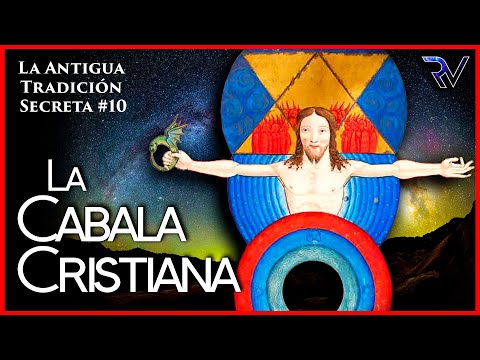
La Cábala Cristiana - Antigua Tradición Secreta #10
New Section
The section discusses the ancient secret tradition in Western Europe during the 15th, 16th, and 17th centuries, highlighting the established secret traditions in Europe.
Ancient Secret Traditions in Europe
- Templars and Umayyad Caliphate were key carriers of secret knowledge.
- Noble families, especially in Southern France, were influenced by Templar secrets.
- Emergence of various secret movements like the Cathars in Southern France.
- Influence of Umayyad Caliphate's preserved knowledge on Western science development.
Exploration of Alchemy and Astronomy
This section delves into the influence of alchemy and astronomy on Western scientific development.
Alchemy and Astronomy Influence
- Alchemy's role in shaping Western chemistry and medicine from Arabic texts.
- Evolution from mysticism to scientific observation through astronomy.
- Link between nature's balance and celestial bodies for understanding universal cycles.
- Development of mathematics from mystical beliefs to precise scientific tools.
Discusses how Christian Kabbalah impacted intellectual thought during that period.
Impact of Christian Kabbalah
- Interpretation of Trinity through Kabbalistic lenses leading to new perspectives on divinity. []( t = 07 ;06 )
New Section
This section discusses the historical figures and their roles in the development of esotericism, particularly focusing on the use of Kabbalah.
Lull and the Use of Kabbalah
- Lull, known as the "Enlightened Doctor," used Kabbalah to compel Jews to convert to Christianity.
- Giovanni Pico della Mirandola played a crucial role in popularizing Kabbalah in Italy during the 14th and 15th centuries.
- Pico della Mirandola is considered the founder of Christian Kabbalah for his genuine belief and practice rather than missionary purposes.
- Giovanni's early studies focused on Kabbalah, Neoplatonism, and Chaldean oracles, leading to significant philosophical works.
New Section
This section delves into the challenges faced by Giovanni Pico della Mirandola due to his philosophical works and beliefs.
Challenges Faced by Giovanni
- In 1485, Giovanni's work "Novecento Theses" was controversial and condemned by the Catholic Church.
- He faced excommunication but was later released with help from King Charles VIII of France.
- Giovanni joined intellectual circles in Florence under Lorenzo de Medici's patronage, influencing future esoteric doctrines like Hermeticism.
New Section
This part explores how various Western esoteric traditions influenced each other through figures like Pico della Mirandola.
Influence of Western Esoteric Traditions
- The convergence of Cabalistic and Hermetic influences at Ficino's Neoplatonic Academy laid foundations for modern magical societies like Golden Dawn.
- Pico's involvement in intellectual circles led to the development of Hermetic doctrines alongside Christian Kabbalah.
New Section
This section highlights Johan Reuchlin's introduction of Christian Kabbalah in Germany following interactions with Pico della Mirandola.
Introduction of Christian Kabbalah in Germany
- Reuchlin learned about Kabbalah from Pico della Mirandola and furthered his studies with Rabbi Jacob Michel Löwen.
New Section
The influence of Kabbalah on Christian thinkers, particularly Anastasio Kirchner, and the adaptation of Kabbalistic ideas into Christian practices.
Influence of Kabbalah on Christian Thinkers
- Anastasio Kirchner, a German Jesuit priest, translated Kabbalistic works to spread Kabbalah among Christians.
- Many Christian Cabalists believed that Kabbalah contained evidence supporting Christianity's truth.
- Christian Cabalists like Francesco George proposed universal systems in books like "De Harmonia Mundi" .
- Historical irony: Christian Cabalists were among the first to publish Jewish esoteric material with tolerance and respect.
New Section
The unique belief of some Christian Cabalists in the relevance of Jewish Kabbalah to their own faith and the potential motivations behind their interest.
Relevance of Jewish Kabbalah for Christians
- Uncommon belief among Abrahamic religions that Jewish Kabbalah was relevant to Christianity.
- Speculation on whether Christian interest in Kabbalah was genuine or driven by occultism.