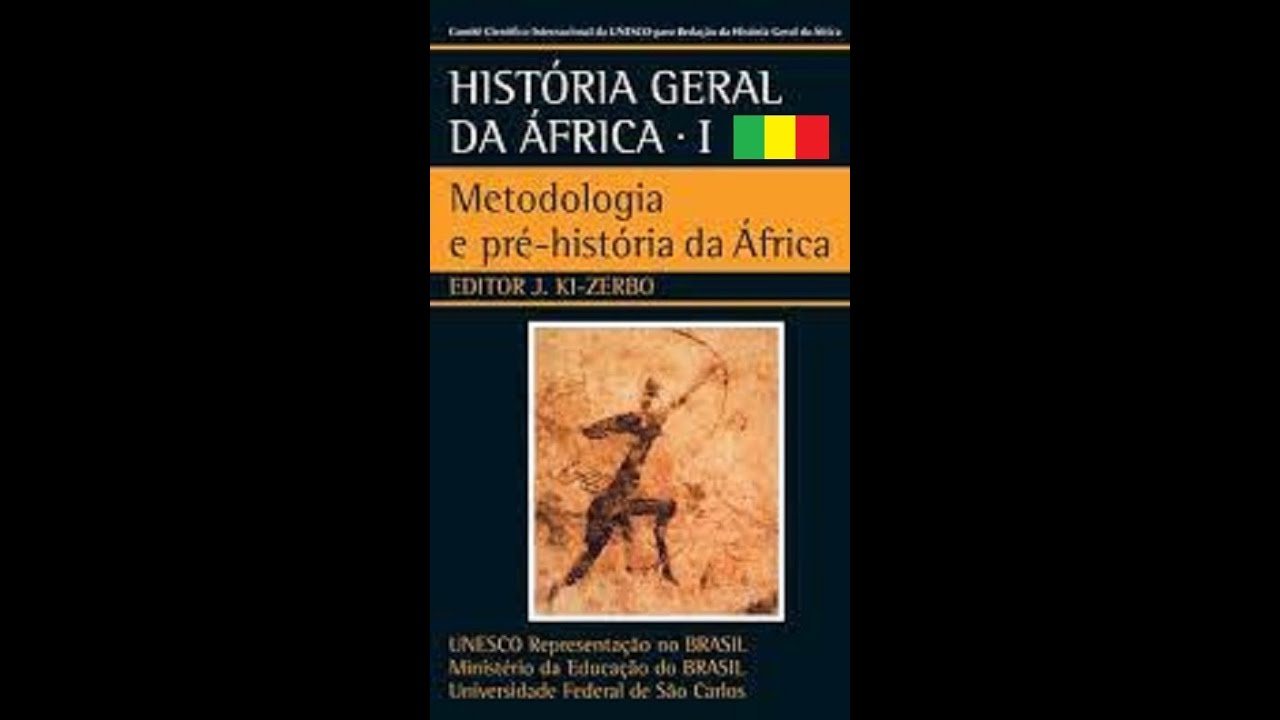
"HISTÓRIA GERAL DA ÁFRICA" - Vol.1 cap. " 02 "
African Historical Consciousness
The speaker delves into the historical consciousness of Africans, emphasizing their creative capacity and societal autonomy throughout millennia.
African History Creation
- Africans have created autonomous societies showcasing creativity in various aspects such as medicines, political organizations, artistic productions, religious celebrations, and refined etiquettes.
Concept of Historical Consciousness
- African history is both conceived a priori and reflected upon posteriori by individuals and communities, becoming a pattern of thought and life.
Perception of Time in Africa
- The isolation of African societies significantly influences their historical perspective, exemplified by the King of Mocim Alto referring to himself as "king of the world," illustrating how technical and material limitations shape sociopolitical realities.
African Temporal Perception
- African time can be mythical and social; however, Africans are aware of being agents in their own history. This unique temporal perception combines mythical elements with a genuine historical understanding.
Influence of Myth on African Thought
New Section
This section discusses the concept of time and its significance in African traditional thought, focusing on the interplay between social time and individual experiences.
Understanding Time in African Traditional Thought
- In African traditional thought, the death of a king disrupts social order, impacting all aspects of life from laughter to agriculture.
- Social time is described as timeless, where animistic beliefs influence actions to prevent harm from enemies. A holistic worldview is essential for understanding this perception of time.
- Traditional African thought views sensory-perceptible time as only a fraction of a broader temporal experience involving other dimensions like the night journey of one's spirit double.
- The "double" in African belief systems symbolizes an individual's personality strength or fragility. Amulets serve to protect and strengthen this spiritual counterpart.
- Achieving unity with one's double signifies exceptional wisdom and strength beyond human limits, exemplified by revered initiates like Cuteco Nino Dazimael.
New Section
This segment delves into ancestral symbolism and the transfer of power through objects in African societies, highlighting the fusion of history and material culture.
Ancestral Symbolism and Power Transfer
- Ancestors like Si are revered for their omnipresence and ability to transcend conventional barriers of time and space, embodying immense authority within communities.
- Objects symbolizing power are passed down through generations, such as golden balls or iron-tipped staffs associated with royal lineage, signifying continuity and legitimacy.
- The transfer of symbolic objects represents a legal bestowal of authority from patriarch to successor, often containing elements from powerful animals like lions or elephants.
- Mythical forges or idols play crucial roles in power transitions, with their transformation reflecting shifts in leadership dynamics within African societies.
- Ceremonies surrounding these objects underscore the profound connection between mythic time and social history, emphasizing the enduring legacy of ancestral lineage.
New Section
This part explores how African perspectives on history intertwine sacred narratives with contemporary events, shaping collective memory and identity.
Interweaving Sacred History with Contemporary Realities
- African historical consciousness blends mythical archetypes with lived experiences, portraying a dynamic interplay between past ideals and present realities.
- Nationalist myths construct narratives around contemporary leaders akin to living entities, while racial myths can evoke deep historical traumas like those under Nazi regimes.
- Africans actively engage as agents in shaping their histories despite past oppressions that once stifled responsible consciousness among communities.
- Pre-colonial societies exhibited varying degrees of historical awareness; some operated within limited frameworks while others showcased strong communal autonomy despite hierarchical structures.
New Section
This section delves into notions of autonomy within pre-colonial African societies amidst shifting power dynamics and cultural paradigms.
Autonomy Amidst Structural Hierarchies
New Section
The text discusses the historical perspective of leadership and the role of leaders in shaping history, emphasizing that human development is often attributed to dynamic groups rather than individuals.
Historical Perspective on Leadership
- The concept of a leader as the driving force behind history is not simplistic; human development is typically credited to a dynamic group rather than a single individual.
New Section
This section highlights how individuals such as spokespeople, servants, and companions of leaders are also remembered in history as heroes, challenging the notion that historical significance is solely reserved for prominent figures.
Recognition Beyond Leaders
- Individuals like spokespeople, servants, and companions of leaders often become heroes in history.
New Section
The text explores the significance of authority in societies with linear structures, particularly focusing on examples from African contexts where succession and leadership were traditionally linear.
Authority in Linear Societies
- In societies with linear structures like Osaba near Niger, authority holds immense importance due to its lineage-based succession system.
New Section
This part delves into the role of women as key figures in African historical evolution, showcasing examples where women held positions of influence and power.
Women's Role in History
- Women such as Mãe do Povo Lunga played significant roles in influencing events and holding spiritual power.
New Section
The text discusses how African women have historically imposed authority within their societies through various roles such as warriors, political activists, and cultural influencers.
Imposition of Authority by African Women