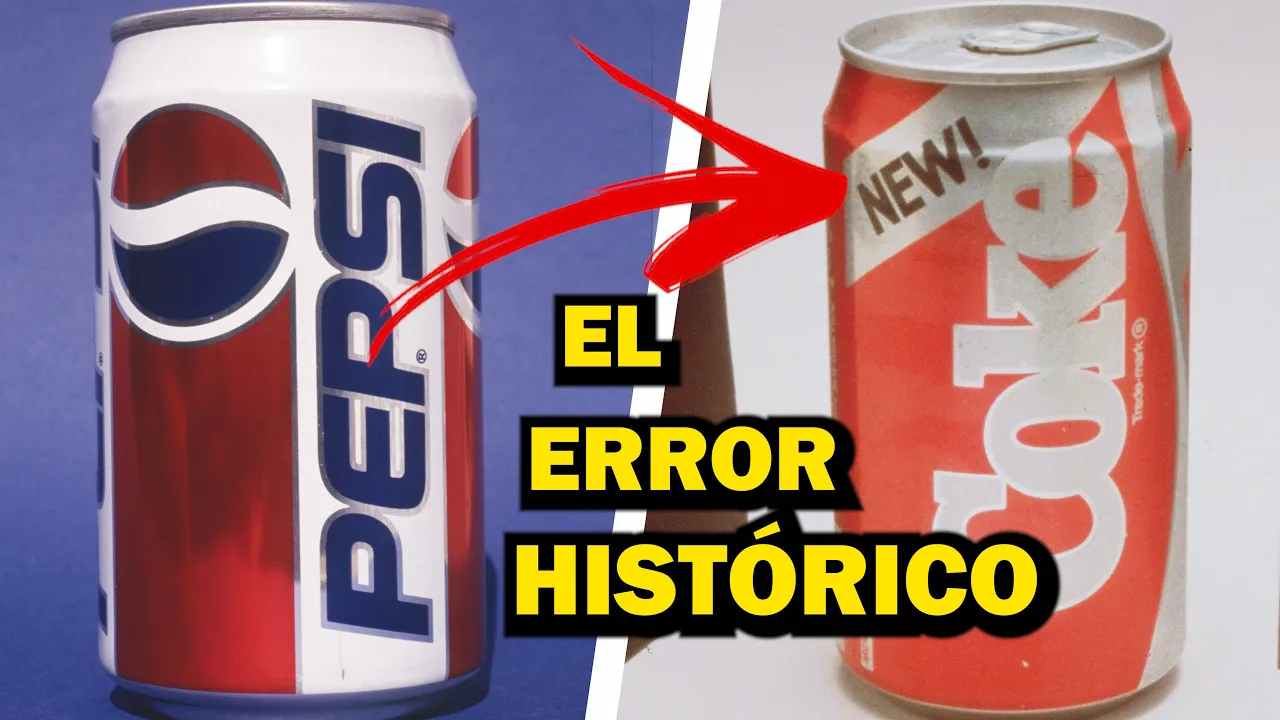
EL FIASCO HISTÓRICO DE COCA COLA QUE LA EMPUJÓ AL ABISMO: EL CASO NEW COKE
What Happened to Coca-Cola?
The speaker delves into the intriguing story of Coca-Cola, exploring its market dominance, competition with Pepsi, and the strategic decisions made by both companies.
The Rise of Pepsi's Market Strategy
- Pepsi continuously attempted to challenge Coca-Cola's market leadership but faced repeated failures.
- Pepsi targeted a niche market of younger consumers through radical and direct advertising strategies.
- By focusing on young consumers, Pepsi gradually gained market share from Coca-Cola in the 1970s.
Pepsi's Market Advancements
- Pepsi succeeded in urban areas with higher purchasing power, posing a significant threat to Coca-Cola.
- By 1980, Pepsi narrowed the market gap with Coca-Cola to only 13 points in the US.
Coca-Cola's Response: Changing the Formula
- Facing intense competition from Pepsi, Coca-Cola decided to change its formula and taste.
- This decision was not taken lightly; extensive marketing studies were conducted before altering the iconic drink.
Testing the New Formula
New Section
In this section, the speaker discusses the initial reactions to the new Coca-Cola flavor and how different groups of people perceived it.
Initial Reactions to New Coca-Cola Flavor
- The majority (75%) of people liked the taste of the new Coca-Cola flavor.
- 15% of individuals were indifferent, neither liking nor disliking the new flavor.
- A small percentage (10%) strongly disliked the new flavor and expressed their opinions vehemently.
New Section
This part delves into how a minority opinion influenced others' perceptions during group discussions about the new Coca-Cola flavor.
Influence of Minority Opinion in Group Discussions
- Despite being a small minority (10%), those who strongly disliked the new flavor had a significant impact on others' opinions.
- Their negative views influenced individuals who initially enjoyed the old Coca-Cola to reconsider their preferences.
New Section
The speaker narrates how Coca-Cola responded to the backlash against its new product, leading to unexpected consequences.
Response to Backlash and Unforeseen Outcomes
- Coca-Cola introduced "the best of green coca-cola" as a response to criticism.
- The situation escalated as a group formed in opposition, leading to racial and political undertones in discussions.
New Section
This segment explores how the debate over Coca-Cola's new flavor transformed into broader societal issues with racial and political implications.
Transformation of Debate into Societal Issues
- The discussion shifted from taste preferences to racial and political dimensions.
- Opinions from influential figures added weight to the debate, reflecting deeper societal divisions.
New Section
Here, we witness how Pepsi capitalized on Coca-Cola's misstep, exacerbating the situation through marketing strategies.
Pepsi's Response and Marketing Strategies
- Pepsi took advantage of Coca-Cola's misstep by mocking it in marketing campaigns.
Coca-Cola Case Study Analysis
The discussion delves into the challenges faced by Coca-Cola when introducing a new flavor, the subsequent public intervention to rectify the situation, and the lessons learned from this marketing debacle.
Criticism and Intervention
- Coca-Cola faced severe criticism and a downhill spiral due to the introduction of a new flavor.
- The issue was resolved through a public intervention by Coca-Cola's director general, admitting their mistake publicly.
Reverting to Original Flavor
- The crucial decision was made to return Coca-Cola to its original taste, abandoning the experimental flavor.
- Even today, many bottles of Coca-Cola are labeled as "classic" to signify the return to the original taste.
Lessons Learned
- Coca-Cola later introduced zero-calorie sugar-free drinks silently, catering to consumer preferences for healthier options.
- Various attempts were made with different Coke variations as special editions but maintaining the classic flavor as a constant reminder.
Impact of Vocal Minorities in Media
This section explores how vocal minorities can influence public opinion and distort reality through media platforms like the internet.
Influence of Vocal Minorities
- The concept of "dictatorship of the minority" is highlighted, showcasing how a loud minority can sway opinions despite being quantitatively small.
- Individuals less invested in certain matters may be influenced by active minorities, leading to the imposition of ideas that may not align with majority views.
Herd Mentality and Social Recognition
- People often succumb to herd mentality out of comfort or fear of rejection by louder groups.
- The need for social recognition drives individuals to conform, impacting decision-making processes significantly.
Psychological Insights on Online Feedback
This segment discusses psychological aspects related to online feedback interpretation and decision-making based on comments received.
Misinterpretation Risks
- Relying solely on online comments can lead to skewed perceptions due to only a fraction of viewers engaging in feedback.
- Caution is advised against making decisions based on limited comments that do not represent the silent majority accurately.
Psychological Considerations
- Understanding comment dynamics involves assigning appropriate weight without being unduly influenced by vocal minorities.
Detailed Analysis of Business Case Study
In this section, the speaker delves into the importance of analyzing businesses thoroughly and avoiding getting carried away by predictions and forecasts. The discussion emphasizes the significance of understanding where a business is heading without being overwhelmed by future projections.
Importance of Strategic Business Analysis
- The speaker highlights the necessity of meticulously analyzing each aspect of a business to comprehend its trajectory effectively.
- Decision-making based on numbers is crucial for both implementing significant changes and maintaining the status quo within a business.
- The case study serves as a classic example taught in various business schools, offering insights into human behavior, values, and brand relationships.
- The absence of internet during that period is noted as potentially beneficial in averting or mitigating crises such as the one faced by Coca-Cola.