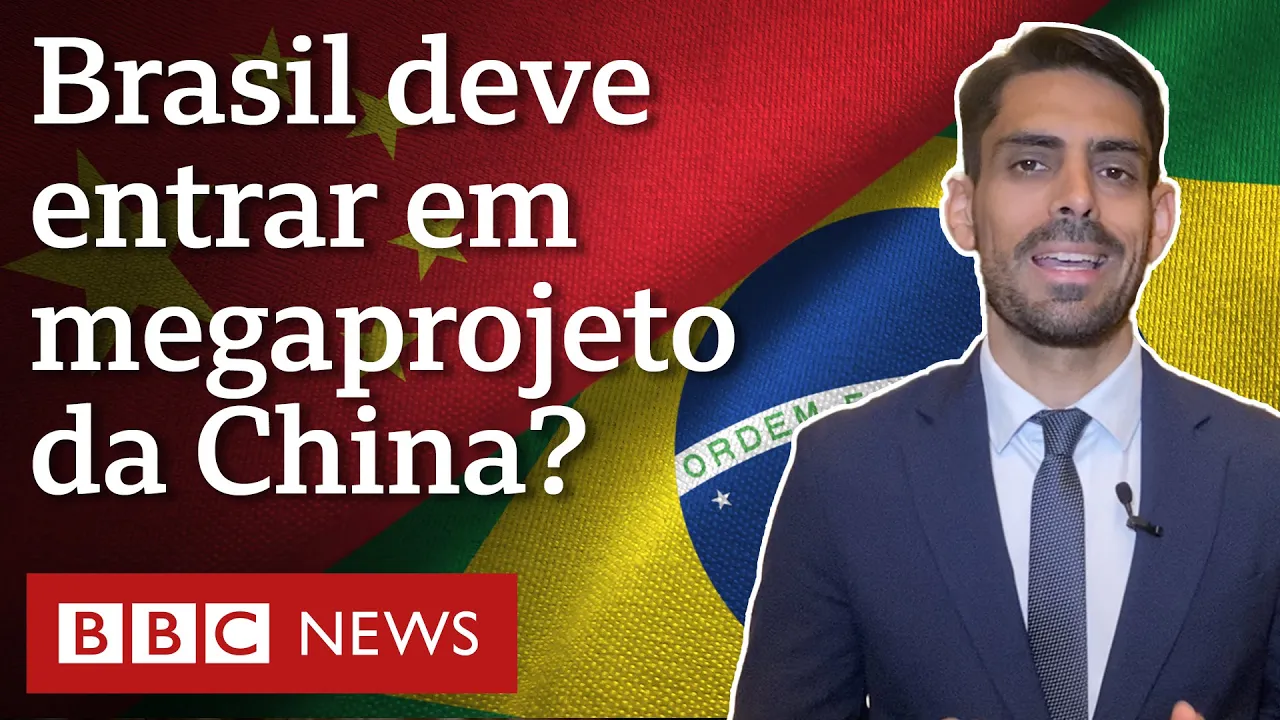
Nova Rota da Seda: Brasil ganha ou perde se aderir a plano chinês?
What is the New Silk Road and Why Does Brazil Matter?
Overview of the New Silk Road
- The New Silk Road is a controversial trillion-dollar investment plan by China, seen as a sign of its expanding global power.
- Launched in 2013, it has evolved from focusing on Asia to including Africa, Oceania, and Latin America.
- Estimates suggest that between $890 billion and $1 trillion has been invested so far; 147 countries are involved, representing two-thirds of the world's population.
Economic and Political Motivations for Brazil's Inclusion
- China aims to include Brazil due to its status as China's main trading partner since 2009; Brazilian exports to China reached $91 billion in 2022.
- Infrastructure projects could lower costs for Brazilian products reaching China while increasing Chinese influence in Latin America.
- Brazil's participation would be politically significant, signaling support from Latin America's largest economy amidst U.S. influence.
Advantages and Disadvantages of Joining the Initiative
- Experts believe joining may have limited immediate economic benefits but could yield political advantages.
- A formal entry might provide access to a $40 billion Chinese investment fund, though conditions have worsened due to China's economic slowdown.
- Agriculture Minister Carlos Fávaro supports joining for potential logistics investments that could reduce export costs.
Concerns About Debt and Sustainability
- Critics warn about "debt trap" scenarios where poorer nations incur unsustainable debts with China; Sri Lanka's port transfer is cited as an example.
- Environmental and social issues related to Chinese-funded projects also raise concerns regarding impacts on indigenous populations.
Internal Divisions Within the Brazilian Government
- The decision on whether Brazil should join divides government factions: one led by diplomats advocating caution versus Lula’s closer advisors supporting inclusion.
Brazil's Diplomatic Balancing Act
Diverging Perspectives on International Relations
- There is a faction advocating for Brazil to maintain positive relations with both China and the United States amid rising tensions between the two nations.
- Celso Amorim, a close associate of Mauro Vieira, expressed in an interview that there is no reason for Brazil not to engage with global initiatives, emphasizing a lack of political harm in doing so.
- Amorim noted that several European countries and many from Latin America are part of certain projects, suggesting Brazil should not remain excluded from these opportunities.
- Professor Pablo Ibanez highlighted the contrasting approaches within Brazilian leadership: one side (PT, Lula, Amorim) favors strengthening South-South relations while another (Itamaraty) fears potential backlash from the U.S. if Brazil aligns too closely with China.