Types of Qualitative Research:Narrative, Phenomenology, Grounded Theory, Ethnography, & Case Studies
Qualitative Research in Organizational and Applied Settings
In this section, the speaker discusses various types of qualitative research that can be conducted in organizational and applied settings. Understanding these research types is crucial for consultants and professionals to tailor solutions effectively.
Narrative Study
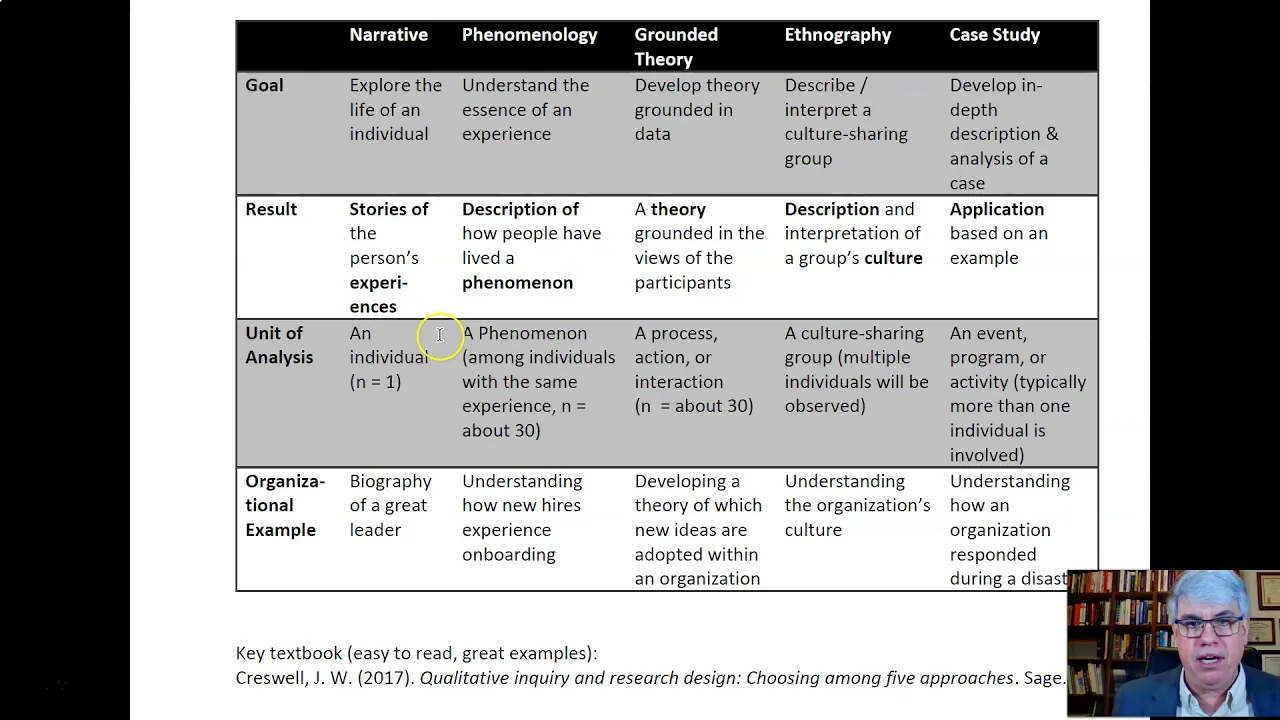
- Narrative study involves exploring the life of an individual, such as the founder of a company or a key leader.
- The goal is to extract meaningful stories from the person's experiences, providing unique insights.
- This type of study focuses on a single individual as the unit of analysis, offering a deep dive into their life and leadership style.
Phenomenology
- Phenomenology aims to understand the essence of experiences within an organization.
- Researchers delve into how individuals perceive and experience phenomena like onboarding processes.
- By interviewing around 30 people until data saturation is reached, a detailed description of people's lived experiences is obtained.
Grounded Theory
- Grounded theory studies aim to develop theories based on data and people's experiences.
- For instance, a CEO might explore why certain ideas are accepted while others are rejected within the organization.
- This approach involves studying interactions around new ideas to formulate theories on adoption and rejection patterns.
Ethnography
- Ethnography involves observing and interpreting group culture within an organization.
- Consultants immerse themselves in the organizational environment to understand practices, symbols, and social structures.
Qualitative Studies in Organizational Culture
In this section, the speaker discusses different types of qualitative studies used to understand organizational culture.
Firsthand Experience and Observation
- Organizations aim for employees to experience various aspects of the culture.
- : Employees should not only rely on their own experiences but also engage with different groups within the company.
Anthropological Approach in Studying Culture
- Detailed data collection within specific divisions or cases is crucial.
- : Acting as an anthropologist helps in understanding behaviors, beliefs, and performance within a division.
Case Studies for In-Depth Analysis
- Case studies focus on specific incidents or problems for detailed analysis.
- : Examining how organizations respond to disasters or major issues provides insights for improvement.
- : Examples include studying responses to fires, building breakdowns, or computer system failures.
Learning from Incidents
- Lessons learned from case studies help in enhancing processes and decision-making.
- : Analyzing responses and actions during incidents aids in identifying areas for improvement.
Importance of Qualitative Studies
- Different types of qualitative studies offer valuable insights for consultants.