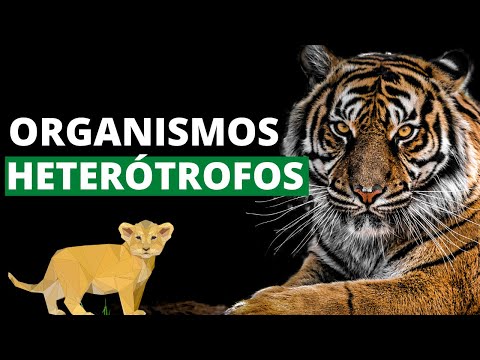
¿Qué son los organismos heterótrofos y cuáles son sus características? (Ejemplos)🐯
Understanding Heterotrophic Organisms
Definition and Characteristics of Heterotrophs
- Heterotrophic organisms are unable to produce their own food, relying on external sources of organic carbon for energy and nutrients. An example is a lion, which requires an external food source.
- In contrast, autotrophic organisms like plants generate their own food. Heterotrophs play crucial roles in the food chain as consumers at various levels (first, second, or third order), primarily feeding on organic matter.
Types of Heterotrophic Organisms
- Examples include fungi, lions, rabbits, humans, monkeys, and eagles. They consume organic carbon from other animals or plants and can utilize fats, proteins, or carbohydrates for energy.
- Primary consumers (e.g., rabbits) feed directly on producers (plants), while secondary consumers hunt primary consumers for energy. Tertiary consumers feed on secondary ones.
- Decomposers like certain bacteria and fungi break down dead organic matter into inorganic substances that return to nature.
Energy Release in Metabolism
- Autotrophic organisms metabolize food to release energy through oxidation processes involving hydrogen and carbon atoms found in lipids, carbohydrates, and proteins.
Categories of Heterotrophs
Herbivores
- Herbivores consume plant species and are classified as primary consumers. Examples include rabbits, deer, llamas, and hares.
Carnivores
- Carnivores obtain nutrients mainly from meat through predation or scavenging. Notable examples are tigers, jaguars, hyenas, and lions.
Omnivores
- Omnivores eat both plants and animals; they tend to be generalists. Humans and bears exemplify this group but exclude panda bears and polar bears due to their specialized diets.
Decomposers
- Decomposers use enzymes to break down dead organic matter; bacteria serve as prime examples of these heterotrophs.
Specific Examples of Heterotrophic Organisms
Tigers
- Tigers are carnivorous predators with adaptations such as large tusks for hunting prey effectively.
Heliobacteria
- These photoheterotroph organisms require organic carbon from water-saturated soil; they enhance soil fertility in rice crops.
Fungi
- Fungi decompose organic matter using exoenzymes that convert it into absorbable elements essential for nutrient cycling in ecosystems.
Cows
- Cows are herbivorous ruminants adapted to digest high-fiber plant material with a specialized four-chambered stomach structure.
Termites & Cockroaches