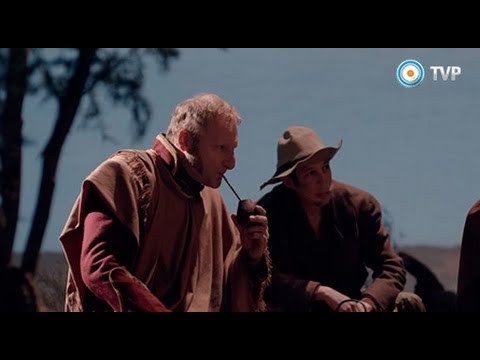
Episodio 03: El Restaurador (1835-1852) - Ver La Historia
The Era of Rosas: A Historical Overview
Context and Background
- The chapter discusses the historical period known as the "Era of Rosas," beginning with a review of events leading up to 1835, when Argentina was on the brink of civil war due to political tensions.
- The assassination of Federal leader Juan Facundo Quiroga reignites longstanding conflicts among provinces, highlighting the challenges faced in achieving national organization after gaining independence from Spanish rule.
Rise of Juan Manuel de Rosas
- Following Quiroga's death, there is a call for strong leadership in Buenos Aires; Juan Manuel de Rosas emerges as a powerful figure capable of restoring order.
- Elected governor in 1829 with extraordinary powers, Rosas implements measures to stabilize the economy and re-establish relations with the Vatican.
Consolidation of Power
- After initially being denied extraordinary powers by the legislature, Rosas resigns but later demands both extraordinary powers and total control over government functions.
- On March 7, 1835, he becomes governor again, consolidating executive, legislative, and judicial power under his authority.
Economic Policies and Regional Dynamics
- The Federal Pact signed in 1831 leads to an alliance among provinces known as the Argentine Confederation; Buenos Aires manages foreign relations while focusing on cattle ranching for export.
- Buenos Aires' economic policies favor its own interests at the expense of other regions; trade restrictions disadvantage northern provinces that produce crafts and supplies.
Social Dynamics Under Rosas
- Unlike many landowners, Rosas engages with popular sectors and is perceived as someone who understands their needs. This connection enhances his support among common people.
- Upon taking office again, he purges unitarios (liberals), replacing their symbols with those representing federalism; dissent is not tolerated leading many opponents into exile.
Political Repression and Control
- In 1835, Rosas establishes ideological unity through mandatory use of red ribbons (divisa punzó), symbolizing loyalty to federalism while suppressing opposition.
- His wife Encarnación plays a significant role in politics by forming La Mazorca—a group that violently opposes any dissent against rosismo.
Economic Legislation Impact
- To strengthen interprovincial commerce weakened by political fragmentation, Rosas enacts new customs laws in 1836 that protect regional economies from foreign imports.
- These laws lead to immediate positive effects such as increased agricultural production in Buenos Aires and growth in various industries across regions despite pressure from English merchants.
Cultural Shifts Amidst Conflict
The Political Landscape of Argentina in the 1830s
The Rise of Juan Manuel de Rosas and Opposition
- The intellectual group from the generation of '37 faces challenges in implementing European ideas within local culture, which is perceived as a threat by Rosas' government.
- After three years in power, Rosas stabilizes Buenos Aires' finances through customs reforms and public land sales but closes universities and cuts funding for hospitals.
- Discontent grows among Rosas' enemies, particularly after he detains French citizens, leading to serious diplomatic conflicts with France.
- A French naval blockade of Buenos Aires devastates the economy, prompting opposition groups to plan an invasion while civil unrest begins across provinces.
- The blockade leads to severe shortages and economic crisis; Rosas is forced into extreme measures to manage the situation.
Economic Measures and Social Unrest
- One significant measure taken by Rosas is the annulment of the enfiteusis law, which had allowed private leasing of state lands at low prices.
- This decision angers landowners who are economically affected, leading them to oppose Rosas’ policies and form the "Libres del Sur" movement.
- Landowners recruit laborers under various pretexts to bolster their ranks against Rosas’ regime during this period of crisis.
Insurrections Against Rosas
- The "Libres del Sur" rebellion centers around key locations like Dolores and Yasc; meanwhile, another insurrection arises in Entre Ríos supported by French ships blocking trade routes.
- Juan Lavalle emerges as a prominent figure opposing Rosas; his background includes military campaigns alongside San Martín and Bolívar before turning against federal authority.
Personal Tragedy Amidst Political Turmoil
- On October 20, 1838, Juan Manuel de Rosas suffers a personal loss with the death of his wife Encarnación Escurra, impacting his political focus and emotional state.
Shifting Alliances and Military Strategies
- Following her mother's death, Manuelita becomes politically active alongside her father but adopts a more humanistic approach rather than militaristic tactics.
- Despite initial plans for rebellion by "Libres del Sur," their forces are insufficiently armed (only about 2000 men), leading to high rates of desertion amidst ongoing conflict.
The Rise and Challenges of Juan Manuel de Rosas
Early Conflicts and Power Struggles
- The confrontations during this period are intense, with bloodshed marking the struggles against Rosas' power. By 1840, all uprisings threatening his authority have been neutralized.
- On October 29, 1840, a peace treaty is signed with European powers, leading to the lifting of a blockade on the Río de la Plata after two years. However, remnants of opposition continue to face defeat.
- In Corrientes, Governor Pedro Ferr organizes an army against Rosas with support from Uruguayan allies. Key issues include Rosas' refusal to convene a Constituent Congress and trade restrictions for provinces.
Major Battles and Political Maneuvering
- Ferr's advance towards Buenos Aires culminates in a crushing defeat at the Battle of Arroyo Grande in late 1842, showcasing the military might of Rosas’ forces.
- José Urquiza emerges as a significant ally for Rosas; he is a wealthy federalist leader whose resources bolster Rosas' position.
Consolidation of Power
- After years of conflict, by 1843, Rosas achieves total victory over his enemies and restores order in the Río de la Plata region. However, new threats arise as European powers renew their aggression.
International Tensions and Military Engagement
- Following his second term as governor starting in 1835, an imperialist attack disrupts stability. French naval blockades incite uprisings that are eventually quelled by Rosas’ strong military response.
- As tensions escalate with France and England due to conflicts over Uruguay and navigation rights on rivers vital for trade, Rosas faces ultimatums from these powers.
Defense Against Foreign Aggression
- The foreign fleets assert control over strategic locations while demanding free navigation rights. This situation leads to accusations against unitarios negotiating with imperialists as traitors.
- Despite facing overwhelming odds during an invasion attempt by Anglo-French forces at Paraná River defenses led by Lucio Mancilla, this episode becomes symbolic of national sovereignty despite resulting in defeat.
Legacy and Recognition
- Following the withdrawal of foreign forces in 1847, San Martín praises Rosas for his resistance efforts. This moment marks a peak in public support for him as he is seen as a defender against imperialism.
The Rise and Fall of Juan Manuel de Rosas
Economic and Political Context
- The economic situation in Argentina has improved, with support from provincial governors for Rosas, indicating a resurgence of his power.
- In 1851, José de Urquiza, the governor of Entre Ríos, challenges Rosas by accepting his resignation regarding foreign relations, marking a pivotal moment in Argentine politics.
- This challenge sets the stage for one of Argentina's most significant battles as Urquiza prepares to confront Rosas.
The Build-Up to Conflict
- By 1850, Rosas enjoys considerable prestige and popularity due to his governance but faces increasing opposition.
- Urquiza's acceptance of Rosas' resignation leads him to advocate for free navigation on rivers for trade without passing through Buenos Aires.
- Urquiza believes that establishing a national constitution should follow achieving lasting peace, contrasting with Rosas' approach.
Formation of Alliances
- As tensions rise, Urquiza assembles a large army and forms alliances with anti-Rosas factions in Uruguay and Brazil.
- Despite being labeled as a traitor by many provinces loyal to Rosas, Urquiza continues his ambitious plans against him.
The Battle at Caseros
- With an army of 28,000 men including notable figures like Domingo Faustino Sarmiento and Bartolomé Mitre, Urquiza advances towards Buenos Aires.
- The armies meet at El Palomar de Caseros; during the battle, Rosas is injured but continues fighting until defeat becomes inevitable.
Aftermath and Legacy
- Following his defeat at Caseros, Rosas resigns and flees to England while Buenos Aires suffers from looting by both sides.
- A subsequent agreement establishes constitutional organization under Urquiza’s leadership; however, political tension remains high in Buenos Aires.