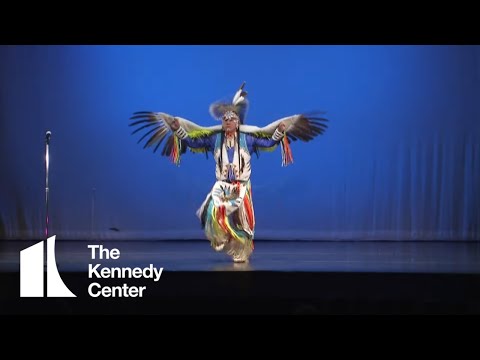
Native Pride Dancers - Millennium Stage (January 9, 2018)
New Section
This section introduces the Native Pride Dancers and sets the stage for their performance.
Introduction of Native Pride Dancers
- The Native Pride Dancers are welcomed to the stage .
- They perform a traditional dance, accompanied by applause from the audience .
Message of Crazy Horse
- A song in a foreign language is sung .
- The lyrics convey messages about preserving the earth and not selling it .
Standing Ground and Predators
- The importance of standing one's ground is emphasized .
- The negative impact of materialism on society is highlighted .
Reiteration of Crazy Horse's Message
- The message from Crazy Horse is reiterated through song .
New Section
Christal Moose, Manager of Native Pride Dancers, introduces herself and invites audience participation.
Introduction by Christal Moose
- Christal Moose introduces herself in both Ojibwemowin and English .
- She explains that they aim to share their culture with others through music and dance .
Audience Engagement
- The audience is encouraged to tap their feet, feel the beat, and later join in dancing .
- Introductions are made for each dancer representing different tribes (Josh Atcheynum, Mardela Costanzo, Larry Yazzie) .
Bridging Cultures
- The importance of learning and sharing experiences to bridge cultures is emphasized .
- Larry Yazzie is introduced as the next performer .
New Section
Larry Yazzie explains the significance of regalia and performs a prayer dance.
Explanation of Regalia
- Larry Yazzie clarifies that his outfit is called regalia, not a costume .
- He emphasizes that each step in his dance is a prayer .
Tribute to Veterans
- Veterans in the audience are recognized and honored .
Introduction by Larry Yazzie
- Larry Yazzie introduces himself in both English and another language .
- He expresses gratitude for being present and acknowledges the audience's beauty .
The summary provides an overview of the transcript, highlighting key points such as the introduction of Native Pride Dancers, messages conveyed through songs, audience engagement, bridging cultures, explanation of regalia, tribute to veterans, and introductions by Larry Yazzie.
The Eagle Dance
In this section, the speaker introduces the beautiful eagle dance and describes the significance of the eagle wings and feathers. They encourage the audience to think about their loved ones and pray for them while watching the dance.
The Eagle Dance
- The speaker spreads their eagle wings over their shoulders and wears eagle feathers on their head.
- They invite the audience to join them in thinking about their people, friends, relatives, and family, and praying for them.
- The speaker prepares to perform the eagle dance as a blessing to each member of the audience.
Performing in the Wings
In this section, the speaker decides to come down from the stage and perform in front of the audience. They explain that touching someone with their eagle wings is considered a blessing.
Performing in the Wings
- The speaker receives applause from the audience.
- They decide to come down from the stage and dance among the audience using their eagle wings.
- Touching someone with their eagle wings is considered a blessing.
- The speaker performs the beautiful eagle dance.
Music Interlude
This section includes a mid-tempo music interlude with singing in a foreign language.
Music Interlude
- Mid-tempo music plays.
- Singing in a foreign language accompanies the music.
Appreciation for Larry Yazzie
In this section, there is an appreciation for Mr. Larry Yazzie's performance.
Appreciation for Larry Yazzie
- The audience cheers and applauds.
- Mr. Larry Yazzie's performance is acknowledged by asking for another round of applause.
Introduction of Josh Atcheynum (Two Wings)
In this section, the speaker introduces themselves as Josh Atcheynum, also known as Two Wings. They explain that their name was given to them by their late grandfather and share the significance of the name.
Introduction of Josh Atcheynum (Two Wings)
- The speaker's colonized name is Josh Atcheynum, but their real name is Two Wings.
- Their late grandfather gave them the name Two Wings through a ceremony.
- The name signifies the ability to travel, see new things, and teach people.
- Initially, as a child, they didn't fully understand the meaning of their name.
- The speaker honors all flying creatures with their name, especially the eagle.
Sharing Native American Culture
In this section, the speaker reflects on how being a proud Native American man has allowed them to travel worldwide and teach people about Native American culture. They express gratitude for being welcomed into new cities and share an experience in Washington DC.
Sharing Native American Culture
- Being a proud Native American man has provided opportunities to travel and teach people about Native American culture.
- The speaker feels humbled when welcomed into new cities.
- They recall an experience in Washington DC where they were head dancers at the American Indian Societies Inaugural Ball with their fiancé almost a year ago.
- Returning to DC now brings back beautiful memories of respect and interaction with people.
The Jingle Dress Dance
In this section, the speaker introduces "The jingle dress dance" originating from Mille Lacs Minnesota. They mention its connection to Anishinaabe/Ojibwe people and share personal connections to Mille Lacs through family heritage.
The Jingle Dress Dance
- The jingle dress dance originates from Mille Lacs Minnesota among Anishinaabe/Ojibwe people.
- The speaker's fiancé has connections to Mille Lacs through her family heritage.
- Her grandfather published the first Ojibwe language dictionary, and her father helped with an archaeological dig that discovered a jingle dress cone dating back to pre-1700s.
The Healing Power of the Jingle Dress
In this section, the speaker shares the story of the jingle dress dance and its healing power. They emphasize the importance of water and respecting all living things.
The Healing Power of the Jingle Dress
- The story revolves around a little girl who was very ill and unable to walk.
- Her grandfather offered tobacco in prayer for healing and had a dream about a beautiful jingle dress.
- When the dress moved, it sounded like rain, symbolizing cleansing and bringing healing.
- The ladies of the tribe created jingle dresses based on his dream, singing songs called sidesteps.
- The little girl gradually regained mobility during the song, eventually dancing on her own.
- Dancing with utmost intensity is known as "the tail" in the song, signifying complete healing.
- The jingle dress continues to be used for healing purposes to this day.
Timestamps are approximate and may vary slightly depending on video version or edits.
New Section
In this section, Della demonstrates the beautiful woman's jingle dress dance.
Della's Jingle Dress Dance
- Della demonstrates the woman's jingle dress dance. [applause]
New Section
The importance of learning the history and meaning behind songs and dances.
Importance of Learning Songs and Dances
- It is important to learn the history and meaning behind songs and dances.
- Many people don't take the initiative to understand what these songs represent or who their people were.
- Each individual has their own songs and dances in their family lineage.
- The speaker's family traced their steps back to Sweetgrass First Nation in Saskatchewan, Canada.
- The speaker emphasizes the importance of knowing one's own culture and heritage.
New Section
The speaker shares a personal story about finding pride in his Native American identity.
Finding Pride in Native American Identity
- The speaker shares his experience of not feeling proud to be a Native American due to racism and bullying.
- Seeing a picture of Sitting Bull every day gave him courage to embrace his Native American identity.
- He honors Sitting Bull by dancing a song called "Sneak Up" that represents the battle of Little Bighorn.
- The speaker considers Sitting Bull the greatest Native American person of all time.
New Section
The performance of "The Sneak Up" song.
Performance of "The Sneak Up"
- The audience cheers and applauds as the speaker introduces "The Sneak Up" song.
- The performance begins with thunder sounds.
- The narrator describes Sitting Bull's offerings and prayers for protection.
- Gunshots and horse neighing are heard during the performance.
New Section
Appreciation for the performer, Josh Atcheynum.
Appreciation for Josh Atcheynum
- The audience applauds and shows appreciation for Josh Atcheynum's performance.
New Section
Historical context about Custer's defeat in battle.
Custer's Defeat
- The narrator mentions that all men in Custer's command were killed in battle.
- It was considered the greatest Indian victory of the Plains Wars.
New Section
Final remarks and gratitude from the performers.
Final Remarks and Gratitude
- Josh Atcheynum expresses gratitude to be performing at the Kennedy Center in Washington, DC.
- He thanks the Millennium Stage and Kennedy Center staff for bringing them there.
- The performers express their honor to be representing their respective nations.
The transcript provided does not include timestamps for every section.
Introduction and Invitation to Pow Wow
The speaker welcomes the audience and invites them to attend their annual Pow Wow, which has been happening for over 100 years. They introduce the fancy dance, also known as the war dance, which originated from the Ponca nation in Oklahoma.
Invitation to Pow Wow
- The speaker invites the audience to attend their annual Pow Wow, which takes place on the second weekend of August.
- The Pow Wow has been celebrated for over 100 years.
- The community welcomes and invites everyone to experience Native American culture at their Pow Wow.
Introduction to Fancy Dance
- The fancy dance originated from the Ponca nation in Oklahoma.
- It is also known as the war dance.
- The first world champion fancy dancer was from the Ponca nation.
- This dance is performed at a fast tempo and requires keeping up with the rhythm of the drumbeat.
Performance of Fancy Dance
The speaker prepares for a performance of the fancy dance and encourages audience participation. They showcase their skills in a lively performance accompanied by upbeat music.
Audience Participation
- The speaker asks the audience to make some noise and cheer.
- They invite individuals from the audience to come up on stage and join them in dancing.
- Those who decline will be asked to contribute $10 towards their cause.
Performance of Fancy Dance
- The speaker performs an energetic fancy dance accompanied by upbeat music.
- The audience cheers and applauds during and after the performance.
Audience Participation
After showcasing their own dancing skills, the performers invite members of the audience to join them on stage for a group dance. They emphasize that participating provides bragging rights and an opportunity to experience dancing at a Pow Wow.
Invitation to Dance
- The performers ask the audience members who are interested in dancing to raise their hands.
- They encourage hesitant individuals to come forward and join them on stage.
- Participating in the group dance gives people bragging rights and an understanding of how to dance at a Pow Wow.
Group Dance and Workout
The performers lead the audience in a group dance, providing instructions for different dance moves. They emphasize that attending a Pow Wow is open to the public and encourages experiencing Native American culture while getting a good workout.
Group Dance Instructions
- The performers instruct the audience to extend their hands outwards.
- They ask everyone to maintain some distance from each other while dancing.
- Different dance moves are demonstrated, including hopping, crisscrossing, heel-toe steps, shuffling, and arm movements.
Experiencing Native American Culture
- Attending a publicly advertised Pow Wow is open to everyone.
- It provides an opportunity to understand and experience Native American culture.
- Dancing at a Pow Wow can also serve as a fun workout.
Fun Exercise Video Idea
The performers suggest creating an exercise video called "Native Aerobics" set to Pow Wow music. They humorously compare it with popular exercise programs like jazzercise and Taebo.
Exercise Video Concept
- The performers propose creating an exercise video called "Native Aerobics" featuring Pow Wow music.
- They humorously mention other exercise programs like jazzercise and Taebo.
- Dancing along with Pow Wow music can be an enjoyable way to stay active.
Continued Group Dance
The performers continue leading the audience in the group dance, demonstrating additional dance moves and encouraging active participation.
Continued Group Dance
- The performers continue guiding the audience through various dance moves.
- They encourage participants to stay in rhythm with the drumbeat and follow their instructions.
- Dance moves include hopping, crisscrossing, heel-toe steps, shuffling, and arm movements.
Conclusion of Group Dance
The performers conclude the group dance session and express gratitude to the audience for participating. They highlight that dancing at a Pow Wow provides an opportunity to connect with Native American culture.
Conclusion of Group Dance
- The performers thank the audience for participating in the group dance.
- They express appreciation for those who joined them on stage.
- Dancing at a Pow Wow allows individuals to connect with Native American culture and have a memorable experience.
Timestamps are approximate and may vary slightly depending on the video source.
New Section
This section features a dance performance at the Kennedy Center for the Performance Arts. The dancers showcase their skills to upbeat music, and later engage in a round dance to bridge cultures and communities.
Dance Performance
- The dancers start with energetic moves, including a dab.
- Music is played for the audience to dance along.
- The host encourages the audience to dance and enjoy the music.
- The host urges everyone to move to the beat and showcases some dance moves.
- Another song is requested, and the dancers continue their performance.
- The host apologizes for playing his Saturday night tracks but continues with more music.
- The audience is encouraged to keep moving and dancing.
- Applause is given to appreciate the dancers' efforts.
Round Dance
- The host invites the dancers for another dance called the round dance, which aims to connect communities.
- A speaker named Christal explains how this dance bridges cultures and brings people together in these divisive times.
- Participants form a line by holding hands and follow along as they go around in a social round dance.
- This inclusive dance promotes healing and joy regardless of age or background.
The transcript concludes with the continuation of music for the round dance.
New Section
This section encourages the audience to participate in dancing and clapping along to the beat.
Audience Participation
- Anyone who is sitting is invited to come and join the dance.
- The audience is encouraged to clap along to the beat.
- The dance brings smiles to everyone's faces, creating a joyful atmosphere.
New Section
The importance of sharing cultural knowledge and understanding between different communities is emphasized.
Sharing Cultural Knowledge
- The performers aim to teach about their culture, music, dance styles, and personal stories.
- They request that the audience shares this information with their families and spreads awareness about Native American culture.
- By understanding each other's cultures, communities can support one another and take care of their families and nations.
New Section
The significance of ancestral land, heritage, and indigenous identity is discussed.
Ancestral Land and Identity
- Native Americans have a deep connection to their ancestral land where their ancestors are buried. They strive to protect this land as it holds their history and culture.
- It is important for individuals to explore their own lineage and discover their indigenous roots in order to better understand Native American people as a whole.
- There are 567 federally recognized tribes in the United States, each with its own laws, judicial system, police force, culture, and history.
New Section
The finale performance takes place, and the audience is invited to take photos with the performers.
Finale and Photo Opportunity
- The performers showcase a finale dance.
- After the performance, the audience can purchase merchandise such as DVDs and CDs or take photos with the performers.
New Section
The availability of movies featuring one of the performers is mentioned.
Movies Featuring Performer
- Larry Yazzie, one of the performers, is an actor in Native American films. DVDs of these movies are available for purchase.
Turn any video into a summary like this
YouTube links, meetings, lectures. With transcripts, search, and chat.