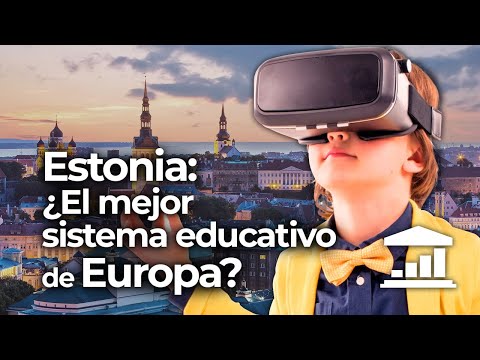
¿Cómo es el MEJOR sistema EDUCATIVO de EUROPA? (Que bate incluso a FINLANDIA) - VisualPolitik
Estonia's Transformation: From Soviet Occupation to Educational Excellence
Historical Context and Economic Challenges
- Estonia regained independence in 1991 after over 50 years of Soviet occupation, facing a dire economic situation with a GDP per capita below $3,500, comparable to Bolivia or El Salvador.
- The disintegration of the Soviet bloc severely impacted member countries; Estonia's economy contracted by more than 20% in 1992, necessitating the construction of a new national model.
A Different Path: Estonia's Success Story
- Unlike other post-Soviet states that fell into instability and autocracy, Estonia emerged as one of the world's most prosperous nations with an increasing standard of living. By 2020, its GDP per capita reached nearly $40,000, surpassing countries like Spain.
- Estonia boasts some of the healthiest public finances globally and has the highest entrepreneurship rates in Europe, creating over 20 businesses per 1,000 inhabitants—six times higher than the EU average.
Key Factors Behind Estonia’s Success
- Several factors contribute to Estonia's success: fiscal policy reforms, technological investments, and a strong educational system are among them. The country is recognized as having the best education system in Europe.
- Known as "Education Nation," Estonia excels in international assessments like PISA, ranking just behind Singapore in reading, math, and science competencies. It also has high academic performance among students from low-income families and minimal disparities between rural and urban education outcomes.
Educational Achievements
- With only about 5% of students lacking basic education and a low course repetition rate (3.5% compared to an OECD average of 12.4%), Estonia demonstrates effective educational practices that promote social mobility.
- The country outperforms Finland—previously regarded as Europe's educational benchmark—in various metrics related to student achievement and language proficiency. This raises questions about how such results were achieved without excessive spending on education.
Misconceptions About Education Funding
- Contrary to popular belief that higher spending guarantees better educational outcomes, Estonia spends less per student than many OECD countries yet achieves superior results; for instance, Iceland spends significantly more but ranks poorly in PISA assessments compared to Estonia.
Reset Your Mind: The Unique Educational Model of Estonia
Introduction to the Estonian Educational Model
- The video introduces a unique educational model in Estonia, emphasizing its independence from political interests and alignment with modern human capital needs.
- It highlights that this system is designed to help students quickly find high-skilled jobs after graduation, which is a departure from traditional models.
Key Features of the Estonian Education System
- Independence is a cornerstone of the Estonian education system, allowing schools and teachers significant freedom in curriculum design and teaching methods while adhering to a government-set framework.
- The dual funding model promotes competition among public schools; funding is based on student enrollment numbers, incentivizing schools to attract more students through better performance.
Competition and Accountability
- Schools are evaluated constantly on academic performance, with results made public. This transparency drives parents to choose higher-performing institutions for their children.
- A notable demographic challenge has emerged as student numbers have decreased by 40% over 15 years, leading to school closures based on performance metrics.
Autonomy and Teacher Responsibilities
- School directors have high autonomy regarding hiring practices, salary decisions, and fund allocation. Teacher salaries vary by institution based on available resources.
- Teachers face greater accountability; prolonged poor student performance can lead to dismissal. Continuous professional development is mandatory for educators.
Curriculum Orientation Towards Employment
- The curriculum focuses heavily on preparing students for the workforce, involving collaboration between educational institutions and businesses in program design.
Estonia's Educational Model: Key Insights
Vocational Education and University Master's Programs
- Estonia emphasizes vocational education, equating it to professional training, with university master's programs also included. Notably, practical work can account for up to 50% of the training hours.
Equality in Education
- A significant focus in Estonia is on educational equality, ensuring that all students have the same opportunities regardless of their socioeconomic background. This approach prioritizes equal conditions over equal outcomes.
State Support for Students
- The Estonian government covers not only tuition but also textbooks and meals for students. Mandatory education includes free school meals and healthcare services until age 19, including routine medical check-ups and dental care.
Core Principles of the Estonian Education System
- The fundamental principles include competition, specialization, integration with businesses, and equality of opportunity within a low-bureaucracy environment with minimal taxes.
Challenges Facing the Educational System
- Despite being recognized as one of Europe's best educational systems, Estonia faces challenges such as a shortage of teachers in specific subjects and improving educational performance among Russian ethnic students.
Impact on Prosperity and Technology Leadership
- Estonia's educational model has contributed significantly to its economic prosperity and technological leadership, fostering a vibrant startup ecosystem.
Reflection on Global Adoption