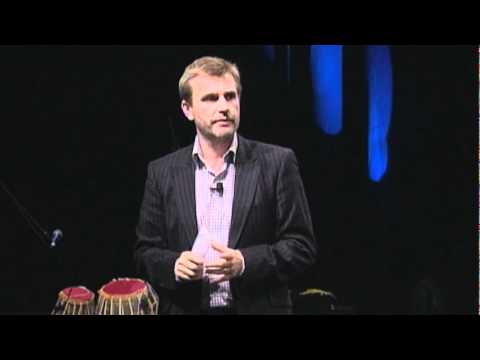
How to make work-life balance work | Nigel Marsh
Introduction and Personal Experience
The speaker introduces the topic of work-life balance and shares his personal experience.
St. Benedict's Advice
- St. Benedict advised his followers to pause and reflect on their existence.
- The speaker humorously refers to the audience as "wretched weaklings" and emphasizes the need to evaluate one's life.
Turning Point at 40
- At the age of 40, the speaker decided to address work-life balance.
- He had been a corporate warrior, neglecting his health and family.
- He took a year off to be with his wife and children but realized it was easy to balance when he didn't have any work.
Struggling with Work-Life Balance
- After returning to work, the speaker spent seven years struggling with work-life balance.
- He studied and wrote about this topic extensively.
- He shares four observations based on his experiences.
Observation 1: Need for Honest Debate
The first observation highlights the importance of an honest debate on work-life balance.
Misleading Discussions
- Many discussions about work-life balance involve irrelevant topics like flexi-time or dress-down Fridays.
- These discussions mask the core issue that certain job choices are incompatible with meaningful engagement in family life.
Observation 2: Individual Responsibility
The second observation emphasizes that individuals must take control of their lives instead of relying on governments or corporations.
Taking Control
- Governments and corporations cannot solve the work-life balance issue for us.
- Individuals should design their own lives rather than letting others dictate their priorities.
- Placing the quality of life in a commercial corporation's hands is risky.
Observation 3: Time Frame Perspective
The third observation focuses on choosing an appropriate time frame to evaluate work-life balance.
Acknowledging Reality
- The first step in solving any problem is acknowledging the reality of the situation.
- Many people lead lives of desperation, working long hours at jobs they hate to buy unnecessary things and impress people they don't like.
Realistic Expectations
- It's important to be realistic about what can be achieved in a day.
- The speaker shares his ideal balanced day but acknowledges that it cannot be achieved daily.
- Elongating the time frame for evaluating balance without postponing it until retirement is crucial.
Observation 4: Balanced Approach
The fourth observation highlights the need for a balanced approach to achieving work-life balance.
A Friend's Example
- A friend approached the speaker, realizing her life was out of balance due to excessive work.
- Joining a gym alone does not create more balance; it only improves fitness.
Conclusion
The speaker emphasizes the importance of honest debate, individual responsibility, choosing an appropriate time frame, and maintaining a balanced approach when striving for work-life balance.
The Importance of Small Things
In this section, the speaker shares a personal anecdote that highlights the significance of small actions and investments in our relationships and overall quality of life.
Spending Quality Time with Family
- The speaker's wife asked him to pick up their youngest son from school because she had other commitments.
- He left work early and spent time with his son at the local park, playing games and enjoying each other's company.
- They shared a meal at a nearby cafe and returned home for bath time and bedtime routine.
- The speaker read a chapter from a book to his son before tucking him in bed.
The Impact of Small Actions
- As the speaker was leaving his son's room, his son expressed that it had been the best day of his life.
- This experience made the speaker realize that small gestures can have a profound impact on our loved ones.
- It emphasizes that being more balanced doesn't require drastic changes but rather investing in meaningful moments.
Transforming Relationships and Society
- The speaker believes that by prioritizing small acts of love and connection, we can transform the quality of our relationships.
- Furthermore, if enough people adopt this mindset, society's definition of success can shift towards a more thoughtful and balanced perspective.
- Rather than measuring success solely based on wealth accumulation, society can embrace a holistic view of what constitutes a well-lived life.
Redefining Success
In this section, the speaker discusses how embracing a more balanced definition of success can lead to personal fulfillment and societal change.
Challenging Simplistic Notions
- The current notion of success is often reduced to material wealth as the ultimate measure.
- The speaker refers to this idea as "the person with the most money when he dies wins."
- He argues that this simplistic view overlooks the importance of relationships, personal growth, and overall well-being.
The Power of Small Investments
- By making small investments in meaningful areas of our lives, we can significantly improve our relationships and overall quality of life.
- These investments don't require drastic changes but rather intentional actions that prioritize what truly matters.
Transforming Society's Definition of Success
- The speaker suggests that if enough individuals adopt a more balanced perspective on success, society as a whole can redefine its values.
- This shift would move away from materialistic pursuits and towards a more thoughtful and holistic understanding of a life well-lived.
- Ultimately, transforming society's definition of success can lead to greater fulfillment and happiness for individuals and communities.
Timestamps are provided for each section to easily locate the corresponding part in the video.
Turn any video into a summary like this
YouTube links, meetings, lectures. With transcripts, search, and chat.