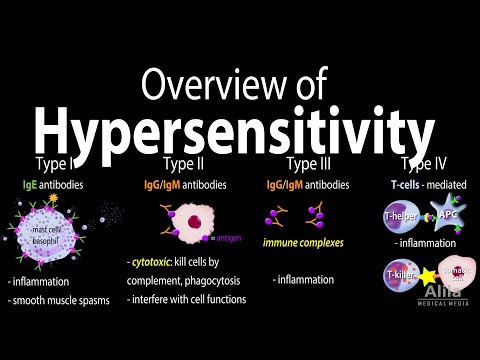
Hypersensitivity, Overview of the 4 Types, Animation.
Hypersensitivity
Overview: Hypersensitivity is an abnormal reaction of the immune system to certain antigens, ranging from mild rashes to fatal anaphylactic shock. It is classified into four types based on mechanisms of action.
Type I Hypersensitivity
IgE molecules bind to their receptors on the surface of mast cells and basophils. Upon re-exposure to the same antigen, the antigen binds to adjacent IgE molecules, triggering a signaling cascade that induces the release of histamine and other inflammatory chemicals.
Reactions can range from mild to severe, and in some cases may lead to anaphylactic shock.
Type II Hypersensitivity
Previously formed IgG or IgM antibodies bind to antigens on the surface of a particular cell type, marking them for destruction.
This type of hypersensitivity is at the basis of many autoimmune diseases, where the body produces antibodies to destroy its own cells.
Type III Hypersensitivity
IgM or IgG antibodies bind to free-floating antigens, forming antibody-antigen complexes. The complement system is activated and inflammation results, causing damage to the affected tissue.
A typical example is serum sickness, induced by a large amount of antigens in the blood.
Type IV Hypersensitivity
Delayed reaction mediated by T-cells. Pre-sensitized T-cells are produced during a previous contact with the antigen.
Upon re-exposure to the same antigen, T-helper cells release inflammatory cytokines, while T-killers induce cytotoxic reactions. Typical examples are allergic reactions to substances that come into direct contact with the skin.