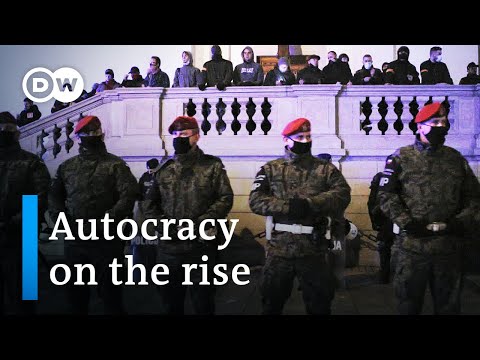
Why are autocrats popular? - Assault on democracy | DW Documentary
Democracy Under Threat: The Rise of Authoritarianism
Global Trends in Authoritarianism
- Approximately one-third of the global population is governed by authoritarian populists, leading to a significant erosion of civil liberties.
- Civil society faces increasing pressure, with government critics and NGOs being targeted while pro-government groups thrive.
- Over the past 15 years, states have systematically stripped civil society of its freedoms and operational capabilities.
The Role of Activists in Democracy
- Critical voices are essential for functioning democracies; their absence could jeopardize democratic integrity.
- Recent legislation in various countries has criminalized protests and severely limited NGO funding, further threatening civil rights advocates.
Case Study: Sand Mining in India
Environmental Violations and Activism
- India's economic growth has led to increased natural resource extraction, resulting in severe environmental violations linked to sand mining practices.
- Unsustainable sand mining causes significant ecological damage, including cratered landscapes and depleted water levels that threaten local biodiversity.
Challenges Faced by Activists
- Ashish Zagar documents illegal sand mining operations but faces intimidation from mine operators connected to political figures like Dal Pat Singh from the ruling BJP party.
- Zagar's work is met with hostility; he fears for his safety as he captures evidence of unlawful activities amidst threats from armed individuals associated with the mines.
The Impact of Intimidation on Environmental Advocacy
Legal Repercussions for Activists
- Zagar has faced multiple charges aimed at silencing him, reflecting broader tactics used against environmental activists in India who challenge state authority or corporate interests.
- Such legal actions serve as a metaphorical means to "kill" dissenting voices without resorting to outright violence, undermining democracy's foundational principles.
Legislative Barriers for NGOs
- Stricter laws across more than 50 countries complicate NGO operations by restricting funding sources and imposing bureaucratic hurdles that hinder their effectiveness.
Impact of Government Regulations on NGOs in India
Overview of the Foreign Contribution Act (FCRA)
- The Indian government has implemented several laws to increase oversight on NGOs, notably the Foreign Contribution Act (FCRA) since 2014. More than 10,000 NGOs have had their FCRA licenses revoked, with the government claiming it's a measure for national security. However, many NGOs believe this law is intended to obstruct their operations.
Greenpeace India's Legal Struggles
- Greenpeace India lost its FCRA license in 2015 and has been banned from receiving funding since then. The government accuses them of hindering economic growth, but Binu Jacob, head of Greenpeace India, argues that these legal challenges are aimed at making NGO work impossible.
- Jacob highlights that a significant portion of their resources is now spent on legal battles rather than environmental advocacy due to ongoing court cases and raids by authorities. In 2018, their office was raided and bank accounts frozen for months, severely impacting operations and staffing levels.
Concerns Over Future Viability
- Jacob asserts that Greenpeace India operates independently within legal bounds but acknowledges the possibility of closure similar to other organizations facing similar pressures. He emphasizes that perseverance and adequate legal support are crucial for NGOs' survival against such governmental actions.
- In 2020, further tightening of foreign funding laws particularly threatens small local NGOs, which critics argue represents an attack on organized civil society as a whole. This raises questions about the implications for democracy in India under Prime Minister Narendra Modi's administration.
Political Context and Authoritarian Trends
- Since Modi's re-election in 2019, there has been a notable rise in authoritarianism alongside the erosion of independent institutions and promotion of majoritarian agendas focused on Hindu supremacy over minorities. This environment fosters polarization between those advocating for social justice and those supporting nationalist ideologies like the Rashtriya Swayamsevak Sangh (RSS).
- The RSS plays a significant role in promoting Hindu nationalism across various sectors while aligning closely with governmental objectives; this dynamic illustrates how legislation is used to pressure dissenting voices within civil society while bolstering compliant organizations like the RSS itself.
Implications for Civil Society
- A growing movement towards Hindu nationalism affects all societal sectors including education and law enforcement; it creates an "us versus them" mentality where advocates for human rights face increasing challenges as dominant narratives suppress alternative viewpoints within what remains officially a democratic framework.
- The concept of democracy becomes distorted when majority rule leads to ostracization of dissenters; autocrats exploit democratic systems to undermine liberal values such as human rights and self-determination while stifling international NGO efforts through restrictive measures akin to those seen in Russia since 2012 against politically active organizations receiving foreign funding.
Rise of State-Controlled Civil Society
- Russia exemplifies tactics employed by governments worldwide where fake civil society groups are established by state agents to promote official agendas under the guise of grassroots movements; this allows governments to project legitimacy while undermining genuine civil activism through intimidation tactics against legitimate organizations like Memorial which documents human rights abuses.
- Such orchestrated campaigns often involve violent actions against activists labeled as threats or spies by these state-sponsored entities aiming to create artificial conflicts that discredit true civil society efforts while reinforcing governmental control over public discourse surrounding human rights issues globally.
The Illusion of Democracy in Russia and Poland
The Role of Civil Society in Authoritarian Regimes
- Those in power leverage internal conflicts within civil society to maintain a facade of democracy.
- The current Russian administration suppresses civil society without outright abolishing it, aiming to preserve its international image as a modern country.
- Boris Nemtsov, a former deputy prime minister and vocal critic of Putin, aimed to rid Russia of corruption but was assassinated in 2015, highlighting the dangers faced by dissenters.
Impact of Political Assassination on Civil Society
- Nemtsov's assassination is viewed as politically motivated, with many Russians believing that an adequate investigation is unlikely.
- His daughter established the Boris Nemtsov Foundation to promote independent journalism and freedom of expression but has faced threats and exile due to her activism.
Challenges for NGOs in Russia
- Operating an NGO in Russia is nearly impossible unless aligned with government interests; critical organizations face severe restrictions.
- Despite the appearance of democratic institutions like parliament and judiciary systems, they function merely as facades under authoritarian control.
Electoral Dynamics Under Authoritarianism
- A functioning democracy requires a critical civil society; however, Putin's regime relies on popular support to legitimize his rule.
- In Poland, since 2015, the ruling right-wing populist party has altered the political landscape by promoting traditional family values while restricting rights for marginalized groups.
Erosion of Women's Rights Advocacy in Poland
- NGOs advocating for women's rights have suffered funding cuts; organizations like Baba struggle against governmental oppression while providing essential services.
- Baba’s employees face police scrutiny due to their work supporting victims of violence amidst increasing state control over NGO funding.
Government Control Over Non-Governmental Organizations
- The establishment of the National Freedom Institute allows the Polish government to regulate NGO funding and stifle critical voices effectively.
Societal Backlash Against Gender Ideologies
- Catholic fundamentalists influence government policies leading to reduced federal funding for NGOs focused on women's rights; reliance on donations becomes crucial for survival.
Misrepresentation of Safety for Women
- Official statistics claim Poland is safe for women; however, definitions skew reality—alcohol consumption during rape incidents can lead to non-reporting.
Traditional Values vs. Modern Rights
- Discussions around women's rights are framed by the state as attacks on Polish traditions; this narrative resonates with voters who support conservative ideologies.
Symbolic Declarations Against LGBTQ+ Rights
- Many regions declared themselves free from "LGBT ideology," which has incited violence against LGBTQ+ individuals despite being largely symbolic gestures.
Influence of Ultra-Conservative Think Tanks
- The Ordo Iuris Institute promotes anti-LGBT policies and seeks to reshape public discourse around gender identity issues through fear-mongering tactics.
Opposition Movements in Poland and Russia
The Role of Ordo Iuris in Poland
- Ordo Iuris is a group opposing mainstream societal movements, particularly radical ones.
- Co-founded by Alexander Stapkowski, who previously served as interim head of Poland's Supreme Court, the organization has significant influence over Polish government and society.
- Over 30 members of Ordo Iuris hold close ties to ruling politicians, enabling them to impact legislation and intimidate citizens.
- In October 2020, Poland's Constitutional Tribunal ruled that even abortions due to severe fetal defects are unconstitutional, tightening already strict abortion laws.
- Activists like Anita Kuhaskar Jijits drew inspiration from Argentinian women’s successful fight for legal abortion rights while preparing protests.
Journalistic Challenges in Russia
- Journalist Ali Farooz faced life-threatening risks while working for Novaya Gazeta, an independent Russian newspaper known for its critical stance against the government.
- Farooz was arrested by police after being targeted due to his journalistic work; he had previously written about migration and minority issues.
- Despite having legal documentation, Farooz was labeled illegal by Russian security services following his articles criticizing the government.
- Daria Gomelskaya supported Farooz during his imprisonment; she recognized the dire implications of his situation regarding potential deportation to Uzbekistan where he could face torture due to his sexual orientation.
International Support and Advocacy
- After six months of international protests led by various media outlets, the Russian Supreme Court overturned Farooz's deportation order based on procedural grounds.
- With assistance from the Red Cross, Farooz relocated to Germany in February 2018 and received refugee status.
- The reasons behind Farooz's arrest remain ambiguous; he suspects it was linked to a critical article about Uzbekistan’s president.
The State of Journalism Under Putin
- Putin frames Europe and LGBTQ+ communities as threats while positioning himself as a protector against these perceived enemies.
- Many journalists have gone into exile under oppressive conditions; Chana Nemtsova initiated seminars aimed at supporting those still reporting within Russia.
- Putin’s regime has systematically targeted independent journalism since he took office, recognizing its power in shaping public opinion.
Agricultural Reforms and Protests in India
Overview of the Agricultural Reform Bill
- In September 2020, the Indian Parliament passed a controversial agricultural reform bill aimed at loosening regulations on how farmers can sell their produce and at what prices.
- The government claims these laws will provide farmers with more freedom; however, opponents argue that they make small farmers vulnerable to exploitation by large corporations.
Criticism of the Government's Actions
- Ashish Zagar describes the reforms as undemocratic, highlighting that while media portrays democracy as thriving, it suppresses protests against the government.
- Following the bill's passage, widespread protests erupted among farmers in late 2020, indicating significant public dissent.
Impact on Farmers' Lives
- Many Indian farmers live below the poverty line, with high suicide rates; over 300,000 have taken their own lives in the past 25 years due to economic distress.
- The new legislation threatens to eliminate minimum support price systems, raising fears of increased exploitation by large corporations setting prices.
Organization and Response to Protests
- Farmers organized protests independently using WhatsApp groups; agriculture employs around 60% of India's population (1.39 billion people).
- In early 2021, the Supreme Court halted legislation and proposed an 18-month moratorium; however, protesters rejected this offer and vowed to continue until the laws are repealed.
Significance of Protests for Democracy
- The ongoing protests represent a pivotal moment for India's democracy; Prime Minister Modi has faced criticism for arresting journalists and cutting off internet access for protesters.
- These demonstrations are noted as potentially being among the largest since Modi took office and signify a victory for civil society against governmental oppression.
Global Context: Civil Society Movements
Protests in Russia and Poland
- Similar civil unrest occurred in Russia following Alexei Navalny's arrest; citizens express discontent with autocratic governance under Putin.
- In Poland, protests erupted after a ruling banning nearly all abortions was perceived as oppressive by younger generations seeking change.
Power of Civil Society
- Despite being labeled "hysteria" by ruling politicians in Poland, these movements inspire hope among youth that civil societies can effect real change.
- Such organized protests pose threats to dictatorships worldwide as they demonstrate collective power capable of challenging authoritarian regimes.