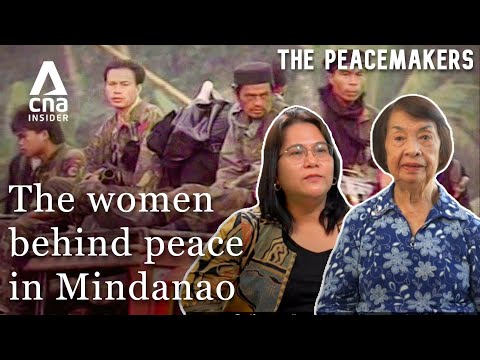
The 40-year War In Mindanao, And The Women Who Helped End It | The Peacemakers - Ep 2/3
Negotiations and Historical Context of the Moro Conflict
Clandestine Talks and Security Concerns
- The Mal press Corp was unaware of secret negotiations, highlighting the sensitive nature of discussions involving rebel leaders.
- Presidential security teams took precautions, including having guards ready to protect against potential threats during these talks.
- There was a mutual risk for both parties involved in the negotiations, as trust issues could arise at any moment.
Historical Background of the Moro People
- The indigenous Muslim population in Mindanao has faced displacement due to Christian settlers moving southward since colonial times. This has led to significant land disputes and tensions.
- Religious conflicts have escalated between Catholics and Muslims, exacerbating historical grievances over territory and identity.
Personal Narratives Amidst Conflict
- A personal account reveals familial pressure regarding religious practices amidst ongoing violence between Christians and Muslims, illustrating the societal impact of conflict on individual lives.
Violence and Martial Law in the Philippines
Government Actions During Martial Law
- The massacre of civilians was perpetrated not only by militia groups but also by military forces, leading to accusations of genocide against the government.
- The Moro National Liberation Front (MNLF) emerged in response to oppression, seeking independence for Mindanao amid widespread violence during martial law declared by President Marcos.
Impact on Society
- Martial law resulted in indiscriminate killings and detentions exceeding 10,000 individuals within nine years, significantly affecting civilian life across the nation.
- Armed forces were deployed heavily into Mindanao to combat insurgency efforts from various groups like MNLF, resulting in mass casualties among civilians.
The Struggle for Independence
Emergence of Factions
- Despite peace agreements being signed between government forces and MNLF, fighting continued due to emerging factions like the Moro Islamic Liberation Front (MILF), which splintered from MNLF with differing ideologies about their struggle for independence.
Resistance Strategies
- MILF adopted guerrilla warfare tactics as they recognized their inability to defeat government forces conventionally due to resource disparities; this led them to focus on resilience rather than outright victory through traditional means.
Path Towards Peace
Negotiation Efforts
- Practical considerations prompted calls for dialogue instead of continued warfare; it was acknowledged that building peace would be less costly than sustaining prolonged conflict.
Role of Women in Peacebuilding
Ceasefire Implementation and Peace Negotiations
Personal Motivation and Involvement
- The speaker shares their deep involvement in the ceasefire agreement, inspired by their father's advocacy for justice and a liberal perspective.
- They were part of the Mindanao People's Campaign, actively calling for negotiations to end the conflict.
Context of Peace Efforts
- The speaker emphasizes their dual role as both a reporter and a stakeholder from IND, highlighting the importance of local perspectives in peace efforts.
- A period of relative peace in 2001 fostered hope among communities, but this was shattered by unexpected government actions during a significant Muslim holiday.
Betrayal and Conflict Escalation
- The government's attack on the M Bo complex was perceived as a betrayal, undermining trust built during negotiations.
- The frustration felt by the MF (Moro Front) is palpable; they were misled into believing peace was imminent while facing military aggression.
Calls for Action
- Following these events, there was an urgent need to convince both sides to agree on a ceasefire; this led to direct engagement with MF leadership.
- The speaker organized the "Mothers for Peace" campaign, emphasizing that women bear the brunt of war's consequences and advocating for dramatic action to halt hostilities.
Role of Civil Society in Peace Processes
- This peace process differed from previous ones due to active involvement from civil society organizations and international monitoring teams.
- Acknowledging hardliners on both sides necessitated third-party intervention respected by all parties involved.
Political Engagement and International Relations
Transitioning Roles
- After serving two terms in Congress, the speaker joined the Bangsamoro peace panel as a lawyer representing armed groups.
- They engaged with Japan's Foreign Affairs Ministry to facilitate international support for monitoring ceasefire agreements.
Challenges Post-Ceasefire Agreement
- Despite initial successes, violations of ceasefire agreements led to significant declines in compliance rates among armed groups.
Leadership in Peace Negotiations
- Appointed chair of the M peace negotiating panel in 2003, they aimed to transition from civil advocacy to governmental oversight regarding internal conflicts.
Key Milestones Achieved
- A pivotal moment came with the signing of the Memorandum of Agreements on Ancestral Domains (MOA AD), which recognized Bangsamoro people's rights over their homelands.
Signing of the MOA-AD: A Turning Point
Initial Excitement and Subsequent Disappointment
- The anticipation surrounding the signing of the Memorandum of Agreement on Ancestral Domain (MOA-AD) was high, with international media and dignitaries expected to attend.
- Upon landing in Cotabato, news broke that the Supreme Court deemed the MOA-AD unconstitutional, leading to a sense of uncertainty about future actions.
Addressing Misconceptions and Engaging Stakeholders
- There was significant resistance from predominantly Christian areas against joining the autonomous region proposed under the MOA-AD. This necessitated efforts to recalibrate discussions with stakeholders.
- Proposals were made to engage various community leaders and churches to clarify misconceptions about the agreement, emphasizing that it would not force Christians out of their homes.
The Role of International Support
- The establishment of an International Contact Group (ICG) emerged from a lack of trust in government negotiations under President Arroyo; this group included both states and NGOs for broader support.
- The ICG aimed to ensure compliance with any agreements reached between conflicting parties, highlighting its unique composition as a blend of governmental and non-governmental entities.
Transitioning Leadership Under President Aquino
- With President Aquino's administration beginning in June 2010, he quickly formed a peace panel composed mainly of civil society members rather than traditional political figures or military leaders. This shift indicated a commitment to resolving conflicts through dialogue rather than force.
- When asked by President Aquino to serve as his adviser on peace processes, there was optimism regarding potential progress due to his willingness to engage directly with all parties involved.
Direct Engagement Between Leaders
- Discussions around autonomy revealed that demands exceeded constitutional allowances, prompting considerations for constitutional amendments—a complex issue given political constraints.
- A pivotal moment occurred when President Aquino agreed to meet face-to-face with Moro Islamic Liberation Front (MILF) Chairman Murad Ibrahim; this personal engagement signaled serious intent from both sides despite inherent risks involved in such high-stakes negotiations.
Secrecy in Negotiations
- Meetings between insurgent leaders and government officials often took place discreetly, away from public scrutiny, particularly during sensitive discussions like those involving President Aquino at Narita Airport in Japan—this approach aimed at minimizing speculation about negotiation outcomes.
Positive Outcomes from Key Meetings
- Following initial apprehensions during meetings between President Aquino and Chairman Murad Ibrahim, there was a breakthrough that fostered a more collaborative atmosphere for ongoing negotiations moving forward.
Negotiation Dynamics in Peace Processes
Tensions and Disagreements
- The atmosphere during negotiations was tense, with participants expressing deep disagreement and disgust, leading to people leaving the room.
Role of International Mediators
- The international contact group played a crucial role in persuading parties to close the negotiation round, fostering goodwill and understanding among conflicting sides.
Progress Through Backchanneling
- After initial rejection, serious reengagement occurred through backchannel discussions, focusing on common points that laid the groundwork for future negotiations.
Achieving Consensus
- A significant breakthrough was reached at 3:00 AM when negotiators agreed on ten decision points after intense discussions; emotions ran high as participants recognized their achievements.
Establishing Bangsamoro Identity
- The agreement established a new political entity named Bangsamoro, symbolizing the struggles of its people and acknowledging their identity within the Filipino nation.
Navigating Complex Issues
Detailed Negotiations on Annexes
- Following the main agreement, contentious issues arose regarding annexes that required detailed negotiations on jurisdictional matters and governance structures.
Balancing Diverse Perspectives
- Negotiations involved addressing various controversial topics such as alcohol regulations for non-Muslim communities while maintaining focus on overarching goals amidst heated discussions.
Creative Solutions to Tension
- To alleviate tension during negotiations, creative approaches were employed, such as introducing helium balloons to lighten the mood and foster a more collaborative environment.
Commitment to Genuine Autonomy
Comprehensive Agreement Goals
- The comprehensive agreement aimed for genuine autonomy without war or injustice, emphasizing a collective desire for peace and stability in Mindanao.
Importance of Women's Voices
- For the first time in peace negotiations, women's voices were included; this diversity is seen as essential for creating robust agreements that address complex issues from multiple perspectives.
Building Trust and Hope
Core Functions of Peace Builders
- Effective peace builders focus on building hope and trust within communities; these elements are vital for encouraging collective action towards lasting peace.
Community Investment in Peace Process