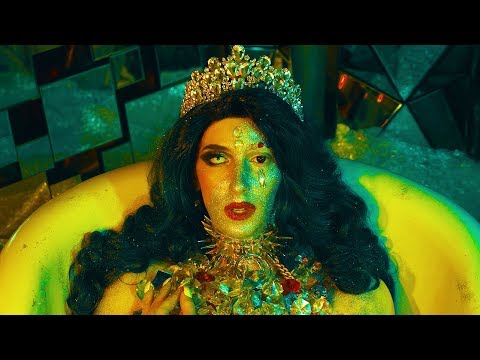
Opulence | ContraPoints
The Aesthetic Pleasures of Life
Introduction to the Speaker's Perspective
- The speaker addresses an audience, humorously acknowledging their judgment and presenting a request to share their life story before facing consequences.
Childhood Memories and Aesthetic Appreciation
- The speaker reminisces about growing up in Washington, D.C., highlighting the National Museum of Natural History as a significant childhood attraction.
- They express a passion for gemstones over fossils, leading to the creation of a personal gem collection that includes amethyst, quartz, and jade.
The Complexity of Taste
- The speaker reflects on how aesthetic sensibility evolves with age, noting that societal influences shape one's taste and preferences.
- They describe their experiences in Northern Virginia's McMansion culture, contrasting their modest upbringing with ostentatious displays of wealth.
Opulence: Symbols and Social Context
Understanding Opulence
- The speaker asserts that opulence is more than mere aesthetics; it carries social significance and communicates messages about power and success.
Cultural References to Wealth
- They discuss how figures like Donald Trump use opulence to project success, likening it to historical symbols of power from pharaohs to modern-day leaders.
American Dream Narratives
- The concept of the American dream is explored through cultural references such as "The Great Gatsby," emphasizing how wealth symbolizes achievement in society.
Hip Hop Culture and Wealth Celebration
Hip Hop as a Reflection of Success
- The speaker highlights hip hop culture as a celebration of success for individuals from challenging backgrounds, countering stereotypes about its portrayal in conservative narratives.
Pop Culture's Obsession with Wealth
- They note that flaunted wealth permeates pop culture, critiquing the superficiality while simultaneously embracing this aspect as part of contemporary identity.
The Illusion of Wealth and Opulence
The American Dream and Social Inequality
- The speaker emphasizes that while the American dream is theoretically accessible to all, in reality, it remains unattainable for most people. This highlights a significant disparity in wealth distribution.
- The concept of wealth is critiqued; the speaker questions the meaning of being rich if it necessitates the existence of poverty, suggesting that societal structures are built on inequality.
Fantasy vs. Reality
- The speaker expresses a desire for ownership over everything, revealing a longing for material wealth that contrasts with their actual circumstances. This reflects a broader human tendency to fantasize about abundance.
- To cope with this lack of ownership, individuals often create illusions or façades to feel valuable and accepted within society, despite not possessing true wealth.
Understanding Opulence
- Opulence is defined as an aesthetic rather than an actual state of abundance; it represents the illusion of having everything. This notion has been popularized through cultural references like "Paris Is Burning."
- Ballroom culture exemplifies this fantasy where participants embody opulence through performance art, showcasing how marginalized communities create beauty and glamour from limited resources.
Realness and Cultural Appropriation
- The term "realness" originates from ballroom culture but has evolved into a more superficial understanding among mainstream audiences. It originally conveyed deeper social issues such as racial justice and class inequality.
- Realness serves as a disguise reflecting societal injustices; it's not merely about appearance but also about challenging perceptions regarding identity and opportunity.
The Allure of Luxury in Society
- Interest in '80s ballroom culture resurfaces due to its portrayal of aspirational lifestyles amidst systemic barriers, emphasizing Americans' desire to experience luxury even when they cannot attain it.
- Las Vegas epitomizes this phenomenon by creating environments that simulate opulence while exploiting visitors’ desires for luxury experiences without genuine financial gain.
Personal Reflections on Gambling
- The speaker shares personal anecdotes about gambling experiences that highlight both excitement and despair associated with fleeting luck in casinos—symbolizing broader themes around risk-taking in pursuit of wealth.
- A vivid description captures the emotional toll gambling can take on individuals, illustrating how desperation can overshadow any semblance of opulence or success.
America's Class Divide and the Illusion of Opulence
The Grift of the American Dream
- The speaker critiques America as a "bad country," highlighting how individuals in desperate situations, like those in wheelchairs with IV drips at casinos, symbolize the darker side of pursuing wealth.
- Donald Trump is characterized as embodying a Vegas-style grift that captivates Americans, suggesting that the allure of opulence overshadows economic inequality.
Two Types of Magic: Wealth vs. Marginalization
- The speaker distinguishes between two forms of opulence: for the wealthy, it serves as a display of power; for marginalized groups, it represents unattainable wealth and status.
- A metaphor comparing opulence to a viper versus a butterfly illustrates how appearances can be deceiving regarding class dynamics.
Class Analysis and Modern Relevance
- The speaker expresses difficulty relating Marxist class analysis to contemporary society, questioning traditional definitions of bourgeoisie and proletariat.
- Personal anecdotes reveal confusion about class identity in modern contexts, such as bartenders who own their bars or YouTubers blurring class lines.
Paul Fussell's Insights on Class Structure
- Reference to Paul Fussell’s book "Class: A Guide Through the American Status System" introduces nine distinct classes based on social status rather than just economic relations.
- Fussell emphasizes cultural capital—education, style, taste—as critical indicators of class distinction beyond mere financial wealth.
Upper Class vs. New Money Dynamics
- The notion that true upper-class status comes from inherited wealth is discussed; those who work for their money are seen as less secure in their social standing.
- A quote from Lord Melbourne highlights perceived flaws within middle-class pretensions compared to higher and lower classes' authenticity.
Opulence and Its Cultural Implications
- Discussion on how ostentatious displays of wealth often come from those trying to prove themselves—both marginalized performers and new rich individuals.
- Trump's appeal is analyzed through his embodiment of "poor people's idea" of richness; he represents an intersection where vulgarity meets mass relatability.
Old Money Values vs. New Money Showmanship
- Contrast between old-money aristocrats valuing privacy versus new-money flaunting wealth suggests a shift in societal values regarding class.
- Observations about old-money survival skills highlight caution against drawing attention due to potential envy or backlash from society.
The Evolution of Aesthetic Taste and Class
The Shift in Class Perception
- The traditional class system is fading, replaced by a mindset where wealth dictates status: "If you've got it, flaunt it" .
- This shift may disappoint those who value class and taste but is seen as positive by some, including unconventional figures like a "tacky transsexual rhinestone connoisseur" .
Critique of Aesthetics
- The speaker acknowledges the common critiques of opulence related to inequality but questions if aesthetics can be reduced solely to economic analysis or social justice perspectives. They reference the need for enjoyment in art despite its flaws .
- Citing a notable art critic, they emphasize that one can appreciate media while being critical of its problematic aspects, suggesting a duality in engagement with art .
Philosophical Perspectives on Beauty
- The discussion touches on Kant's idea of disinterested aesthetic taste—appreciating beauty without material desire—and contrasts this with Plato’s views on beauty stemming from physical attraction to bodies .
- The speaker humorously reflects on the struggles faced by historical philosophers regarding their repressed desires and how this impacts their understanding of aesthetics. They highlight Oscar Wilde's perspective that finding beauty in beautiful things signifies cultivation and hope for society .
Power Dynamics in Taste
- From a sociological viewpoint, taste is closely linked to power dynamics; museums present objects as art under specific contexts that influence perceptions of value and beauty. This contrasts with retail environments where aesthetic pleasure is tied to consumerism .
- The example of Beyoncé and Jay-Z's music video "Apesh*t" illustrates how cultural representation within prestigious spaces like the Louvre challenges racial disparities in art appreciation and ownership .
Historical Misconceptions about Art
- There’s an exploration into the misconception surrounding classical statues' whiteness, which was historically viewed as an ideal but has been revealed to be inaccurate due to paint remnants found on these sculptures. This reflects deeper societal biases equating whiteness with beauty .
- Margaret Talbot discusses how this dogma persists due to cultural tendencies that associate color with sensuality rather than classical ideals, highlighting ongoing issues within art history narratives .
Art, Taste, and Identity: A Discussion on Aesthetic Values
The Intersection of Art History and Identity Politics
- Some art historians face harassment from the Alt-Right for challenging white supremacist narratives about antiquity. This reflects a broader issue of identity politics in art history.
- There exists a prejudice against colorful aesthetics among upper and middle-class white individuals, often expressed through disdainful terms like "gaudy" or "tacky." This indicates a cultural bias towards conservative tastes.
- Jo Weldon highlights that the term "tacky" is often associated with femininity, ethnicity, queerness, and non-conformity to traditional masculine standards. It suggests that aesthetic excess can be seen as liberating rather than negative.
Camp Aesthetics and Cultural Critique
- The concept of camp was prominent at this year's Met Gala, sparking debates about its definition among intellectual circles. The speaker critiques the notion of "coward camp," which embraces bad taste as a shield against criticism.
- Susan Sontag's distinction between naive and deliberate camp emphasizes that true camp is often unintentional—a failed seriousness that becomes absurdly beautiful. This perspective challenges the idea of intentionally bad taste as valid artistic expression.
Personal Reflections on Taste
- The speaker expresses pride in their aesthetic choices despite being labeled as having "bad taste." They reference John Waters' idea that understanding bad taste requires an appreciation for good taste, suggesting complexity in personal style preferences.
- Reflecting on their attraction to what might be considered bad taste, the speaker connects it to their identity as a transsexual individual navigating class dynamics within society. This personal narrative illustrates how identity shapes aesthetic preferences and social standing.
Glamour: Magic vs Opulence
- The discussion transitions to glamour's origins in magic (gramarye) versus its contemporary association with wealth and opulence. Terre Thaemlitz critiques how modern definitions of glamour serve capitalist ideologies rather than genuine enchantment or transformation.
- Thaemlitz argues that glamour perpetuates social hierarchies by offering an illusion of upward mobility without addressing systemic inequalities—highlighting the American dream's superficial promise of success through individualism rather than collective betterment.
Personal Journey Through Gender Identity
- The speaker shares their own journey from being a troubled individual to finding empowerment through self-expression on YouTube, illustrating how personal struggles intersect with broader themes of gender identity and societal expectations around aesthetics and glamor. Their past experiences remain painful yet formative in shaping their current identity narrative.
Reflections on Transition and Glamour
Struggles During Transition
- The speaker reflects on their journey, noting the challenges faced during the initial months of transition, including being ridiculed in public spaces.
- Despite outward confidence, they experienced deep emotional pain from cyberbullying as a YouTuber, with strangers critiquing their appearance and identity.
Coping Mechanisms and Personal Growth
- The pain from bullying motivated the speaker to focus intensely on self-improvement, likening it to a life-or-death situation.
- They clarify that while passing (being perceived as cisgender) was a goal, their approach to glamor is not solely about passing but rather an artistic expression.
Perceptions of Gender Presentation
- The speaker discusses how makeup can lead to different perceptions; for cis women, it's often seen as an interest in beauty, whereas for them it can be viewed as drag.
- They identify themselves as a "female impersonator," emphasizing that their presentation is both fun and creatively fulfilling.
Critique of Glamour in Trans Narratives
Disillusionment with Glamour
- Quoting Terre Sprinkles, the speaker highlights how glamor can mask the realities of transgender bodies and experiences.
- There’s growing resentment among trans women towards glamorous representations in media and social platforms, reflecting broader discontent with societal expectations.
Representation Issues
- Another quote from Terre emphasizes that public acceptance for MTF individuals often hinges on unrealistic beauty standards that many women do not meet.
- Many trans women express frustration over constantly having to present a fantasy version of themselves instead of being accepted for who they are.
The Complexity of Envy and Success
Understanding Envy through Glamor
- John Berger's perspective on glamor suggests that being envied creates a false sense of happiness which ultimately leads to isolation.
- The risks associated with opulence include attracting envy alongside admiration; this necessitates careful management of one's public image.
Public Relations Strategies
- Successful individuals often engage in strategies like charitable donations or relatable narratives (e.g., rags-to-riches stories), which help mitigate feelings of exclusion or elitism.
Case Studies: Jeffree Star vs. Gigi Gorgeous
Comparing Public Reception
- The speaker contrasts two prominent YouTubers—Jeffree Star and Gigi Gorgeous—highlighting similarities yet noting differing public perceptions regarding relatability.
Audience Engagement Dynamics
- Gigi's 2017 video "I Wear Walmart for a Week" serves as an example where audience engagement did not resonate positively compared to Jeffree Star's content.
Analysis of Gigi's Walmart Experience
Introduction to the Walmart Visit
- The video begins with a critique of Gigi's unfamiliarity with Walmart, suggesting it reflects her upper-middle-class upbringing. This sets a tone of irony regarding her experience.
- The notion of treating a trip to Walmart as an adventure is perceived as elitist, hinting at a disconnect from everyday experiences faced by many Americans.
Observations and Reactions
- Gigi humorously comments on the chaos around her, including a baby crying and her struggles with the shopping cart, which adds to the comedic aspect of the video.
- A notable moment occurs when Gigi whimsically considers purchasing a gown for a red carpet event while in Walmart, highlighting her naivety and privilege.
Cultural Commentary
- The narrator describes Gigi’s behavior as "naive camp," emphasizing that she seems unaware of her privileges compared to others who shop at Walmart. This perspective invites viewers to reflect on class disparities.
- In contrast, Jeffree Star's similar content receives more favorable public perception due to his relatable backstory and connection with ordinary people, particularly women who admire his self-made narrative.
Gender Dynamics in Public Perception
- The discussion shifts towards gender dynamics in how wealthy individuals are perceived; rich women like Gigi may be viewed more negatively than their male counterparts like Jeffree Star due to societal biases.
- Jeffree’s appeal lies in his ability to connect with fans through shared experiences despite his wealth, making him aspirational rather than alienating. His background story resonates well with audiences seeking relatability amidst wealth disparity.
Economic Inequality Reflections
- The narrator discusses how economic inequality allows society to still idolize wealthy figures like Jeffree Star while critiquing elitism; this duality complicates public sentiment towards wealth and class issues.
- As inequality grows, there is concern that admiration for wealthy influencers could shift into resentment if their lifestyles become too disconnected from everyday struggles faced by average people. This could lead to social unrest or revolutionary sentiments against the elite class.
Conclusion: Gothic Horror and Class Commentary
- The video transitions into discussing gothic horror tropes related to aristocracy and decay, drawing parallels between historical narratives about wealth and modern perceptions of economic disparity through cultural lenses such as literature and media aesthetics.
The Gothic Aesthetic of Decaying Opulence
The Backstory of Victorian Mansions
- The trope of decaying Victorian mansions stems from the Gilded Age, where a new wealthy class built extravagant homes that later fell into disrepair during the Great Depression.
- These abandoned mansions became associated with hauntings and decay, leading to a Gothic aesthetic that reflects current societal issues like inequality and social unrest.
Modern Reflections on Abandonment
- The idea of decaying opulence raises questions about contemporary society; as economic conditions worsen, will we see a new Gothic aesthetic in places like abandoned shopping malls?
- Dan Bell's "Dead Mall" series explores this theme by documenting the ruins of once-thriving shopping centers, such as the Owings Mills Mall near Baltimore.
The Rise and Fall of Owings Mills Mall
- Opened in 1986 with high-end stores like Macy's and Saks Fifth Avenue, the mall gained notoriety after a tragic murder in 1992 led to its decline.
- By 2015, only five out of 155 original stores remained, showcasing an emotional landscape filled with nostalgia and sadness for many viewers.
Emotional Responses to Abandonment
- Viewers express various emotions while watching Dan Bell’s videos: nostalgia, rage at wastefulness, creepiness, or dark humor regarding societal changes.
- The final video features post-apocalyptic footage that evokes reflections on consumerism and what remains after such spaces decay.
Philosophical Musings on Consumerism
- Questions arise about the significance of crumbling retail spaces; what do they symbolize in terms of aspirations and material desires?
- The discussion shifts towards personal anecdotes mixed with humor but ultimately reflects deeper societal critiques surrounding consumer culture.