Nutrición en invertebrados
Nutrition in Animals: Understanding Invertebrate Digestion
Overview of Animal Nutrition
- The video introduces the concept of nutrition in animals, contrasting it with other kingdoms of nature.
- Animals are classified as heterotrophs, meaning they cannot produce their own food and must obtain it from their environment.
Types of Nutritional Processes in Invertebrates
- Three main types of nutrition in invertebrates are discussed:
- Nutrition without a digestive system.
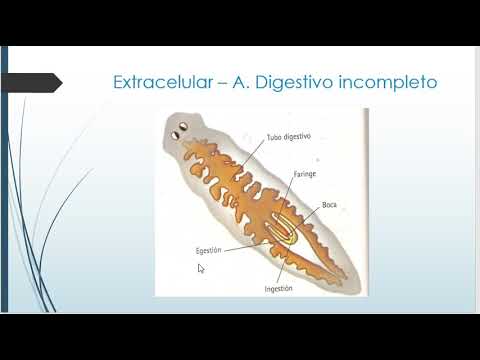
- Nutrition with an incomplete digestive system (sac-like).
- Nutrition with a complete digestive system (tube-like).
Digestion Without a Digestive System
- Sponges exemplify organisms that lack a true digestive system; they utilize diffusion through canal networks for nutrient absorption.
- The incomplete digestive system allows for one opening for both ingestion and egestion, seen in organisms like cnidarians.
Intracellular vs. Extracellular Digestion
- Intracellular digestion occurs in organisms without a proper digestive tract, such as sponges.
- Extracellular digestion is present in animals with either incomplete or complete systems, like flatworms (incomplete) and arthropods (complete).
Detailed Mechanisms of Invertebrate Digestion
Sponges' Nutritional Process
- Sponges filter water through pores to extract nutrients and oxygen using specialized cells called choanocytes.
- Nutrients diffuse into cells while waste products exit through the osculum.
Planarians' Digestive System
- Planarians have an incomplete digestive system with one opening serving both functions; they consume prey via pharyngeal action.
- After ingestion, nutrients are absorbed within the gastrovascular cavity before waste is expelled through the same orifice.
Arthropods' Complete Digestive Process
- Arthropods possess mandibles to capture food which then travels through various organs including the esophagus, crop (buche), gizzard (molleja), stomach, and intestines for digestion and nutrient distribution.
Mollusks' Unique Features
Digestive Process in Annelids
Overview of Annelid Digestion
- The digestive process in annelids involves a complete digestive system, with distinct differences noted within their apparatus.
- Food enters through the mouth and moves to the pharynx, which is muscular and helps suction food into the esophagus.
- The esophagus transports food to the crop (buche), where it is moistened before moving to the gizzard (molleja).
- In the gizzard, food is ground down; this processed food then travels to the intestines for nutrient absorption.
- Waste products are eventually expelled from the body through the anus, completing the digestive cycle.
Nutritional Classification
- All three discussed animals exhibit extracellular nutrition with a complete digestive system but show variations in their digestive structures.