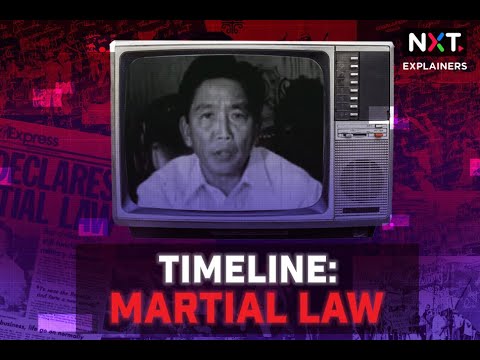
Timeline: Mga nangyari noong Martial Law | NXT
Martial Law in the Philippines: A Historical Overview
The Declaration of Martial Law
- The discussion begins with the declaration of Martial Law by former President Ferdinand Marcos on September 23, 1972, marking a significant event in Philippine history.
- On the first day of Martial Law, numerous public utility companies were shut down, including those providing electricity and transportation services. Approximately 400 media outlets were also closed, notably ABS-CBN.
Impact on Media and Civil Society
- The closure of media outlets led to a significant reduction in press freedom; some broadcasting companies remained operational but were closely tied to Marcos' cronies.
- Channel 2 was taken over by other entities but not by ABS-CBN. Key critics of Marcos were arrested shortly after the declaration.
Human Rights Violations
- Within just one day of declaring Martial Law, around eight thousand civilians were reported detained, including journalists and opposition members from the Constitutional Convention.
- The context for this crackdown included civil unrest following protests against Marcos' administration that began with his controversial election victory in 1969.
Protests and Public Response
- Protests escalated during what was known as the "First Quarter Storm," leading to violent confrontations between protesters and government forces.
- The elections of 1969 are described as highly contentious, setting a backdrop for increased political tension and subsequent protests.
Justification for Martial Law
- Marcos justified his declaration by citing threats from communist groups and alleged attacks on government officials. This narrative was used to legitimize military action against dissenters.
Military Control and Suppression
- Following the declaration, there was an increase in military presence aimed at suppressing any form of resistance or protest against the regime.
- Reports indicate that many individuals who opposed or criticized the regime faced severe repercussions under martial law.
Societal Changes Under Martial Law
- During martial law (1972–1977), curfews were imposed which citizens initially welcomed due to reduced noise levels; however, this came at a cost to democratic institutions.
Restrictions on Freedoms
- Various restrictions were placed on personal freedoms; long hair for men became taboo while certain games deemed violent were banned.
- Popular anime shows like "Voltes V" faced censorship due to their perceived violent content.
Human Rights Abuses Documented
- Significant human rights violations occurred during this period: approximately 70,000 arrests without warrants took place alongside thousands being killed or disappeared.
The Marcos Era and Its Aftermath
Overview of Martial Law Declaration
- Discussion on the declaration of martial law in the Philippines, highlighting its impact on various sectors, including water management and documentation related to victims' rights.
- Reference to an interview with President Bong Marcos regarding the rationale behind declaring martial law, aimed at combating communist insurgencies and armed groups.
Duration and Consequences of Martial Law
- Clarification that martial law was not declared for personal gain but as a response to perceived threats; it lasted several years until the snap elections in 1986.
- Establishment of the Presidential Commission on Good Government post-martial law, tasked with recovering ill-gotten wealth from the Marcos family both locally and abroad.
Justice and Recovery Efforts
- Emphasis on justice through recovery efforts targeting ill-gotten wealth accumulated during the Marcos regime, indicating challenges faced after 1986.
Current Political Climate
- Reflection on how historical narratives are being reshaped in contemporary politics, particularly concerning social media's role in disseminating information about martial law.