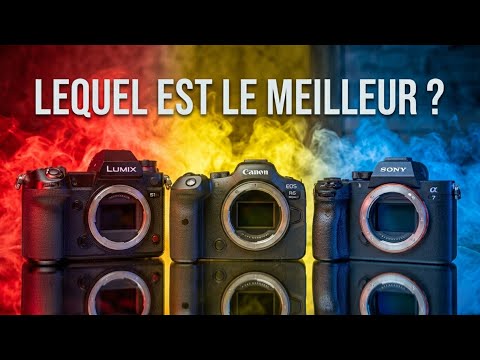
Canon R6III - Sony A7V - Lumix S1II - COMPARATIF
Introduction to Canon R6 Mark 3 Review
Overview of the Video Format
- The review features three contributors discussing the Canon R6 Mark 3, comparing it with other models like the R6 Mark 2, Canon C50, Sony A75, and Lumix S1 Mark 2.
- The video aims to provide a comprehensive analysis despite challenges in content production due to adverse weather conditions.
Equipment and Support
- The Canon R6 Mark 3 was provided by IPLN.fr along with an RF2405 F4 lens for testing purposes. Viewers are encouraged to support the channel through purchases using a creator code.
Ergonomics and Design Features
Body Specifications
- The Canon R6 Mark 3 features a stabilized sensor with 32.5 million pixels and retains much of the body design from its predecessor, with minor modifications such as a new color button for film simulation.
- It includes a full-size HDMI port and weighs approximately 609 grams, equipped with a rotatable screen and an OLED viewfinder.
Comparison with Competitors
- While maintaining classic ergonomics, the R6 Mark 3 shows limited evolution compared to competitors like Sony and Lumix which have introduced more modern features such as improved screens and card slots.
Software Interface
Menu Systems
- Each brand has distinct menu systems: Canon's is user-friendly but can be confusing at times; Lumix offers clear organization especially for video settings; Sony's menus remain complex despite improvements over time.
Battery Life Assessment
Performance Metrics
- Canon claims an autonomy of about 620 shots in photo mode; however, real-world tests show significant limitations in video recording capabilities compared to competitors like Sony A75 which achieved over two hours of continuous recording in similar conditions.
Heat Management During Use
Overheating Issues
- In testing at ambient temperatures while recording in 4K50, overheating occurred after approximately one hour on the Canon R6 Mark 3, leading to shutdown due to high temperatures. This contrasts sharply with performance from competitors that showed no signs of overheating during longer sessions.
ISO Performance Analysis
Low-Light Capabilities
- All three cameras feature dual base ISO settings; however, results indicate that while they perform well up to certain thresholds (e.g., ISO 12800), noise levels vary significantly among them—with Sony showing superior low-light performance overall.
Stabilization Techniques
Effectiveness Across Models
- Testing revealed that while all three cameras offer stabilization features, Lumix consistently outperformed both Canon and Sony under various conditions—especially when utilizing electronic stabilization modes which resulted in smoother footage even at higher crops.
Autofocus Capabilities
Comparative Analysis
- The autofocus system on the Canon R6 Mark 3 remains effective but does not incorporate newer technologies found in other models like the Sony A75 which demonstrated superior tracking abilities during tests involving moving subjects or obstacles. Overall performance varied across different scenarios tested among all brands involved.
Autofocus and Video Performance Comparison of Camera Models
Autofocus Technology Insights
- The autofocus technology in the Canon R62 and R63 models remains unchanged, which is disappointing as there was an opportunity for improvement. Both models perform well in photo and video settings.
- Compared to Sony cameras, Canon's autofocus struggles with "pumping" issues during video recording, leading to a slight disappointment in performance.
- The Lumix S12 shows significant improvements in object tracking and human detection, making it a strong contender for wedding videography.
Video Specifications Overview
- The Canon R63 offers impressive specs including 7K 30fps RAW, 4K 120fps full-frame options, but lacks RAW capabilities in 4K.
- The Lumix S1 Mark II provides extensive codec options and frame rates but does not support internal RAW recording.
- Sony A75 features high-quality 4K options but has limitations such as crop factors when shooting at higher frame rates.
Comparative Analysis of Camera Features
- Lumix stands out with the most extensive catalog of codecs and frame rates available for video users.
- Sony maintains a reliable offering with solid quality across its specifications but lacks some advanced features like open gate or internal RAW.
- Canon positions itself as a versatile option with balanced features for both photography and videography.
Photography Capabilities Discussion
- Weather conditions hindered thorough testing of photography capabilities; however, the R63 boasts impressive burst shooting speeds up to 40 fps on a 32.5 MP sensor.
- Notably, after continuous shooting bursts, the camera requires downtime to clear its buffer before resuming use.
Performance Under Pressure
- Sony's new stacked sensor allows for sustained performance with unlimited mechanical shutter bursts while maintaining usability even after reaching buffer limits.
- The R6 Mark III excels in speed but suffers from overheating issues that limit prolonged usage during intensive tasks.
Conclusion: Differentiating Camera Philosophies
- Each camera brand presents unique strengths: Canon focuses on versatility; Sony emphasizes reliability; Lumix targets video-centric users while providing decent photo capabilities.
- Despite lacking groundbreaking innovations, Sony’s A75 excels in ISO performance and overall reliability—key factors for professional use cases like weddings or events.
This structured overview captures key insights from the transcript regarding autofocus technologies, video specifications, comparative analysis among different camera brands' offerings, photography capabilities under various conditions, and concludes with reflections on each brand's philosophy towards their products.