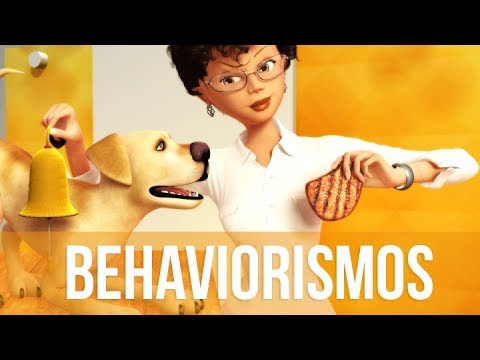
BEHAVIORISMO (1): METODOLÓGICO E RADICAL
Understanding Behavioral Psychology
The Influence of Social Environment on Behavior
- Discussion begins on why certain behaviors are repeated and how social environments influence conduct, highlighting the factors that favor learning.
- Introduction to behaviorism in psychology, noting its scientific application starting in the early 20th century with key figures like John Watson and B.F. Skinner.
Key Figures in Behaviorism
- Overview of methodological behaviorism led by John Watson, who focused on observable behaviors rather than internal phenomena like thoughts and emotions.
- Introduction to radical behaviorism by B.F. Skinner, which studies operant behavior and does not exclude thoughts or emotions from analysis.
Types of Conditioning
Reflexive Conditioning
- Explanation of reflexive conditioning as involuntary actions (e.g., salivation), primarily studied through classical conditioning methods.
- Example provided: food as a stimulus causing salivation in dogs; introduction of a neutral stimulus (bell) leading to conditioned responses over time.
Operant Conditioning
- Shift to operant conditioning where an organism emits a voluntary behavior (e.g., telling a joke), followed by consequences that reinforce or discourage the behavior.
- Emphasis on how positive reinforcement increases the likelihood of repeating behaviors based on their outcomes.
Comparing Reflexive and Operant Conditioning
- Distinction made between reflexive conditioning (stimulus-response model) and operant conditioning (behavior-consequence model).
- Noted that Skinner's approach includes studying thoughts and emotions as behaviors rather than mental processes, contrasting with traditional views.
Understanding Behavior Through Actions
- Skinner’s perspective is highlighted: he considers thoughts and emotions as behaviors needing explanation rather than causes for actions.