Digital Signature Algorithm (DSA) - Cryptography - Practical TLS

Digital Signature Algorithm (DSA) - Cryptography - Practical TLS

Digital Signature Algorithm Overview

In this section, the Digital Signature Algorithm (DSA) is introduced and compared to other asymmetric encryption algorithms like RSA and Diffie-Hellman.

RSA Algorithm Functionality

  • The RSA algorithm involves creating a pair of keys for encryption, decryption, and signatures.

DSA Specifics

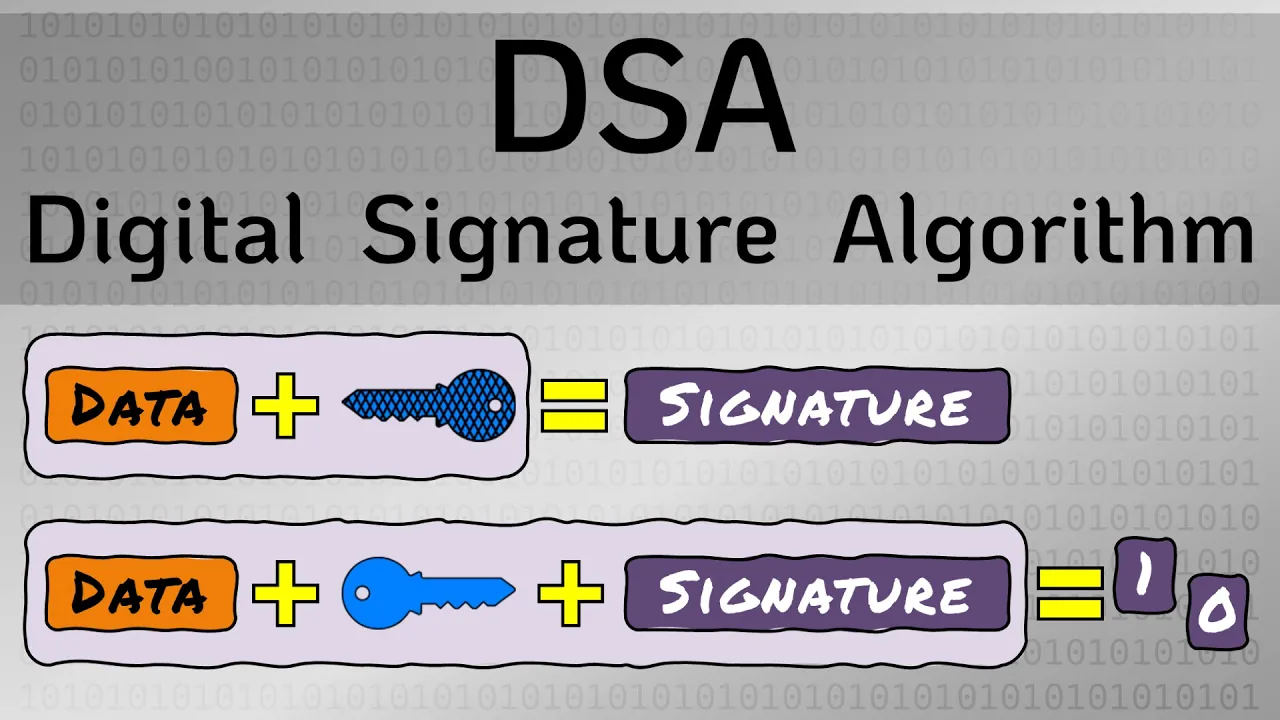
  • DSA can only be used for signature generation and verification.

Signature Generation Process

  • DSA signature generation requires the message, private key, random number, and specific parameters.

Signature Verification Operation

  • For signature verification in DSA, the message, public key corresponding to the private key used for signing, signature itself, and DSA parameters are needed.

Importance of Unique Random Numbers in DSA

This part emphasizes the critical role of unique random numbers in ensuring the security of the Digital Signature Algorithm.

Unique Random Number Importance

  • Reusing random numbers in DSA can lead to catastrophic failures by exposing private keys.

Mitigating Duplicate Random Numbers

  • Solutions include using sufficiently large random numbers or employing RFC 6979 for deterministic random number generation based on the message being signed.

Key Takeaways on Digital Signature Algorithm

Summarizing essential points about the Digital Signature Algorithm (DSA) and its distinct features compared to other asymmetric encryption protocols.

Main Points on DSA

  • DSA is solely for signature generation and verification purposes.
Video description

The Digital Signature Algorithm (DSA) is an Asymmetric Encryption algorithm... but it's different from the other Asymmetric Encryption algorithms we've discussed (RSA & DH). DSA has only two functions: Signature Generation and Signature Verification. It cannot do Encryption, it cannot do Decryption, it cannot do a Key Exchange. It's use is purely creating and verifying Signatures, which provides Integrity and Authentication to what is signed. This lesson is a free sample lesson from the the greatest TLS and SSL training course ever created. No instructor rambling on about pointless stories. No slides with massive walls of text. No time wasting. Only simple, effective, and precise explanations. Complimented with practical illustrations and visuals. 🔐 More details about the course: https://classes.pracnet.net/courses/practical-tls 🏢 Do you configure or troubleshoot TLS/SSL for work? If so, I'm willing to bet your employer would happily pay for this SSL training. Reach out if you'd like to coordinate an introduction for a bulk license purchase with your company. I'm happy to provide a generous referral bonus =) 💬 Join Practical Networking Discord https://discord.com/invite/yrexngJ 🖧 Want to learn how how data moves through a network? https://www.youtube.com/playlist?list=PLIFyRwBY_4bRLmKfP1KnZA6rZbRHtxmXi Since you've made it to the bottom of the Description, here's a $100 off coupon code you can use on the full course =) YT100