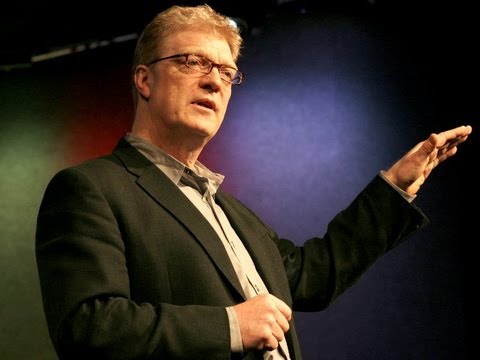
Do schools kill creativity? | Sir Ken Robinson | TED
New Section
The speaker expresses frustration and mentions being arrested, leading to a discussion about various topics.
Frustration and Arrest
- The speaker expresses frustration in Mandarin.
- Three topics are mentioned repeatedly, emphasizing the importance of realization and opportunities.
- Reflection on imperfections and hidden complexities in life is discussed.
- A brief mention of limitations and qualities is made.
- Qualities are further discussed with a hint of inadequacy.
Realization and Creativity
The speaker delves into creativity, education systems, mistakes, and creative capacities.
Creativity and Education Systems
- Discussion on creativity being stifled by education systems.
- Importance of creativity highlighted through personal experiences.
Mistakes and Creative Capacity
- Encouragement for taking chances despite fear of being wrong.
- Critique on how mistakes are stigmatized in education systems.
Hierarchy in Education Systems
Exploration of the hierarchy within education systems worldwide.
Subject Hierarchy
- Mathematics and languages are prioritized over arts globally.
- Arts hierarchy within schools is discussed, emphasizing dance's neglect.
Transitioning Cultures
Personal anecdotes about transitioning between cultures and educational perspectives.
Cultural Transition
- Anecdotes about moving from Stratford to Los Angeles with insights on cultural differences.
What is the Purpose of Public Education?
In this section, the speaker delves into the purpose of public education and its focus on academic success.
The Purpose of Public Education
- Public education aims to produce university professors as the epitome of success.
- University professors are described as living in their heads, detached from their bodies.
- Professors view their bodies merely as a means to transport their heads, showcasing a disconnect from physicality.
The Impact of Academic Ability on Education
This part discusses how academic ability shapes our educational systems and perceptions of intelligence.
Academic Ability Influence
- The education system prioritizes academic ability due to historical ties to industrial needs.
- Academic ability dominates our view of intelligence, leading to misconceptions about talent and value.
- Highly talented individuals may undervalue themselves due to traditional views on academic success.
Rethinking Intelligence in Education
Here, the speaker advocates for reevaluating our understanding of intelligence within educational frameworks.
Rethinking Intelligence
- Degrees are becoming devalued due to an increase in graduates globally.
- Intelligence is diverse, encompassing various ways of thinking and experiencing the world.
Jillian's Journey to Success
The speaker recounts Jillian's journey from being labeled as having a learning disorder to discovering her talent and passion for dance.
Jillian's Early Struggles and Discovery of Talent
- Jillian was perceived as hopeless in school, with signs of a learning disorder.
- In the 1930s, ADHD wasn't recognized, leading to misconceptions about children like Jillian.
- A specialist identified Jillian's potential when she couldn't sit still but moved to music.
Embracing Dance and Achieving Success
- Encouraged to pursue dance, Jillian found her place among others who shared her need to move.
- She auditioned for the Royal Ballet School, leading to a successful career and founding her own company.
Rethinking Human Ecology
The speaker emphasizes the need for reevaluating education systems and nurturing human creativity for a sustainable future.
Reimagining Education for Human Potential
- Proposes adopting a new human ecology concept focusing on human capacity richness.
- Criticizes current education systems for not nurturing children's full potential akin to mining resources.
Cultivating Creative Capacities for the Future
- Urges utilizing human imagination wisely and educating children holistically for an uncertain future.
- Emphasizes seeing children as hope bearers and preparing them to make the most of their creative abilities.
Turn any video into a summary like this
YouTube links, meetings, lectures. With transcripts, search, and chat.