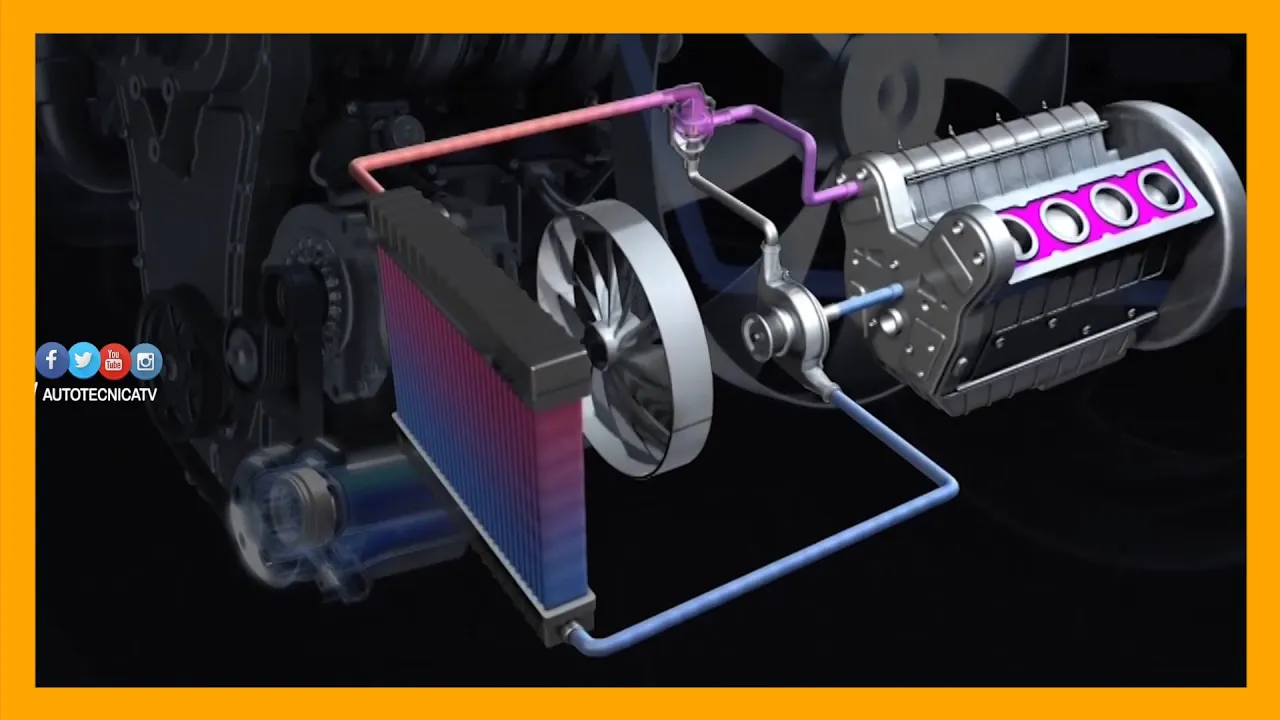
¿Cómo funciona el circuito de enfriamiento del motor de un automóvil?
New Section
The importance of vehicle cooling systems and the components involved in maintaining optimal temperatures are discussed.
Understanding Vehicle Cooling Systems
- Vehicles require proper cooling to manage temperature fluctuations caused by fuel combustion.
- The system of cooling involves components like the coolant, circulation pump, and radiator to regulate heat effectively.
- Key components include the coolant, circulation pump for moving coolant through the engine, and the radiator for heat dissipation.
- Coolant plays a crucial role in absorbing heat generated by the engine due to combustion and friction.
- Regular maintenance of coolant is advised to ensure efficient heat absorption and transfer within the system.
New Section
Detailed discussion on additional components like water pumps, thermostats, hoses, and temperature sensors that contribute to effective vehicle cooling.
Additional Components in Vehicle Cooling Systems
- Water pumps play a vital role in circulating coolant; issues like corrosion can impact their efficiency.
- Thermostats control coolant flow to help engines reach optimal operating temperatures quickly.
- Hoses are essential for transporting coolant within the system; damage can lead to leaks affecting cooling efficiency.
- Temperature sensors monitor engine temperature; malfunctioning sensors can mislead about actual engine conditions.