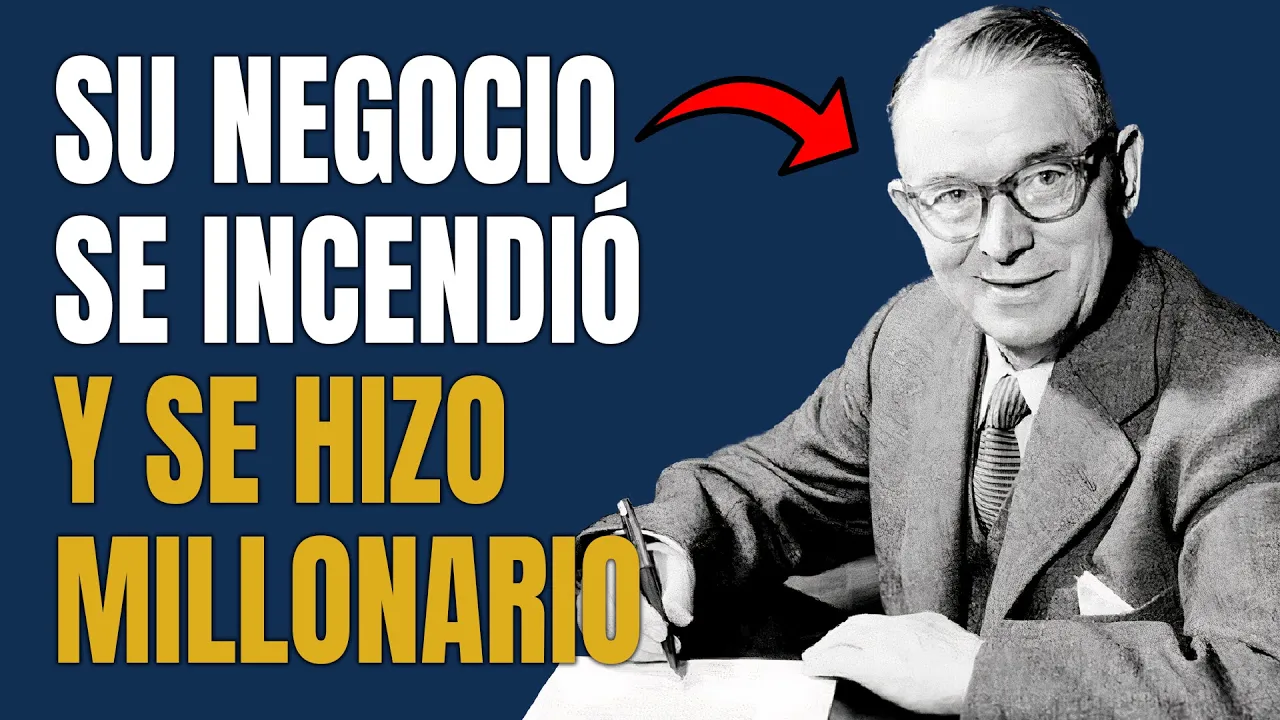
Su Negocio Se Incendió y Se Hizo Millonario | La Historia de LEGO 😱📝
New Section
This section introduces the story of Ole Kirk Christiansen, the founder of Lego, highlighting his journey from adversity to success in the toy industry.
Ole Kirk Christiansen's Early Life and Challenges
- Ole Kirk Christiansen, born in 1891 in Denmark, grew up in a low-income family and developed a passion for woodworking at a young age.
- After working as a carpenter in Germany, Christiansen returned to Denmark and established his own woodworking business in Billund.
- Despite facing setbacks like a fire destroying his workshop and the Great Depression causing financial strain, Christiansen persevered and expanded his business.
Transition to Toy Manufacturing
- Following personal tragedies and economic hardships, Christiansen shifted his focus to creating affordable wooden toys during the recession.
- Inspired by his son's playtime activities, he began producing small wooden toys as a new business venture.
Evolution of Lego Toys
- Despite initial challenges and poverty levels affecting sales, Christiansen continued innovating with easy-to-make wooden toys that appealed to children's motor skills development.
- The meticulous craftsmanship of Lego toys using birch wood garnered popularity among children, leading to increased sales and necessitating rehiring staff.
Lego's Growth and Family Involvement
This section explores the expansion of Lego under Ole Kirk Christiansen's leadership and involvement of his family members in the business.
Diversification of Product Line
- With rising demand, Lego diversified its toy offerings by introducing various products such as a popular wooden duck on wheels loved by children.
Family Engagement in Business Operations
Lego: The Story Behind the Famous Toy Company
This section delves into the early history of Lego, focusing on Ole Kirk Christiansen's commitment to quality and excellence in toy manufacturing.
Ole Kirk Christiansen's Commitment to Quality
- Ole Kirk Christiansen reinvested all profits back into the business to enhance toy quality.
- Emphasized "Only the best is good enough" as the company motto, showcasing his dedication to excellence.
- Taught his son, Godtfred, the importance of maintaining high standards and not compromising on quality.
Overcoming Adversity
- Survived challenges during World War II, including a factory fire that destroyed everything.
- Rebuilt the factory with innovative assembly lines inspired by Ford's methods.
Innovation and Expansion
This section highlights Lego's shift to plastic toys and its journey towards innovation and international success.
Transition to Plastic Toys
- Discovered plastic building blocks at an international fair, sparking new ideas for Lego products.
- Became Denmark's first toy manufacturer to import a plastic molding machine in 1947.
Introduction of Building Blocks
- Redesigned plastic blocks for stacking, leading to "The Automatic Binding Brick."
- Initial block reception was modest but laid the foundation for future successful products like the "Tractor Ferguson grey."
Business Strategy Evolution
Focuses on Godtfred Christiansen's strategic decisions and marketing innovations that propelled Lego's growth.
Marketing Strategies
- Hired salespeople to promote products nationwide; faced initial challenges with summer sales decline.
- Personalized customer visits led by Godtfred boosted year-round sales; emphasized interactive displays for children in stores.
Learning from Experience
Journey of Lego: From Inception to Innovation
This section delves into the inception of Lego, highlighting how the founder's vision transformed traditional toy concepts into a revolutionary system of play that sparked creativity and imagination in children worldwide.
Designing a Revolutionary Toy System
- Ole Kirk Christiansen aimed to provide toys for children year-round, leading to the creation of a unique play system centered around a city plan with Lego blocks.
- The innovative "Sets de Lego" allowed children to construct houses while learning about road safety, fostering imagination and creativity.
- Godtfred, Ole's son, revolutionized Lego by introducing interlocking bricks with tubes for enhanced versatility and stability in constructions.
Evolution of Lego Blocks
- Godtfred's creative solution involved designing bricks with internal and external tubes, increasing connectivity possibilities up to five different ways.
- The patented design in 1958 marked a significant milestone as it became the most popular Lego product globally, enabling endless imaginative play for children.
Legacy and Expansion of Lego
This segment explores the enduring legacy left by Ole Kirk Christiansen and his family through perseverance and innovation in creating one of the most iconic toy brands globally.
Perseverance and Innovation
- Ole Kirk Christiansen's legacy inspired generations of children worldwide through the timeless appeal of Lego toys that encouraged creativity and exploration.
- Despite his passing before witnessing its full impact, his innovative spirit lived on through Godtfred's groundbreaking developments in Lego products.
Strategic Decisions for Growth
- Following multiple setbacks including factory fires, Godtfred focused on enhancing Lego blocks' quality over wooden toys, leading to dissent among family members but ultimately securing sole ownership.
- With full control, he strategized European and American market expansion by establishing an airport near the Billund factory in 1961.
Expansion Through Creativity
This section highlights Godtfred's strategic initiatives that propelled Lego from a local Danish brand to an international phenomenon through creative endeavors and visionary leadership.
Visionary Expansion Strategies
- Establishing an airport near Billund facilitated logistical operations crucial for European market penetration under Godtfred's visionary leadership.
Lego: A Journey of Innovation and Resilience
The section discusses the history of Lego, from its patent in 1979 to becoming a globally recognized brand by 1990. It covers the challenges faced post-patent expiration, financial struggles in the mid-90s, and strategic shifts that revitalized the company.
Lego's Early Success and Challenges
- Lego patented a design in 1979 that gained significant market acceptance.
- After the original patent expired in 1981, competitors emerged, impacting Lego's competitive advantage.
- Financial difficulties arose in 1994 due to losses and the death of a key executive.
Revitalization Strategies Under New Leadership
- In 2004, Jorgen Vig Knudstorp took over as CEO and implemented strategies like downsizing staff and relocating manufacturing to Mexico.
- The introduction of "Bionicle," a narrative-driven set, marked a shift towards storytelling within Lego products.
Innovative Expansion and Brand Differentiation
This segment explores how Lego diversified its product range through partnerships with popular franchises like Star Wars and Harry Potter. It highlights Jorgen Knudstorp's role in expanding into various sectors beyond traditional toy manufacturing.
Strategic Partnerships for Growth
- "Bionicle" set success led to further narrative-driven products with tie-ins to books, comics, movies.
- Licensing agreements with major franchises such as Star Wars and Disney boosted sales significantly.
Lego's Market Dominance and Criticisms
The discussion focuses on how Lego's strategic partnerships propelled it to become the world's largest toy company by revenue. However, criticisms regarding creativity loss due to complex sets are also addressed.
Market Expansion and Criticisms
- Licensed sets contributed over 60% of sales by 2008, enhancing brand differentiation.
- Despite success, some critique Lego for sacrificing creativity with complex specialized pieces.
Current Status and Legacy of Lego
This part reflects on Lego's continued success amid the pandemic-induced surge in sales. It also touches upon the financial standing of the company and its founders' wealth.
Pandemic Boost and Ongoing Success
- Sales surged during the pandemic as families turned to Lego for entertainment at home.