Lunes 6 10 2025
Course Overview and Upcoming Activities
Introduction to the Session
- Compañeros are greeted, and a brief introduction is made regarding the session's agenda. The instructor prepares to share important information about the course calendar.
Group Exercises for Today
- Today's session will involve two exercises (Exercise 11 and 12) that students will work on in groups. The instructor asks if students have previously worked in groups with the professor to organize them accordingly. If not, random groups will be formed.
Time Allocation for Exercises
- Students are expected to dedicate approximately one hour to complete both exercises, starting around 7:30 AM and concluding by 9:30 AM after regrouping for discussion on their findings. Each exercise should take about 30 minutes.
Intellectual Property Discussion Next Week
Upcoming Topics
- The next session on Thursday will cover intellectual property topics, following a similar group discussion format as today’s exercises. This structure aims to facilitate deeper understanding through collaborative debate among students.
Assessment Updates
Short Quiz Details
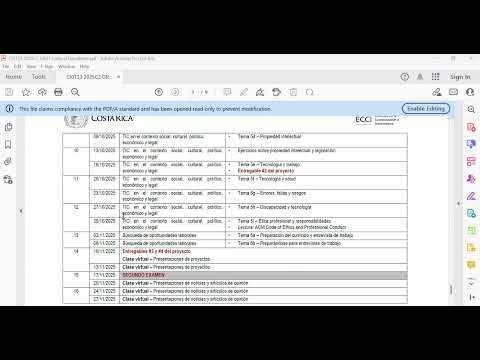
- A short quiz worth 15 points is pending; grades are being finalized by the professor and will soon be available on the mediation platform for student review of their performance in the course.
Rescheduling of Second Quiz
- The second short quiz has been rescheduled from Monday to Thursday, November 20th, maintaining its weight of 15 points but now conducted virtually via an online platform instead of in-person. Students need to prepare adequately as it will consist of multiple-choice questions based on class materials covered until then.
Exam Format and Preparation Guidelines
Open Book Exam Structure
- The upcoming exam will be open book, allowing students access to course materials during the test; however, they must apply concepts learned rather than answer straightforward definitions or concepts directly from memory. Cases presented may require practical application of knowledge related to intellectual property issues discussed in class sessions leading up to the exam date.
Time Management During Exam
- Students will have a maximum of four minutes per question during this one-hour exam period; thus, thorough preparation is essential for effective time management while answering questions accurately under pressure. It is emphasized that studying beforehand is crucial for success in this format since reliance solely on materials during the exam may hinder performance due to time constraints.
Final Remarks and Student Engagement
Encouragement for Participation
- The instructor encourages students who are present to inform their peers who might not be attending about these updates and emphasizes collaboration within their study groups as many classmates may be engaged with other courses simultaneously.
Discussion on Class Assignments and Group Work
Overview of Class Structure and Expectations
- The speaker emphasizes the importance of attendance in sessions, indicating that there are no surprises regarding participation.
- Queries about agreements made with the professor concerning additional tasks or assignments, highlighting a need for clarity on evaluation criteria.
- Mentions previous virtual exercises evaluated by the professor but notes that some in-class activities have not been assessed.
Evaluation Criteria and Upcoming Tasks
- Clarifies that today's session will not be considered an evaluation; future tasks may include intellectual property discussions scheduled for next week.
- Offers to upload additional tasks to the mediation platform for students to access, ensuring they have supplementary materials.
Group Dynamics and Collaboration
- Inquires whether students have pre-assigned groups for collaborative work during the course, confirming they typically work within project groups.
- Confirms there are seven active groups currently working together, facilitating organized collaboration.
Instructions for Group Work
- Plans to create Zoom breakout rooms corresponding to each group so members can collaborate effectively on their assignments.
- Requests each group prepare a presentation addressing two specific exercises as part of today’s session.
Flexibility in Group Participation
- Allows students who are alone in their groups to join others without penalty since today's activity is not graded; stresses the importance of teamwork for future evaluations.
- Reiterates that participation is crucial as points will be lost if members do not attend when assessments occur.
Upcoming Deadlines and Task Management
- Confirms a task due on November 20th remains unchanged; students can submit earlier if desired.
- Discusses potential adjustments to deadlines based on class discussions or needs, emphasizing flexibility while maintaining accountability.
Focus Areas for Today's Session
Discussion on TikTok and Freedom of Expression
Overview of the Exercise
- The session begins with a reading assignment related to the U.S. government's blockade on TikTok, emphasizing its implications for freedom of expression.
- Participants are instructed to prepare a group presentation addressing questions about TikTok's situation and broader social media issues.
- The discussion will also cover local technology issues in Costa Rica, linking them to the global context.
Group Organization and Preparation
- The instructor requests that groups read both exercises (11 and 12), preparing for a discussion scheduled from 8:30 to 9:30.
- Groups can choose how to divide tasks between members, either tackling both exercises together or splitting them up.
Reading and Presentation Guidelines
- Each question should be addressed with a maximum of one slide per question in their presentations to ensure time efficiency during discussions.
- Eight groups are created for collaborative work; participants are encouraged to join any group they prefer if they are not already assigned.
Insights from Group Discussions
Concerns About TikTok as a Threat
- Group one discusses whether TikTok poses a threat, highlighting potential algorithmic manipulation that could influence content visibility based on political or economic interests.
Implications for Freedom of Expression
- There is concern that platforms like TikTok may censor free speech by controlling information flow through algorithms, similar to other government-controlled platforms.
Lack of Regulatory Framework
Discussion on Social Media Regulation and Influence
Who Regulates Platforms Like TikTok?
- The question arises about who sets the guidelines for platforms like TikTok to ensure they are safe and free from discrimination or data leaks.
- Concerns are raised regarding TikTok's Chinese ownership, with fears that it may influence American citizens' decisions through data collection, perceived as a form of interference or espionage.
- There is currently no clear regulatory framework in place to govern platforms like TikTok, leading to uncertainty about who should enforce regulations—Americans or Chinese authorities.
The Case of Donald Trump and Social Media
- A discussion begins on an article detailing Donald Trump's legal actions against social media companies like Twitter, Google, and Meta after being banned following the Capitol riots.
- These companies aimed to limit Trump's ability to disseminate information post-riot, prompting him to claim violations of free speech rights and call for collective legal action against these firms.
- The group concludes that while some content (e.g., hate speech or misinformation) should be moderated, determining what gets censored poses challenges due to potential biases.
Implications of Content Moderation
- It is suggested that a dedicated moderation team adhering to public standards could better manage content regulation across social media platforms.
- The conversation highlights the complexities surrounding who has the authority to censor content and what criteria should guide those decisions.
Trump's Response: Creating His Own Platform
- Following his bans from major platforms, Trump launched his own social media platform called Truth Social, leveraging his political and economic power.
- This move raises concerns about him becoming both judge and jury over what content is published on his platform.
Changes at Twitter Under Elon Musk
- After acquiring Twitter (now X), Elon Musk dismissed employees not aligned with his vision, significantly altering the platform's information dissemination style.
- This led to a backlash in San Francisco where many users boycotted X due to Musk's policies. Over time, this backlash has lessened but remains significant in discussions about platform governance.
Broader Impact of Social Media as Communication Tools
Discussion on Political Disinformation and Freedom of Expression
Context of Political Campaigns in Costa Rica
- The speaker references the January 6th Capitol riot as an example of political extremism, linking it to Donald Trump.
- The electoral campaign for the presidency in Costa Rica has begun as of September 15, 2023, with a focus on responsible social media use.
- Concerns are raised about misinformation from candidates discussing urgent national issues versus trivial matters.
Current Cases of Misinformation
- A notable case involves presidential candidate Fabricio Alvarado facing allegations of sexual assault, which may lead to further misinformation.
- There is speculation about additional cases related to drug trafficking and criminal organizations that could emerge during the campaign.
Regulation vs. Freedom of Expression
- The discussion highlights the tension between regulating social media to prevent misinformation and protecting freedom of expression.
- Questions arise regarding whether unrestricted expression can lead to harmful consequences for certain societal groups.
Majority vs. Minority Influence
- The speaker emphasizes that societal decisions often favor a powerful minority rather than reflecting true majority interests.
- Historical decisions in Costa Rica regarding freedom of expression have been influenced by economically significant minorities rather than the general populace.
Media Manipulation and Transparency Issues
- Public broadcasters are accused of manipulating information based on their economic interests, raising questions about genuine freedom of expression.
Analysis of Emergency Commission Case
Inquiry into Information Disclosure
- A group discusses reasons behind not publishing investigation results through official channels, considering potential public panic versus internal resolution efforts.
Risks and Benefits Assessment
- Participants weigh the risks associated with disclosing sensitive information against potential benefits for transparency and public safety.
Discussion on Freedom of Expression and Emergency Protocols
The Role of Transparency in Communication
- The speaker emphasizes the importance of promoting transparency to mitigate risks during emergencies, such as tsunamis.
- They argue that sharing information related to public interest is a valid exercise of freedom of expression, but caution against potential harm if not considering reasons for non-disclosure.
Case Study: Media Representation and Public Safety
- A reference is made to a television series "Law & Order," which illustrates the need for official communication during emergencies like natural disasters.
- The discussion highlights the necessity for institutions to have clear protocols for communicating incidents that could incite panic or help prevent greater harm.
Protocol Challenges in Crisis Situations
- The speaker recounts an incident involving a school where a student brought a gun, illustrating failures in following established safety protocols by school authorities.
- It is noted that despite having protocols, they were not clearly defined or followed, leading to tragic consequences when an altercation occurred.
Balancing Communication and Public Reaction
- The conversation raises questions about how urgent communication should be handled without causing mass panic among the population.
- There’s acknowledgment of the gray area surrounding when and how to communicate risks effectively while managing public response.
Emergency Response Framework
- Reference is made to national emergency commissions using color-coded alerts (yellow, orange, red) to inform citizens about varying levels of threat intensity.
Discussion on the Third Report of Freedom of Expression in Costa Rica 2022
Overview of the Report and Initial Questions
- The discussion centers around the third report on freedom of expression in Costa Rica for 2022, highlighting its significance.
- Participants are prompted to share insights from Exercise 12 regarding their understanding of political discourse manipulation.
Legitimacy of Political Participation
- A participant argues that manipulating debates through coordinated behavior with fake accounts undermines legitimate political participation, viewing it as deceptive rather than authentic engagement.
- The presence of fake accounts can distort public perception, leading citizens to feel manipulated due to altered consensus and relevance surrounding candidates or issues.
Ethical Considerations in Campaign Communication
- While strategic communication is common in campaigns, coordinated inauthenticity crosses ethical boundaries and often violates platform terms of service.
Future Recommendations for Addressing Disinformation
- Suggestions include tagging political ads with information about funding sources and amounts to enhance transparency. This could help combat misinformation effectively.
- Proposals also involve collaboration with electoral authorities to remove verified disinformation from platforms and establish systems for early detection of non-authentic networks. Additionally, media literacy programs should be implemented to educate the public on basic verification skills during elections.
Current Regulatory Landscape
- A participant expresses skepticism about existing regulations against misinformation on social media, stating that current laws are insufficiently rigorous or entirely absent. They highlight a lack of accountability for candidates spreading false information without legal repercussions.
Cultural References: Superman's Narrative as an Analogy
- The conversation shifts towards a cultural reference involving Superman, illustrating how negative perceptions can be artificially created through social media manipulation by using trolls—paralleling real-world scenarios where misinformation is spread online without consequences for those orchestrating it.
Impact of Social Media on Political Communication
The Role of Social Media in Shaping Public Perception
- The speaker discusses the potential damage to a candidate's image and reputation due to social media, emphasizing that despite this, they were not imprisoned for it. This highlights the dual nature of social media as both a tool for communication and a weapon in political discourse.
Disinformation in Political Campaigns
- A second case is introduced focusing on disinformation during the 2022 political campaign, prompting analysis and discussion among group members about its implications.
Echo Chambers and Their Ethical Implications
- The concept of "echo chambers" is explained, where individuals' ideas are reinforced through social media without exposure to opposing viewpoints. This phenomenon raises questions about critical thinking and ethical considerations regarding algorithmic content delivery.
- It is noted that while algorithms can enhance user engagement by presenting preferred content, they also pose ethical dilemmas by limiting exposure to diverse perspectives.
Effects on Critical Thinking and Polarization
- The lack of exposure to contrasting ideas diminishes critical thinking skills among users. Understanding various viewpoints is essential for developing well-rounded opinions.
- Increased polarization is identified as a significant consequence of echo chambers, particularly in politically charged environments.
Freedom of Expression vs. Ideological Bubbles
- Social media platforms allow greater freedom of expression but also create ideological bubbles where users only engage with like-minded individuals, leading to misinformation.
- Two main negative impacts are highlighted:
- Users become isolated within their beliefs.
- Content contrary to their views becomes invisible, resembling censorship.
Case Study: Digital Marketing Strategies in Elections
- An article written by the speaker from four years ago discusses digital marketing strategies used during presidential elections, illustrating how candidates adapt their communication methods based on audience preferences.
- The speaker recounts the electoral process involving José María Figueres and Rodrigo Chávez, noting Figueres' dominance among candidates initially before moving into a runoff election.
Evolution of Candidate Communication
- The transition from traditional campaigning methods (television/radio) to modern digital strategies reflects changing voter engagement patterns.
Understanding the Role of Technology in Modern Voting
The Impact of Education and Technology on Voter Behavior
- Individuals today are more educated, often at a university level, and possess a better understanding of technology, allowing them to plan their schedules effectively.
- Voters engage in informed decision-making rather than relying solely on mass media propaganda; they seek direct communication with candidates through social media platforms like Facebook and Twitter.
- Direct questioning of candidates is emphasized, where voters expect explicit answers to their concerns instead of vague promises.
Communication Breakdown in Political Campaigning
- A lack of one-on-one communication from candidates leads to disconnection with voters; traditional media methods fail to address individual voter needs.
- The failure to utilize technology for direct engagement contributed to electoral losses for candidates who did not adapt their communication strategies.
Social Media as a Tool for Expression
- Social media serves as an essential platform for freedom of expression, enabling direct dialogue between voters and political figures without restrictions.
- Responses from candidates can be met with skepticism, highlighting the need for transparency and accountability in political discourse.
The Debate Over Video Game Regulation
Legal Perspectives on Violence in Video Games
- Discussion centers around California's law regarding violent video games, which equates such content with obscene material.
- Concerns arise over the vagueness of the law’s definition of violence, potentially leading to arbitrary control over free expression.
Implications for Freedom of Expression
- The potential for this regulation to extend beyond video games into other forms of media (books, music), raises alarms about broader implications for artistic freedom.
Connection Between Gaming and Real-Life Violence
- Notable incidents involving school shootings have been linked to individuals playing specific violent video games like Call of Duty and Battlefield.
- While mental health issues are common among perpetrators, exposure to violent gaming is identified as a significant contributing factor that may exacerbate these tendencies.
Legislative Response to Violent Content
Discussion on Freedom of Expression and Societal Impact
The Dilemma of Regulation
- The speaker questions the effectiveness of laws designed to protect certain groups, suggesting that such regulations may inadvertently restrict the freedoms of others in society.
- Acknowledges the appeal of violent video games, highlighting a paradox where what is detrimental to one group can be beneficial to another, raising concerns about societal impact.
Violence and Video Games
- Discusses a case involving a shooter who learned skills from video games, emphasizing the potential negative influence these games can have on individuals who appear otherwise harmless.
- Points out that many people connect through gaming communities, which can foster both positive and negative interactions, complicating the issue of freedom of expression.
Influence of Social Media
- Introduces Selena Gomez as an example of an influencer whose popularity led young fans to emulate her style in hopes of attracting partners like Justin Bieber.
- Highlights how brands began to leverage Selena's influence for marketing purposes, demonstrating the significant economic impact influencers can have on consumer behavior.
Cultural Phenomena and Community Building
- Notes the rise of fandom communities (e.g., comic conventions), attributing their growth to social media's ability to connect individuals with shared interests.
- Emphasizes that understanding freedom of expression is crucial not only in computing but also in social sciences and law due to its complex implications for individual rights.
Regulatory Challenges
- Raises concerns about managing individual freedoms within society, indicating that this remains a contentious topic across various fields.
Discussion on Authorization and Rules
The Concept of Entry and Conditions
- The speaker asserts that individuals do not have the authorization to enter without consent, likening it to entering someone's home under specific conditions.
- Emphasizes that if one does not agree to the host's rules, they are not welcome, drawing a parallel to social media access and ethical judgments about individuals.
Ethical Considerations in Judgments
- Discusses the necessity for transparency (e.g., social media access) to assess whether someone poses a threat (e.g., terrorism or drug trafficking).
- Acknowledges this as a debatable point, suggesting further discussion is warranted.
Upcoming Sessions and Exam Details
Schedule Overview
- Recaps upcoming sessions: Thursday's in-person meeting at 7:15 PM, concluding around 8:30 PM.
- Mentions an exercise planned for the following Monday aimed at group engagement and practical application of discussed topics.
Examination Information
- Announces a second partial exam scheduled for November 20th, consisting of 15 multiple-choice questions with a one-hour time limit.
- Clarifies that students can log in between 7:00 PM and 7:30 PM; however, all must finish by 8:30 PM.
Final Remarks and Questions
Session Wrap-Up
- Invites questions or comments from participants before concluding the session.