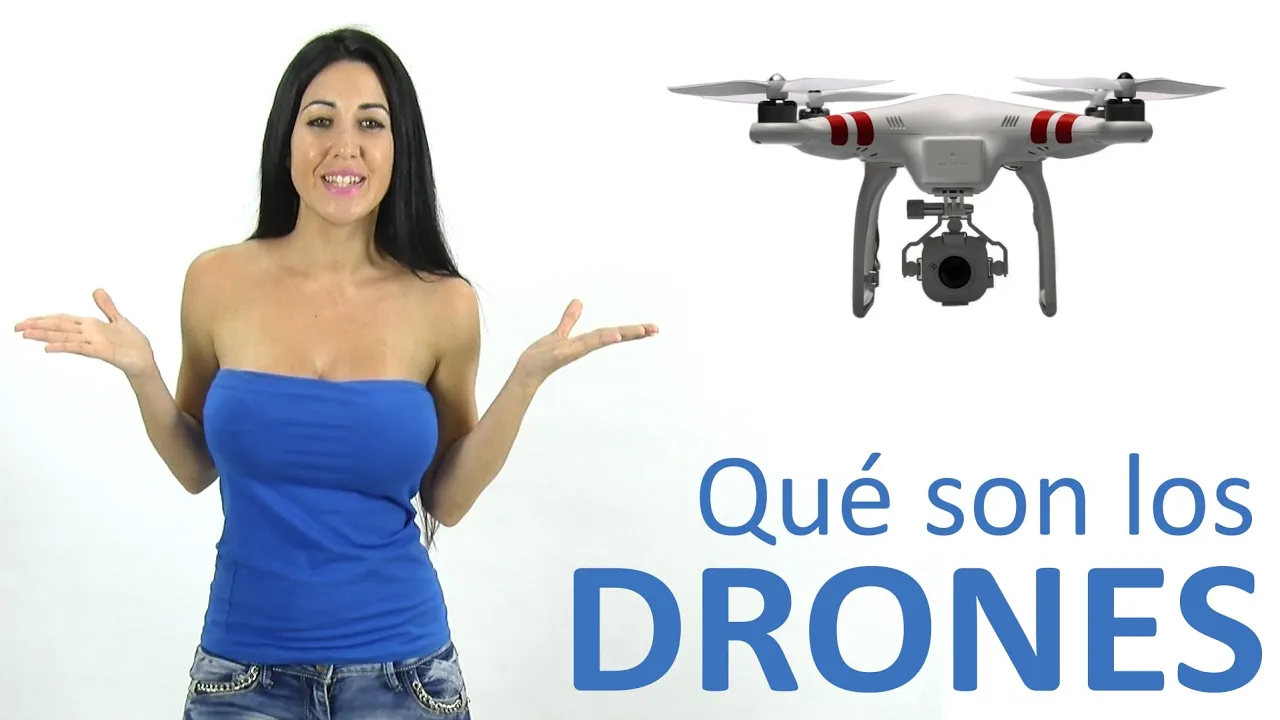
DRONES: Funcionamiento, tipos y usos (en Español)
What Are Drones?
The video introduces drones, explaining their uses and characteristics, highlighting their historical development and diverse applications in various fields.
Introduction to Drones
- Drones are unmanned flying robots controlled remotely or autonomously through software. They have been used for over a century, initially in warfare to engage the enemy without risking soldiers' lives.
- Two main types of drones exist: airplane-shaped ones with efficient gliding capabilities for low consumption and helicopter or quadcopter-shaped ones with multiple propellers allowing static hovering.
- Drones can be autonomous with sensors and GPS for navigation or remote-controlled, often equipped with cameras for maneuvering without direct visual contact.
Evolution and Popularization of Drones
- Initially military-focused, drones have expanded into civilian domains due to technological advancements. Viral campaigns by companies like Amazon and Domino's Pizza have popularized drone use for delivery services.
- Beyond commercial applications, drones are increasingly utilized in entertainment for both children and adults, offering recreational activities like flying planes or helicopters via smartphones.
Diverse Applications of Drones
- Drones play crucial roles in monitoring forests, controlling fires cost-effectively, surveilling public spaces during events or potential conflicts, and even conducting life-saving operations such as rescues at sea.
- In agriculture, drones enhance crop monitoring economically through high-resolution imaging techniques like orthophotomaps and terrain elevation models.
Future Prospects of Drone Technology
The discussion delves into futuristic possibilities of drone technology beyond current applications, exploring potential advancements that could revolutionize various industries.
Innovative Uses of Drones
- Google's project aims to provide global internet access using drones as signal transmitters. Besides military surveillance purposes, drones could transform daily life through enhanced aerial views at lower costs than traditional methods.
- Miniature "mosquito" drones offer inconspicuous mobility but raise concerns about privacy violations. Additionally, 3D printing enabled by drones could revolutionize construction processes by eliminating structural constraints.
Integration with Virtual Reality
- Envisioned scenarios include drone warfare competitions using virtual reality headsets to simulate aerial battles realistically. This integration promises immersive experiences previously unattainable with conventional equipment.
- Ongoing innovations continually unveil surprising applications for drone technology across diverse sectors while acknowledging the dual nature of its impact—both negative (e.g., in warfare casualties) and positive (e.g., cost reduction and lifesaving potential).
Closing Thoughts on Drone Utility
Reflecting on the multifaceted implications of drone usage discussed earlier in the video prompts viewers to consider their own perspectives on the benefits and drawbacks associated with this evolving technology.
Ethical Considerations