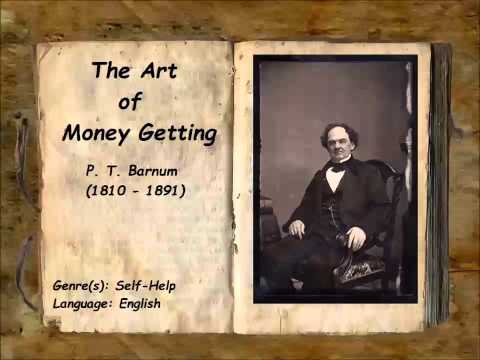
The Art of Money Getting (FULL Audiobook)
Introduction and Overview
The transcript is an introduction to the book "The Art of Money Getting" by P.T. Barnum. It emphasizes the importance of making money and provides insights on how to attain financial independence.
Section 1: Making Money
- Making money in a field with many opportunities is not difficult for individuals in good health.
- Engaging in any respectable occupation that offers lucrative employment can lead to financial success.
- Attaining financial independence requires setting one's mind on the goal and taking proper means to achieve it.
Section 2: The Road to Wealth
- The road to wealth is as simple as expending less than what we earn.
- True economy is often misunderstood, leading people to make mistakes in managing their finances.
- Some individuals focus on saving small amounts but fail to realize that they waste larger sums in other areas.
Section 3: Rational Savings vs Irrational Spending
- Rational savings involve consistently ensuring that income exceeds expenses.
- Small amounts saved and invested over time can accumulate and contribute to financial success.
- Rational savings provide more satisfaction than irrational spending.
Section 4: A Recipe for Financial Success
- To overcome extravagance and mistaken economy, keep track of every expenditure by maintaining a record book.
- Mark down every item of expenditure daily or weekly in two columns, one for necessary expenses and another for unnecessary ones.
Conclusion
The transcript concludes with a recommendation for maintaining a record book to track expenditures as a way to curb extravagance and achieve rational savings.
The Importance of Finding Less Crowded Vocations
This section emphasizes the significance of pursuing less crowded vocations and the potential benefits it can bring.
Pursuing Less Crowded Vocations
- It is advantageous to choose vocations that are not overcrowded in order to avoid competition and increase chances of success.
Starting a Business with Limited Capital
This section discusses the idea of starting a business with limited capital and highlights the importance of having the necessary funds to begin.
Starting with Limited Capital
- Having a few thousand dollars as initial capital can provide a good start for anyone, regardless of gender.
- It is crucial to have enough money to start with, even if it means temporarily engaging in any respectable occupation that offers lucrative employment.
- Many young individuals make the mistake of believing they will succeed by borrowing money, but true success comes from setting one's mind on attaining independence and accumulating wealth through proper means.
Understanding the Value and Management of Money
This section emphasizes the importance of understanding the value and management of money in order to achieve financial success.
The Value and Management of Money
- Merely possessing money does not guarantee its worth; knowing how to make use of it effectively is essential.
- Giving a boy $20,000 without teaching him how to manage it often leads to failure, as easy come, easy go.
- Money should be valued for its ability to help achieve financial independence rather than solely for enjoyment or fun.
- Learning the value of money through experience and proper management is crucial for financial success.
The Role of Economy, Self-Denial, and Patience in Wealth Accumulation
This section highlights the significance of economy, self-denial, patience, and perseverance in accumulating wealth.
Economy and Wealth Accumulation
- True economy involves effort, self-denial, patience, perseverance, and commencing with capital.
- Having an annual income that is not earned leads to failure in accumulating wealth. It is better to have a smaller income and spend less than to spend more than one earns.
- Many rich individuals understand the importance of economy and practice it diligently throughout their lives.
Success Stories of Self-Made Rich Individuals
This section presents examples of successful individuals who started from humble beginnings and achieved great wealth through determination, industry, perseverance, and good habits.
Success Stories
- Many wealthy individuals in society today began as poor boys but managed to make their own fortunes through hard work and good habits.
- Examples include Stephen Girard who started as a poor cabin boy but died worth nine million dollars; John Jacob Astor who was a poor farmer boy but accumulated immense wealth; Cornelius Vanderbilt who rowed a boat before becoming a successful entrepreneur; Stewart who was a poor Irish boy but paid taxes on millions; and others.
The Misconception about Economy
This section addresses the misconception surrounding economy and emphasizes its true meaning and importance in acquiring wealth.
The Misconception about Economy
- Many people mistakenly believe that economy is simply saving money and accumulating it. However, true economy involves understanding the value of money and making wise financial decisions.
- Examples of individuals who misunderstood economy are presented, including those who saved money but did not know how to make use of it effectively.
Importance of Making the Most of Opportunities
This section emphasizes the significance of seizing opportunities and making the most out of them in order to achieve financial success.
Seizing Opportunities
- Successful individuals recognize and seize opportunities when they arise, such as Stephen Girard presenting our government with cheese pairings and candles on a steamship worth a million dollars.
- Taking advantage of opportunities can lead to significant financial gains and contribute to wealth accumulation.
The Royal Road to Learning and Wealth
This section discusses the concept of a "Royal Road" to learning and wealth, emphasizing the importance of economy and efficient use of resources.
The Royal Road to Learning
- There is no Royal Road to wealth, but there is a Royal Road to learning.
- This road is wonderfully economical in saving intellect and expanding knowledge.
- By being frugal with one's intellectual resources, one can make significant progress in intellectual growth.
- It enables the student to solve profound problems and gain deep knowledge.
The Royal Road to Wealth
- While there is no direct path to wealth, individuals can apply their economy in both directions - saving and spending wisely.
- By being economical in daily expenses, one can accumulate more principal that will increase itself through interest over time.
- Extra occasions for spending should be limited, allowing for a state of independence where savings grow significantly.
The Value of Money
- Understanding the value of money is crucial for proper financial management.
- Studying human nature helps in making wise financial decisions.
- Saving money by avoiding unnecessary expenses leads to long-term financial stability.
False Notions about Wealth
- Some people mistakenly believe that being born into wealth guarantees a life without work or financial worries.
- However, relying solely on inherited wealth often leads to poor financial management skills and eventual loss of fortune.
Lessons from Frugality
- Being frugal from an early age teaches valuable lessons about the true value of money.
- Excessive pampering and material indulgence can lead to arrogance and self-conceit.
Expanding Intellect while Saving Money
This section highlights the importance of balancing intellectual growth with economic habits. It emphasizes how being frugal can lead to both personal development and financial stability.
Intellectual Growth vs. Material Indulgence
- Expanding one's intellect should not come at the expense of wasteful spending.
- It is possible to save money while pursuing intellectual endeavors.
The Value of Experience
- Accumulating experience is like building muscles; it enables individuals to navigate life more effectively.
- Enlarged experience helps in making better financial decisions and accumulating wealth.
The Pitfalls of Excessive Spending
- Indulging in unnecessary expenses, such as expensive parties or luxury items, can hinder financial progress.
- Being economical with resources allows for long-term financial stability and growth.
The Importance of Saving
- Saving a small amount consistently over time can lead to significant savings.
- Wise financial habits, such as reusing envelopes and avoiding unnecessary expenses, contribute to long-term wealth accumulation.
False Notions about Inherited Wealth
This section explores the misconceptions surrounding inherited wealth and highlights the importance of practical knowledge and experience in managing finances.
The Illusion of Inherited Wealth
- Being born into wealth does not guarantee financial success or security.
- Many individuals who inherit large estates end up losing their fortunes due to lack of practical knowledge and experience.
Practical Knowledge vs. Inheritance
- Practical knowledge gained through hard work and experience outweighs the benefits of inherited wealth.
- Understanding the value of money and practicing frugality are essential for long-term financial stability.
Lessons from Economical Habits
- Learning frugal habits from an early age instills a sense of responsibility towards money management.
- Excessive pampering can lead to arrogance and self-conceit, hindering personal growth and financial success.
The Golden Spoon and Equality
This section discusses the misconception of equality and the idea that everyone is born equal. It highlights the difference between social status and wealth.
Misconception of Equality
- The notion of being "free and equal" is a mistake.
- While it is true that everyone is born with equal rights, it does not mean that everyone is born with equal opportunities or wealth.
Social Status vs Wealth
- Being a gentleman or having grace does not necessarily make someone free and equal.
- One's occupation or profession does not determine their worth as a person.
- A person's income or business does not define their character or make them superior to others.
Proving Equality
- To prove one's equality, it is important to behave well and excel in one's own field.
- Trying to appear rich or putting on airs will not convince others of one's equality.
- Instead, focus on excelling in your own line of work and maintaining good habits and integrity.
Choosing a Profession
This section explores the importance of choosing a profession based on personal interest, skills, and market demand rather than overcrowding in certain fields.
Overcrowded Professions
- Many professions or occupations may be overcrowded in terms of competition.
- The upper floors may be crowded with professionals while there is plenty of room upstairs for other opportunities.
Choosing Wisely
- It is crucial to choose a profession that aligns with personal interests, skills, and market demand.
- Rather than following the crowd into an overcrowded field, seek out areas where you can excel and find success.
Excelling in Your Field
This section emphasizes the importance of excelling in one's chosen field by continuously learning, improving skills, and maintaining good habits.
Continuous Learning
- Every individual should strive to learn something useful and improve their skills.
- Making an effort to excel in one's field will lead to success and abundant patronage.
Good Habits and Integrity
- Maintaining good habits, integrity, and a strong work ethic are essential for securing patronage and gaining the trust of others.
- By living up to high standards, one can excel in their profession and stand out from the competition.
Superficiality vs Substance
This section discusses the superficiality of striving for quick wealth and the importance of substance in one's profession or occupation.
Superficial Pursuit of Wealth
- Americans are often focused on getting rich quickly without considering substance or quality.
- Striving for quick wealth can lead to shallow pursuits that lack depth or meaning.
Substance in Profession
- It is important to prioritize substance in one's profession or occupation.
- Being the best at what you do, regardless of the field, will make you sought after and respected by others.
The Majority Ought to Rule
This section highlights the principle that the majority should rule and encourages individuals to live by this principle rather than succumbing to vanity and envy.
Principle of Majority Rule
- In a democratic society where the majority ought to rule, it is important not to succumb to vanity or envy.
- Living by this principle allows for a fairer society where everyone has equal opportunities.
Avoiding Vanity and Envy
- To avoid falling into vanity or envy, focus on excelling in your own line of work rather than trying to appear superior.
- Upholding principles of fairness and equality will lead to personal growth and success.
The Importance of Financial Support
This section discusses the significance of financial support in one's life and the impact it can have on their future.
Changing Fortunes and Support
- Financial support plays a crucial role in navigating the changing fortunes of life.
- Having adequate support can help individuals handle various situations effectively.
Consequences of Poor Planning
- Laying plans without considering the consequences can lead to negative outcomes.
- Business may suffer if not properly managed, resulting in loose ends and instability.
Living Expenses and Prosperity
- Some families spend large sums of money annually, often exceeding $20,000.
- There is no definitive end to work, especially for those who strive for more prosperity.
- It is important to recognize limits when it comes to spending and living within means.
Balancing Prosperity and Enjoyment
- While some individuals know how to live on less, others must find a happy medium.
- Striving for solid enjoyment rather than excessive spending leads to a more fulfilling life.
Adversity vs Prosperity
- Coping with sudden prosperity can be more challenging than dealing with adversity.
- Some individuals struggle to manage newfound wealth due to lack of preparation or planning.
Easy Come, Easy Go Mentality
- Carelessly acquiring possessions without organization leads to difficulty finding them later on.
- The saying "easy come, easy go" holds true as possessions are easily lost or misplaced.
Pride and Vanity
- Excessive pride and vanity can lead to unnecessary formality and a focus on appearances.
- Similar to the Circumlocution Office in Dickens' works, it becomes all theory and no substance.
The Pitfalls of Overspending
This section highlights the consequences of overspending and the challenges faced by businesses that prioritize luxury over financial stability.
The Astor House Hotel
- When the Astor House Hotel was established in New York City, it quickly became renowned.
- The proprietors aimed to emulate European hotels, leading to extravagant expenses.
Swallowed by Expenses
- The hotel's rigid system resulted in expenses surpassing income, jeopardizing its success.
- Attempts to maintain appearances led to ruinous spending and financial instability.
A Costly Sofa
- An example is given of a gentleman who experienced sudden prosperity and purchased an expensive sofa.
- The cost of the sofa alone amounted to $30,000 due to additional purchases required for its display.
Spiraling Expenses
- The landlord felt compelled to hire more staff and expand services to match the new furniture.
- Expenses continued to escalate as each new addition necessitated further expenditures.
Interfering with Systems
- The landlord insisted on maintaining a specific number of waiters despite fluctuations in demand.
- This commitment strained finances, requiring creative solutions such as repurposing existing staff members.
The Irishman's Solution
- A clever solution was proposed by an Irishman named Pat, suggesting a more practical approach.
- By reducing unnecessary formality and focusing on real comfort, expenses could be minimized.
The transcript provided does not contain any further timestamps or sections beyond this point.
The Dangers of Indorsing Notes without Security
This section discusses the risks associated with endorsing notes without proper security.
Indorsing Notes for a Friend
- The proprietor advises Pat to be cautious when endorsing notes for others.
- Pat is retired and living off his money, while his friend has acquired expensive tastes.
- The friend approaches Pat and asks him to endorse a note for $20,000, claiming he doesn't owe any money.
- Despite not using tobacco himself, Pat reflects on the friend's wealth and agrees to endorse the note.
The Temptation Continues
- The friend continues to ask Pat for more endorsements, assuring him that there is no risk involved.
- Pat feels happy about helping his friend and doesn't realize the negative effects of endorsing these notes.
Losing Money in Speculation
- Unfortunately, the friend's speculative investments do not yield the expected profits.
- As a result, more notes need to be discounted to cover previous losses.
- Pat realizes that he has been deceived by his friend's charm and misplaced trust.
Health Effects of Tobacco
- The transcript briefly mentions the negative health effects of tobacco use on smokers' palates and taste buds.
How Easy Money Leads to More Losses
This section explores how easy access to money can lead individuals into further financial losses.
Expensive Tastes and Investments
- With easy access to cash through discounted notes, the friend sees opportunities for temporary investments.
- He suggests investing in a grape vineyard as a temporary venture requiring only $10,000.
Offering Ripe Fruits as an Attraction
- To entice potential investors like Pat, the friend offers delicious imported fruits from Spain, France, and Italy.
- He showcases his own garden and house as a display of wealth and success.
The Cycle Continues
- The friend convinces Pat to endorse another note, promising quick returns from the grape vineyard investment.
- Pat falls into the same pattern of endorsing notes without realizing the consequences.
Losses and Regrets
- Unfortunately, the grape vineyard investment fails, resulting in more financial losses for Pat and his friend.
- Pat realizes that he has been deceived once again and regrets his decisions.
The Consequences of Trusting Others' Financial Decisions
This section highlights the consequences of blindly trusting others with financial decisions.
Losing Fortune and Trust
- The friend loses half of his fortune due to failed investments, leaving Pat as the endorser responsible for repaying the discounted notes.
- Pat's trust in his friend is shattered as he realizes that he has been taken advantage of.
Health Implications
- The stress and anxiety caused by these financial losses have negative health effects on both Pat and his friend.
- Pat experiences physical symptoms such as trembling and palpitations due to the emotional toll.
Lessons Learned
- Through personal experience, it becomes clear that endorsing notes without proper security can lead to significant financial losses.
- Blindly trusting others with financial decisions can have severe consequences for one's own well-being.
The Dangers of Speculation and Impulsive Spending
This section discusses the negative consequences of speculation and impulsive spending, emphasizing the importance of clear thinking and reasoning in business.
Speculation as a Bad Example
- Engaging in speculation without proper reflection can lead to health issues and financial losses.
- The allure of making large sums quickly can be tempting, but it sets a bad example for others.
The Pitfalls of Impulsive Behavior
- Many speculators only focus on their gains, ignoring the potential losses that come with it.
- Making impulsive decisions based on appearances or temporary success can be detrimental to one's financial stability.
- Endorsing notes and relying on others' signatures for money can become a chronic habit, leading to further complications.
The Importance of Clear Thinking
- Successful money-making requires a clear brain and the ability to reason effectively.
- Reflecting on past mistakes and analyzing details is crucial for avoiding ruin in business.
- A muddled brain from intoxicating drinks impairs judgment and hinders success in business.
Temptations of Easy Money
- Having easy access to money often leads people into hazardous speculations, causing missed opportunities and regret.
- Indulging in social drinking or other vices can cloud one's judgment and result in foolish decisions.
The Value of Hard Work and Sacrifice
- Earning money through hard work and sacrifice helps individuals appreciate its value and make wiser financial choices.
- Advertising genuine goods and providing customer satisfaction are essential for success in business.
The Art of Money Getting
This section emphasizes the importance of understanding the value of money, starting a business with caution, and avoiding excessive reliance on public support.
Understanding the Value of Money
- Starting a business should be based on a clear understanding of the value of money earned through hard work.
- Greasing the wheels by seeking initial help is acceptable, but relying too heavily on others' money leads to failure.
Avoiding Excessive Reliance on Public Support
- Depending on public support requires ensuring that goods or services provided are valuable, genuine, and satisfactory.
- Relying solely on public patronage without offering true value is an indefensible practice across various professions.
Success Through Personal Effort
- Succeeding in business necessitates earning dollars through hard work rather than acquiring them too easily.
- The art of money getting involves appreciating the value of personal sacrifice and effort in building a successful enterprise.
Getting Your Money's Worth
This section discusses the importance of finding the right vocation and how advertising may not always lead to success in this regard.
Finding the Right Vocation
- Many people believe that the majority of individuals have not found their true calling.
- Advertising alone does not guarantee success in finding the right vocation.
- Mistaken career choices are common, even among those who have tried advertising.
The Role of Advertising
- Advertising is compared to learning a language - a little knowledge can be dangerous.
- Selecting the proper location for advertising is crucial for attracting the right audience.
- Inserting advertisements multiple times increases visibility and potential customers.
The Importance of Location
- Choosing the right location is essential for businesses to thrive.
- A hotel located in a small village without transportation infrastructure would likely fail.
- It is important to communicate effectively with the public about what you have to offer.
Persistence in Advertising
- Advertisers must continue their efforts until they have successfully conveyed their message.
- Investing money in advertising without persistence can result in wasted resources.
- Some individuals possess a talent for creating attention-grabbing advertisements.
Making an Impact with Advertising
This section emphasizes the need for advertisers to capture attention and make an impact through creative strategies.
Creating Attention-grabbing Advertisements
- Writing striking advertisements that arrest readers' attention is crucial.
- An example is given of an advertisement featuring bearded ladies and other curiosities.
- Another example involves showcasing dirty wax figures as a unique attraction.
Unconventional Approaches
- Some advertisers become popular by using unique signs or displays.
- A showman with extraordinary stories and bearded ladies as attractions is mentioned.
- An example is given of a man who spent his last dollar on advertising to save money.
The Importance of Imparting Information
- Advertisers must ensure that the public understands who they are and what their business offers.
- Failure to convey this information can result in wasted advertising investments.
- Some individuals have a talent for writing attention-grabbing advertisements.
Location and Persistence in Advertising
This section highlights the significance of location and persistence in successful advertising campaigns.
The Impact of Location
- Locating a business where there is no transportation or public travel can lead to failure.
- Businesses should carefully select locations that align with their target audience's needs.
The Need for Persistence
- Advertisers must continue their efforts until they have successfully conveyed their message.
- A story is shared about a man who advised someone to spend ten cents to save a dollar through persistence in advertising.
Conclusion
- Successful advertising requires creativity, capturing attention, selecting the right location, and persistently conveying the intended message.
The Sign and the Inscription
This section discusses a sign with an inscription in front of a store, which sparks a conversation about the authenticity of wax figures and their resemblance to real individuals.
Sign Extending over the Sidewalk
- A sign extends over the sidewalk in front of a store.
- The speaker asks someone not to speak so loudly.
Satirical Inscription on the Sign
- The sign has a satirical inscription that reads "Madame Tussaud's Wax Figures."
- The speaker sarcastically comments that these figures are not real.
Authenticity of Wax Figures
- The speaker mentions that the wax figures are covered with gilt, tinsel, and imitation diamonds.
- They explain that these figures are copied from engravings and photographs.
- The speaker questions the authenticity of these figures compared to real individuals.
Using Figures for Business
- It is revealed that the person responsible for these wax figures made his fortune by attracting the public to his establishment.
- Customers who visit Madame Tussaud's may consider themselves as looking upon living individuals.
- The speaker mentions Genin, who used this strategy successfully with his hat business.
Henry VIII Figure
This section focuses on an interesting encounter with a figure labeled as Henry VIII at an auction. It highlights how appearances can be deceiving and how marketing strategies can influence perception.
Jenny Lind Ticket Auction
- A Jenny Lind ticket was sold at auction for $225.
- One ticket was labeled as belonging to Henry VIII.
Curiosity about Henry VIII Figure
- Upon seeing the figure labeled as Henry VIII, the speaker becomes curious about its appearance.
- They express surprise since Henry VIII was known as a stout old king.
Appearance Discrepancy
- The next morning, when observing the figure, the speaker notices that it looks lean and lank.
- The speaker questions why the figure's appearance changed overnight.
Marketing Strategy
- The auctioneer explains that the figure was made to resemble Henry VIII as depicted in newspapers and telegraphs.
- The figure's appearance was intentionally altered to match the circulated image.
Genin the Hatter
This section discusses Genin, a hatter who used marketing strategies to attract attention. It highlights how perception can be influenced by advertising and public opinion.
Genin's Hat Business
- Genin is introduced as a hatter who bought Jenny Lind's first ticket at auction for $20,000.
- His purchase of the ticket served as an advertisement for his business.
Public Perception
- Thousands of people from different cities came to see Genin's hat store due to his association with Jenny Lind.
- The speaker emphasizes that everyone knows about Genin, referring to him as "Genin the Hatter."
Respecting Genin
- People in the street took off their hats when passing by, showing respect for Genin's respectable character.
- The speaker points out that even in Iowa, someone wearing a genin hat was seen as respectable.
Value of a Real Genin Hat
- A man with a worn-out genin hat is praised for possessing a real genin hat worth two cents.
- The speaker suggests that owning such a hat could be considered lucky and valuable.
A Valuable Heirloom
This section explores an interaction between the speaker and a man who owns a worn-out genin hat. It highlights how personal possessions can hold sentimental value and become family heirlooms.
Envy over Worn-out Hat
- A man in the crowd envies another man who possesses a worn-out genin hat.
- The speaker acknowledges the envy and suggests that the hat could become a valuable heirloom.
Personal Value
- The speaker encourages the man to hold onto the hat, as it may have sentimental value for his family.
- They mention that after two years, the man can auction off the hat and potentially make a profit.
Auctioning the Hat
- The man decides to put up his worn-out genin hat for auction.
- It is eventually sold as a keepsake for $9.50.
Conclusion
This section concludes by mentioning that Genin sold 10,000 hats in their New York Museum before moving on to other ventures.
Purchasing Habits
This section discusses the purchasing habits of customers and the impact it has on businesses.
Factors influencing purchases
- Customers often buy from the same seller repeatedly.
- The convenience of buying multiple items from one seller influences purchasing decisions.
Importance of trust in transactions
- Trust plays a crucial role in business transactions.
- A customer's trust can be easily broken if they are not treated well or their needs are not met.
Potential consequences of mistreating customers
- Mistreating a customer may result in them never visiting again and spreading negative word-of-mouth.
- It is important to maintain good relationships with customers to avoid losing their business.
Unnecessary Actions in Lecture Room
This section highlights an incident where unnecessary actions were taken in a lecture room.
Unnecessary action by an individual
- A man was whipped unnecessarily in a lecture room, which could have been avoided.
Consequences of unnecessary actions
- Unnecessary actions can lead to negative outcomes and damage relationships.
- Taking unnecessary actions can result in loss of trust and potential false accusations against the person responsible for the action.
Dealing with Creditors
This section discusses a conversation about dealing with creditors.
Handling creditor demands
- When faced with creditor demands, it is important to consider the potential consequences before taking any action.
- Whipping a debtor may lead to further complications and strained relationships.
Potential repercussions of mistreating debtors
- Mistreating a debtor may result in them resorting to falsehoods or finding alternative ways to avoid payment.
- It is important to handle creditor-debtor relationships with care and avoid actions that could lead to negative outcomes.
The Role of Money and Charity
This section discusses the role of money and charity in society.
Money as a servant
- Money can be a faithful servant when used wisely and invested properly.
- It is important to make money work for you rather than being controlled by it.
Importance of charity
- True charity involves assisting those who are willing to help themselves.
- Promiscuous almsgiving without considering worthiness can be counterproductive.
The impact of interest on wealth
- Accumulating interest can either work for or against an individual's financial well-being.
- Being mindful of interest rates and managing finances effectively is crucial for avoiding poverty.
The Importance of Integrity and Perseverance
This section emphasizes the significance of integrity and perseverance in achieving success, particularly in terms of financial gain. It highlights the negative consequences of dishonesty and the need to preserve one's reputation.
The Pitfalls of Dishonesty
- Instead of helping those in need, some individuals prioritize accumulating wealth.
- Certain people have a habit of sharing their business secrets, even compromising their own interests.
- Sharing financial gains with neighbors can lead to loss rather than gain.
Preserve Your Integrity
- It is crucial to keep your profits, hopes, expectations, and intentions private.
- Letters should also be written with caution, as they can impact one's reputation.
- Preserving integrity is more valuable than material possessions like diamonds or rubies.
Perseverance and Self-Reliance
- Perseverance is essential for success; it requires dedication and determination.
- While honesty is encouraged, if obtaining money honestly proves difficult, one may consider alternative means.
- Self-reliance and determination are key qualities for achieving success.
The Value of Diligence and Financial Honesty
This section emphasizes the importance of diligence and financial honesty in attaining success. It warns against attempting to make money dishonestly and highlights the consequences that follow such actions.
Making Money Honestly
- The advice given by a miser to his sons was misguided; it suggested that obtaining money dishonestly was acceptable.
- Lack of principle leads to being discovered and losing all avenues for success.
- Public faith diminishes when integrity is doubted.
Honesty as a Foundation for Success
- Strict honesty forms the foundation for success in all aspects of life, not just financially.
- Uncompromising integrity is invaluable and secures peace and joy.
- Diligence is essential for achieving wealth and success.
The Dangers of Dishonesty and the Importance of Self-Reliance
This section highlights the dangers of dishonesty, the importance of self-reliance, and the need to avoid compromising one's principles.
False Weights and Measures
- False weights and measures are a sign of dishonesty that others will not tolerate.
- Strict honesty is necessary to maintain trust in business dealings.
Preserve Your Reputation
- Self-reliance is crucial; relying on dishonest means leads to ruin.
- It is important to be cautious about compromising one's principles for financial gain.
The Difficulty of Making Money Dishonestly
- Making money dishonestly is challenging, as prisons are filled with those who attempted it.
- Lack of principle leads to being discovered, closing all avenues for success.
The Power of Integrity and Diligence
This section emphasizes the power of integrity and diligence in achieving success. It highlights how these qualities contribute to personal growth and financial prosperity.
Uncompromising Integrity
- Uncompromising integrity is invaluable, leading to peace, joy, and financial security.
- It forms the foundation for success in all aspects of life.
Diligence Leads to Prosperity
- Diligence ensures that every avenue for success remains open.
- Financial prosperity comes from perseverance, self-reliance, and hard work.
The Importance of Hard Work and Ambition
This section emphasizes the significance of hard work, ambition, and perseverance in achieving success in business and life.
Hard work and ambition as requisites for success
- "Lands can purchase a man who is known to be doing well."
- Many individuals acquire fortunes through their dedication to their business or profession.
- Industry, perseverance, ambition, and energy are essential qualities for achieving success.
The role of money management
- Miserliness is a hindrance to success.
- Fortune favors those who are brave and take risks.
- Spending time wisely is crucial; hoarding wealth without purpose leads to dissatisfaction.
The consequences of idleness and poor money management
- Idleness breeds bad habits and financial difficulties.
- Shakespeare's quote highlights the negative outcomes of being a spendthrift vagabond.
Money as a means to an end
- Money alone does not guarantee happiness or contentment.
- Good friends and the art of money management contribute more to one's well-being than mere wealth.
Exceptions to the General Rule
This section discusses exceptions to the general rule that hard work leads to success.
Exceptions among money getters
- Some individuals who thoroughly understand their business may remain poor due to various circumstances.
Factors beyond hard work
- Hypocrites in religion and demagogues in politics can acquire fortunes without genuine hard work.
- While hard work is crucial, it is not the sole determinant of success.
The Importance of Action and Opportunity
This section emphasizes the significance of taking action and seizing opportunities.
Waiting for something to turn up
- Hoarding wealth without utilizing it will eventually lead to its dispersal.
- Opportunities often arise when one takes action and actively seeks them out.
The consequences of inaction
- Inaction can result in a life of poverty or imprisonment due to idleness.
- It is essential to make money honestly and not rely on chance or luck.
Money as a means to an end
- Money alone does not guarantee happiness or contentment; it is how one uses it that matters.
- The art of money management and good relationships are more valuable than mere wealth.
Please note that these summaries are based solely on the provided transcript and may not capture the full context or nuances present in the original video.