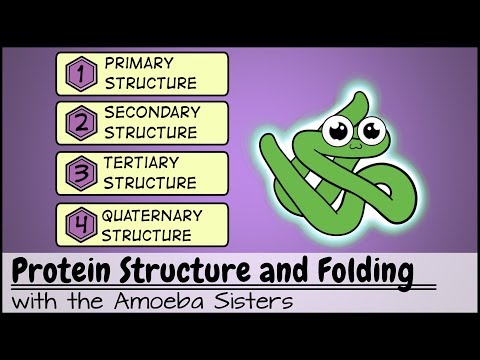
Protein Structure and Folding
Folding Challenges and Importance in Biology
In this section, the speaker discusses their personal challenge with folding and introduces the concept of folding in biology.
Folding as a Challenge
- The speaker struggles with folding various items, including sheets, towels, and shirts.
- Folding extends to paper as well, making foldables in the classroom difficult for the speaker.
- Despite the challenges, folding is a powerful way to organize concepts.
Folding's Role in Function
- Folding is not just about convenience; it also plays a crucial role in biology.
- Proteins are mentioned as amazing molecules that can perform various functions.
- Protein synthesis produces long chains of amino acids but does not automatically result in functional proteins.
- Modifications, including folding, are necessary for proteins to become functional.
Importance of Shape
- Shape and function are closely related in biology.
- Examples from cell signaling and enzyme activities highlight how specific shapes enable protein functionality.
- Understanding different levels of protein structure is essential for comprehending protein folding.
Levels of Protein Structure
This section explains the primary structure and introduces secondary structure in protein organization.
Primary Structure
- Primary structure refers to the sequence of amino acids that make up a protein.
- Amino acids are held together by peptide bonds.
- Genes determine the order and number of amino acids, which is critical for a protein's structure and function.
Secondary Structure
- Secondary structure involves the folding of amino acid sequences observed in primary structure.
- Common secondary structures include alpha helix and beta pleated sheet formations.
- Hydrogen bonds between specific areas of amino acids contribute to these folded structures.
Tertiary Structure and R Groups
This section explores tertiary structure and the role of R groups in protein folding.
Tertiary Structure
- Tertiary structure refers to additional folding that occurs in the three-dimensional shape of a functional protein.
- R groups, also known as side chains, play a significant role in tertiary structure folding.
- Interactions such as hydrophobic interactions, ionic bonds, Van der Waals interactions, disulfide bonds, and hydrogen bonds influence tertiary structure folding.
R Groups' Impact
- Different amino acids have different R groups that define their behavior.
- Hydrophilic R groups are attracted to water and tend to be on the outside of folded proteins.
- Hydrophobic R groups avoid water and tend to be on the inside of folded proteins.
Quaternary Structure
This section introduces quaternary structure and explains how multiple polypeptide chains come together in protein formation.
Quaternary Structure
- Proteins can consist of more than one polypeptide chain in quaternary structure.
- Each polypeptide chain can act as a subunit within the larger protein.
- Interactions between these subunits, such as hydrogen bonds or disulfide bonds, contribute to maintaining the overall protein structure.
Conclusion
The speaker addresses who is responsible for protein folding.
Protein Folding Process
- The transcript does not provide information about who is responsible for protein folding.
Protein Folding and Function
This section discusses the protein-folding problem and the role of chaperonins in assisting with protein folding. It also emphasizes the importance of proper protein structure for its function and highlights the relevance of protein misfolding in diseases.
Protein Folding and Chaperonins
- The protein-folding problem is an area of scientific exploration that investigates how proteins fold.
- Proteins often receive assistance in the folding process, with chaperonins being a type of protein that aids in this process.
- Chaperonins have a barrel shape and provide an ideal environment for proteins to fold correctly.
Importance of Protein Structure
- Proper structure at primary, secondary, tertiary, and quaternary levels is crucial for a mature protein to have its correct shape and carry out its function.
- Many diseases are associated with protein misfolding, disrupting their normal function.
Impact of Environment on Protein Functioning
- Each protein requires an ideal environment for optimal functioning, including specific temperature or pH ranges.
- Exposure to conditions outside the ideal range can disrupt interactions at different structural levels, leading to denaturation of the protein.
- Denaturation prevents proper functioning, and depending on the extent, it may affect multiple levels of protein structure.
- While some cases of denaturation may be reversible, others are not.
The environment plays a significant role in determining a protein's functionality.