Artrópodos- Pulgas
Introduction to Medical Importance of Arthropods: Fleas
Overview of Flea Families
- The discussion focuses on two families of fleas: the Pulicidae (common flea, black rat flea, cat and dog fleas) and the Tunga family, which includes only one member.
Anatomy of a Flea
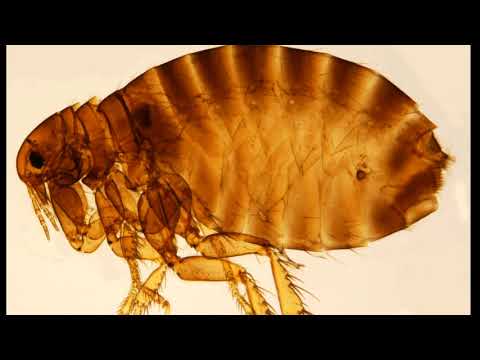
- A diagram illustrates the anatomy of a flea, highlighting its laterally flattened body and three classic insect segments: head, thorax, and abdomen. The head contains eyes, antennae, and bristles useful for species differentiation.
- The thorax is divided into nine segments that aid in distinguishing different flea species; it consists of dorsal plates (scutum), ventral nodes (sternum), and lateral pleurae.
Unique Features of Fleas
- Fleas possess long hind legs with elastic protein called resilin that enables them to jump up to two meters high. This adaptation is crucial for their survival and dispersal.
- Specific bristle types on the head help in identifying species; variations in size or quantity can indicate different flea types. The thorax's structure is essential for medical identification purposes.
Medical Significance of Specific Flea Species
Key Flea Species Discussed
- Xenopsylla cheopis (black rat flea): Notably unfaithful to usual hosts; can transmit diseases like bubonic plague caused by Yersinia pestis and murine typhus caused by Rickettsia typhi. It lacks both pronotal combs and genal combs but has a distinctive thickening on its mesopleurae.
- Pulex irritans (common flea): Similar disease transmission capabilities as Xenopsylla cheopis, but without mesopleural thickening or comb structures. Identification may be challenging due to morphological similarities with other fleas.
Other Notable Fleas
- Ctenocephalides felis (cat flea): Infects not only cats but also various carnivorous mammals; characterized by prominent comb structures compared to previously mentioned fleas. Its role as a vector for diseases is significant due to its wide host range.
- Ctenocephalides canis (dog flea): Shares similarities with Ctenocephalides felis but has distinct head shapes aiding in differentiation; less common than cat fleas yet still medically relevant due to potential disease transmission capabilities.
Disease Transmission by Fleas
Vector Capabilities
- All discussed fleas are capable vectors for diseases such as bubonic plague (Yersinia pestis) and murine typhus (Rickettsia typhi). However, there’s uncertainty regarding whether Ctenocephalides canis serves as a vector for these pathogens based on available literature.
Parasitic Infections from Fleas
- Beyond bacterial infections, fleas can carry parasites like tapeworm larvae (Echinococcus granulosus), which pose risks particularly to children who might accidentally ingest infected fleas during play or grooming activities. Treatment options include medications like gamexane or malathion alongside personal hygiene practices as preventive measures against infestations.
Tunga Penetrans: A Unique Case
Characteristics of Tunga Penetrans
- Known as "jigger" or "sand flea," this species differs significantly from typical fleas due to its burrowing behavior where females penetrate skin—often between toes—to feed on blood while laying eggs directly within the host's tissue causing conditions known as tungiasis.
Health Implications
- Tungiasis presents unique health challenges requiring specific treatment approaches focused on removal from affected areas while emphasizing prevention through proper hygiene practices given their invasive nature compared to other more surface-dwelling fleas discussed earlier in the transcript.
This structured summary provides an organized overview of key points related to medical arthropods focusing specifically on fleas' anatomy, significance in disease transmission, notable species characteristics, and implications for human health based on provided timestamps from the transcript.
Clinical Triad of Flea Infestation
Description of Flea Infestation
- The flea leaves a hole at the end for breathing, which can be observed in the wound it creates. The female flea may appear similar to a pimple but is embedded in the skin, with a swollen abdomen filled with eggs.
Clinical Triad Characteristics
- A clinical triad can be described:
- The central black point represents the genital and respiratory opening of the flea.
- The translucent white stick symbolizes the abdomen filled with eggs visible through the skin.
- Peripheral hyperkeratosis indicates the reaction of surrounding skin tissue to the infestation.