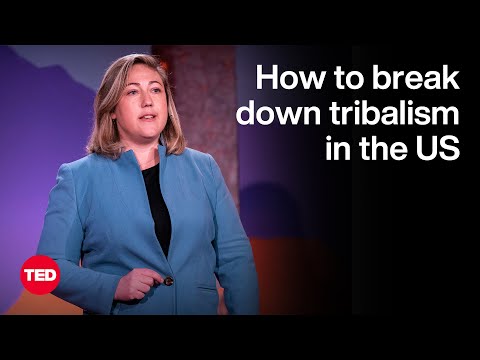
What Makes Someone Vote Against Their Political Party? | Sarah Longwell | TED
Understanding Tribalism in Politics
Introduction to "Survivor" and Tribalism
- Sarah Longwell introduces herself and her favorite TV show, "Survivor," which revolves around tribal dynamics and social competition.
- The show's popularity is attributed to the universal anxiety of rejection from one's tribe, highlighting a deep-rooted human desire for community and belonging.
Human Instincts and Political Tribalism
- Longwell discusses how humans have an innate need for belonging, which has been essential for survival throughout history.
- She connects this instinct to current political landscapes defined by partisan tribalism, emphasizing the challenge of prioritizing democracy over party loyalty.
Personal Experience with Partisan Loyalty
- Longwell shares her initial reluctance to address the topic of democracy over party due to her observations of American voters' strong ties to their political teams.
- Reflecting on 2018, she recounts her efforts to encourage Republican candidates to oppose Trump but found that many voters were supportive of him despite concerns about his behavior.
Insights from Polling and Focus Groups
- After conducting polling, she discovered that many Republicans did not view Trump's actions as antidemocratic; they appreciated his outsider status.
- Longwell notes that even those who disliked Trump still defended him against external criticism, showcasing the protective nature of tribal loyalty.
Building Trust Among Disaffected Voters
- To counteract Trump's influence in elections, she aimed to create permission structures for disillusioned Republicans to break away from their tribe.
- A breakthrough occurred when focus groups revealed that testimonials from ordinary Republicans resonated more than expert opinions or institutional messages.
Formation of a New Tribe Against Trump
- The initiative led to the creation of "Republican Voters Against Trump," allowing individuals to maintain their Republican identity while opposing Trump.
Understanding the Current Political Landscape
The Perception of Democracy in Recent Elections
- Discussion on how voters in 2020 viewed democracy, with a focus on swing voters who were more concerned about extreme Republican candidates than threats to democracy.
- Voters expressed their reluctance to support Republicans primarily due to their extreme views on abortion rather than perceiving them as a threat to democratic values.
- Emphasis on the ingrained nature of democracy in American life, suggesting that its value is often taken for granted and not explicitly discussed among voters.
Divergent Views on Threats to Democracy
- Highlighting the contrasting perspectives between Democrats and Republicans regarding threats to democracy; each side blames the other for undermining democratic principles.
- The need for better communication about what democracy entails and why it is essential, including concepts like pluralism, free speech, and rule of law.
Building a Broader Democratic Coalition
- Urging the importance of uniting various political groups under a larger democratic identity that encompasses diverse beliefs within America.
- Acknowledgment of the precarious state of American democracy and its implications for global democratic stability.
Strategies for Political Engagement
- Advocating for winning elections as a means to counteract extremist views rather than solely promoting "democracy over party."
Turn any video into a summary like this
YouTube links, meetings, lectures. With transcripts, search, and chat.