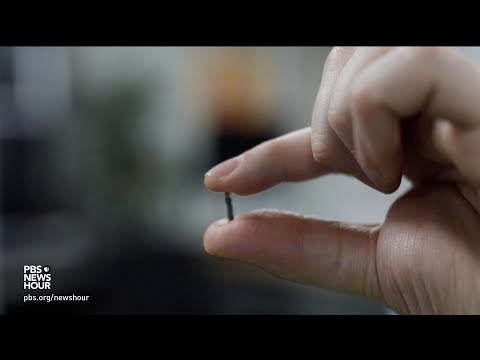
Microchipping humans wields great promise, but does it pose greater risk?
The Benefits and Drawbacks of Human Microchips
This section introduces the debate surrounding human microchips, their increasing use, and the potential benefits and concerns associated with them.
Alex Lewis: Embracing an Exceptional Life
- Alex Lewis, a motivational speaker, shares his desire to lead an exceptional life despite facing serious medical challenges.
Life-Altering Medical Condition
- Alex Lewis contracted a common cold that led to a rare case of Strep A, resulting in toxic shock syndrome, septicemia, and sepsis. He lost all four limbs within months.
Microchips for Accessibility
- Alex Lewis has microchips implanted in his remaining arms.
- One chip holds medical information while the other assists with everyday tasks like using keys.
- The microchip saves time and improves accessibility for prosthetic users.
Near Field Communication Technology
- These microchips utilize near field communication technology similar to contactless debit and credit cards.
- The chips' information can be scanned but not transmitted.
- Developers envision future applications such as contactless payments.
Sweden's Role in the Microchip Revolution
This section explores Sweden's involvement in the microchip revolution, particularly regarding transportation ticketing.
Chip Tickets on High-Speed Rail Lines
- In Sweden, passengers have been implanting chips for travel payment on high-speed rail lines for 18 months.
- Passengers express satisfaction with this convenient method of ticketing.
Rail Company's Decision to Stop Experiment
- Despite positive feedback from passengers, the rail company plans to pursue alternative ticketing methods due to low participation numbers.
- Jowan Osterlund, a pioneer in Swedish microchip technology, emphasizes the potential for easier travel and safer payments.
Privacy Concerns and Medical Applications
This section delves into privacy concerns associated with human microchips and explores their medical applications.
Privacy International's Perspective
- Gus Hosein from Privacy International raises concerns about governments and corporations exploiting personal data obtained through microchips.
- He highlights the potential risks of increased surveillance.
Medical Benefits of Microchips
- Dr. Geoff Watson, a consultant anesthetist, implants a near field communication microchip in an I.T. student named Kieran Anderson.
- The chip can store various medical information such as name, address, contact details, blood type, allergies, and basic medical history.
- Kieran expresses excitement about the potential for seamless communication and automatic payments.
Control Over Personal Information
- Dr. Watson explains that microchips do not transmit data actively but require active reading by authorized individuals.
- He believes that microchips offer more control over personal information compared to mobile phones.
- Gus Hosein remains skeptical about the implications of widespread adoption of this technology.
Conclusion
Human microchips present both benefits and drawbacks. While they offer convenience and accessibility in certain areas like transportation ticketing and prosthetic use, there are valid concerns regarding privacy and potential exploitation of personal data. Further exploration is needed to strike a balance between technological advancements and safeguarding individual rights.
The Benefits and Drawbacks of Human Microchips
This section discusses the intense debate surrounding human microchips, their benefits, and drawbacks. The practice of implanting chips in people is on the rise, with some seeing it as a way to regain control over personal data while others express concerns about potential misuse.
Human Microchips: A Controversial Trend
- Human microchips are gaining popularity as a means to identify and track individuals.
- Proponents argue that microchips offer a way to reclaim control over personal data.
- Critics worry about the potential misuse of data collected through these chips.
Alex Lewis: Embracing Microchip Implants
- Alex Lewis, a motivational speaker who lost all four limbs due to a rare medical condition, has embraced microchip implants.
- He sees microchips as a practical solution for tasks like opening doors and holding medical information.
- For Alex, microchip implants save time and provide convenience in his daily life.
Near Field Communication Technology
- Microchips use near field communication (NFC) technology similar to contactless debit and credit cards.
- NFC allows scanning of chip information but does not transmit data wirelessly.
- Developers believe that once banking security is configured, consumers will be able to make payments using implanted chips.
Sweden's Leading Role in Microchip Implants
- Sweden is at the forefront of the microchip revolution, with implanted passengers using chips for various purposes.
- On high-speed rail lines in Sweden, passengers have been using implanted chips for ticketing purposes.
The Debate Over Human Microchips Continues
This section highlights the ongoing debate surrounding human microchips. While some view them as an opportunity for enhanced control and convenience, others express concerns about privacy and potential misuse of personal data.
The Benefits and Drawbacks of Microchips
- Human microchips offer the potential for individuals to regain control over their personal data.
- However, there are concerns about how this data could be used and the implications for privacy.
Alex Lewis: A Life-Changing Event
- Alex Lewis's life took a drastic turn when he caught a common cold, leading to severe medical complications.
- He lost all four limbs within six to seven months due to toxic shock syndrome, septicemia, and sepsis.
Embracing an Exceptional Life
- Despite his challenges, Alex aspires to lead an exceptional life rather than settling for a normal one.
- He believes that microchip implants can enable him to try new things and overcome obstacles.
Microchips as Practical Solutions
- For Alex, microchip implants provide practical solutions in daily tasks such as opening doors.
- Keys can be challenging for prosthetic users, making microchip technology beneficial in saving time and effort.
Exploring Microchip Implants in Southern England
This section focuses on the experiences of Alex Lewis in Southern England. It highlights his journey as an interior designer, businessman, adventurer, and motivational speaker who has embraced microchip implants.
Meet Alex Lewis: A Pathfinder for Others
- Alex Lewis is an ordinary family man who faced extraordinary challenges after losing all four limbs.
- Despite his circumstances, he became a pathfinder for others with serious medical conditions.
Breakthrough Series on Science and Technology
- Alex's story is part of a breakthrough series that explores advancements in science, technology, and medicine.
- His experiences shed light on the potential benefits of microchip implants in improving quality of life.
Overcoming Challenges with Microchip Implants
This section delves into the specific challenges that microchip implants help Alex Lewis overcome in his daily life.
Keys: A Fiddly Task for Prosthetic Users
- As a prosthetic user, one of the most challenging tasks for Alex is dealing with keys.
- Microchip implants provide a practical solution to save time and effort in accessing doors.
Saving Time and Convenience
- Microchips offer significant time-saving benefits for individuals like Alex who rely on prosthetics.
- The convenience of microchip technology enhances their ability to perform everyday tasks more efficiently.
Near Field Communication Technology and Its Applications
This section explores near field communication (NFC) technology used in microchip implants and its applications in various contexts.
Near Field Communication (NFC) Technology
- Microchips utilize NFC technology, similar to contactless debit and credit cards.
- NFC allows scanning of chip information but does not transmit data wirelessly.
Sweden's Leading Role in Microchip Implants
- Sweden has been at the forefront of adopting microchip implants, particularly on high-speed rail lines.
- Passengers in Sweden have been using implanted chips for ticketing purposes, showcasing the practical applications of this technology.
The Benefits of Chip Ticketing
Carla Grelsson from Sweden discusses the advantages of chip ticketing.
Chip Ticketing Advantages
- Chip tickets are considered beneficial for ticketing purposes.
Concerns about Sinister Uses
A discussion about potential sinister uses of chip technology.
Potential Misuse
- Eddie Curry expresses concerns about the technology being used for sinister purposes.
- Jowan Osterlund, a microchip pioneer, believes that chip technology provides more control over personal information compared to mobile phones.
- Gus Hosein from Privacy International is skeptical and believes that governments may exploit data collected through chips.
Transforming the Company into a Digital Hub
The rail company's plan to attract new income by becoming a hub for digital innovators.
Transformation Plan
- The rail company aims to turn itself into a hub for digital innovators to generate new income.
Ethical Considerations and Control over Personal Information
Discussion on ethical considerations and control over personal information with chip technology.
Ethical Firm Approach
- The New Milton Advertiser considers itself an ethical firm and does not envision using chip technology beyond its intended purpose.
Mixed Reactions and Privacy Concerns
Reactions from staff members and privacy concerns regarding chip implantation.
Staff Reactions and Privacy Concerns
- Majority of staff members have rejected the offer to be chipped.
- Privacy International's Gus Hosein raises concerns about government surveillance and fallible technologies like facial recognition.
Potential Applications and Government Surveillance
Discussion on potential applications of chip technology and concerns about government surveillance.
Potential Applications and Surveillance
- Geoff Watson sees potential in medical applications for chip technology.
- Gus Hosein warns about the political ramifications and overreaching state and corporate surveillance.
Medical Benefits and Ethical Arguments
The medical benefits of chip technology and ethical arguments surrounding its use.
Medical Benefits and Ethical Arguments
- Dr. Geoff Watson highlights the potential life-changing advances that chip technology can bring to individuals, especially in the medical field.
- There are ongoing ethical arguments regarding microchipping people.
Connection between Microchipping and Personal Information
Discussion on the connection between microchipping and personal information.
Personal Information Connection
- Steven Northam from BioTeq believes that fears about microchipping are exaggerated, emphasizing the importance of personal information for proper treatment in emergency situations.
Conclusion
Summary of key points discussed in the transcript.
Key Points Recap
- Chip ticketing offers benefits but raises concerns about potential misuse.
- The rail company aims to transform itself into a digital hub.
- Ethical considerations surround chip technology, with an emphasis on control over personal information.
- Privacy concerns exist regarding government surveillance.
- Chip technology has potential medical benefits but also raises ethical arguments.
- The connection between microchipping and personal information is debated.
Timestamp accuracy may vary due to limitations in processing natural language inputs
How is the transcript being used by Alex and others?
This section discusses how the transcript is being utilized by Alex and other individuals.
Transcript Usage
- The transcript is being used as a reference tool for creating a comprehensive and informative markdown file.
- It helps in structuring the markdown file in a clear and concise manner.
- Timestamps are utilized to link bullet points to specific parts of the video, aiding in studying the transcript effectively.