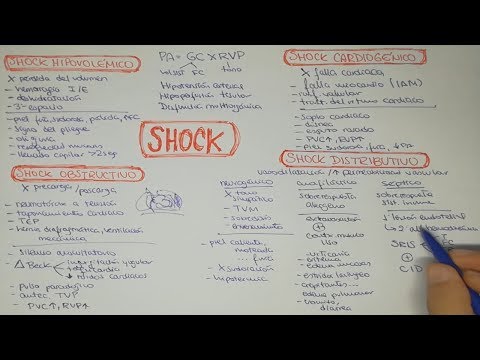
SHOCK: Hipovolémico, Distributivo, Obstructivo, Cardiogénico
What is Shock and Its Types?
Understanding Shock
- Shock is defined as a state of tissue hypoperfusion that fails to meet the body's demands, characterized by hypotension, tissue hypoperfusion, and progressive multi-organ dysfunction.
- The formula for blood pressure (BP = cardiac output x peripheral vascular resistance) is crucial for understanding shock. Cardiac output is derived from stroke volume and heart rate.
Types of Shock
- There are several types of shock: hypovolemic, cardiogenic, obstructive (also known as restrictive), and distributive shock. Distributive shock further divides into neurogenic, anaphylactic, and septic types.
Hypovolemic Shock
- Hypovolemic shock involves a loss of volume (plasma, red blood cells, or bodily fluids). Common causes include internal or external hemorrhage and dehydration due to vomiting or diarrhea.
- In cases of dehydration with third spacing (interstitial fluid not in vessels), the body cannot maintain effective circulation.
Obstructive Shock
- Obstructive shock occurs when there’s failure in preload due to conditions like pneumothorax or cardiac tamponade.
- Preload refers to the volume delivered from veins to the heart; post-load refers to the resistance against which the heart pumps. Conditions like tension pneumothorax can impede venous return.
Cardiogenic Shock
- Cardiogenic shock results from heart failure affecting myocardial function. Typical causes include acute myocardial infarction and valvular insufficiency.
Distributive Shock Types
Neurogenic Shock
- Neurogenic shock arises from loss of sympathetic tone often due to spinal cord injury or drug overdose leading to parasympathetic dominance.
Anaphylactic Shock
- Anaphylactic shock results from an exaggerated immune response to allergens.
Septic Shock
- Septic shock occurs when there’s an overwhelming immune response against pathogens in immunocompromised patients or those facing highly virulent agents.
Clinical Differentiation of Shocks
Hypovolemic vs Other Shocks
- In hypovolemic shock, skin appears cold and sweaty due to vasoconstriction; pallor may be present alongside increased heart rate as compensatory mechanisms kick in.
Obstructive vs Other Shocks
Understanding Shock and Its Mechanisms
Pathophysiology of Shock
- The inferior vena cava continues to transport blood volume to the right heart, but due to its inability to expand, there is a resultant jugular venous distension.
- Compensatory mechanisms include tachycardia; however, cardiac tissue may restrict contractions leading to decreased heart sounds.
- Patients may exhibit paradoxical pulse due to these changes in hemodynamics.
Pulmonary Embolism and Central Venous Pressure
- In cases of pulmonary thromboembolism, a history of deep vein thrombosis is often present. Central venous pressure (CVP) increases when a catheter is placed in the venous side at the atrial level.
- Despite continued volume delivery, inadequate outflow results in elevated CVP and increased peripheral vascular resistance as compensation for low cardiac output.
Cardiogenic Shock and Valve Insufficiency
- In valvular insufficiency cases, patients may present with heart murmurs and dyspnea. Pink sputum indicates fluid retention in the lungs due to ineffective pumping by both sides of the heart.
- Increased CVP and peripheral vascular resistance are noted as sympathetic nervous system attempts compensation leads to cold, sweaty skin and hypotension.
Distributive Shock Variants
Neurogenic Shock
- Neurogenic shock results from loss of sympathetic tone; patients exhibit warm, mottled skin due to lack of vasoconstriction followed by potential hypothermia from evaporative cooling.
Anaphylactic Shock
- Anaphylaxis causes extravasation due to smooth muscle contraction leading to urticaria and mucosal edema. Severe cases can lead to airway obstruction if laryngeal swelling occurs.
Septic Shock
- Septic shock begins with endothelial injury followed by hemodynamic alterations identifiable through systemic inflammatory response syndrome (SIRS), affecting temperature, heart rate, respiratory rate, and leukocyte count.
Coagulation Issues in Shock