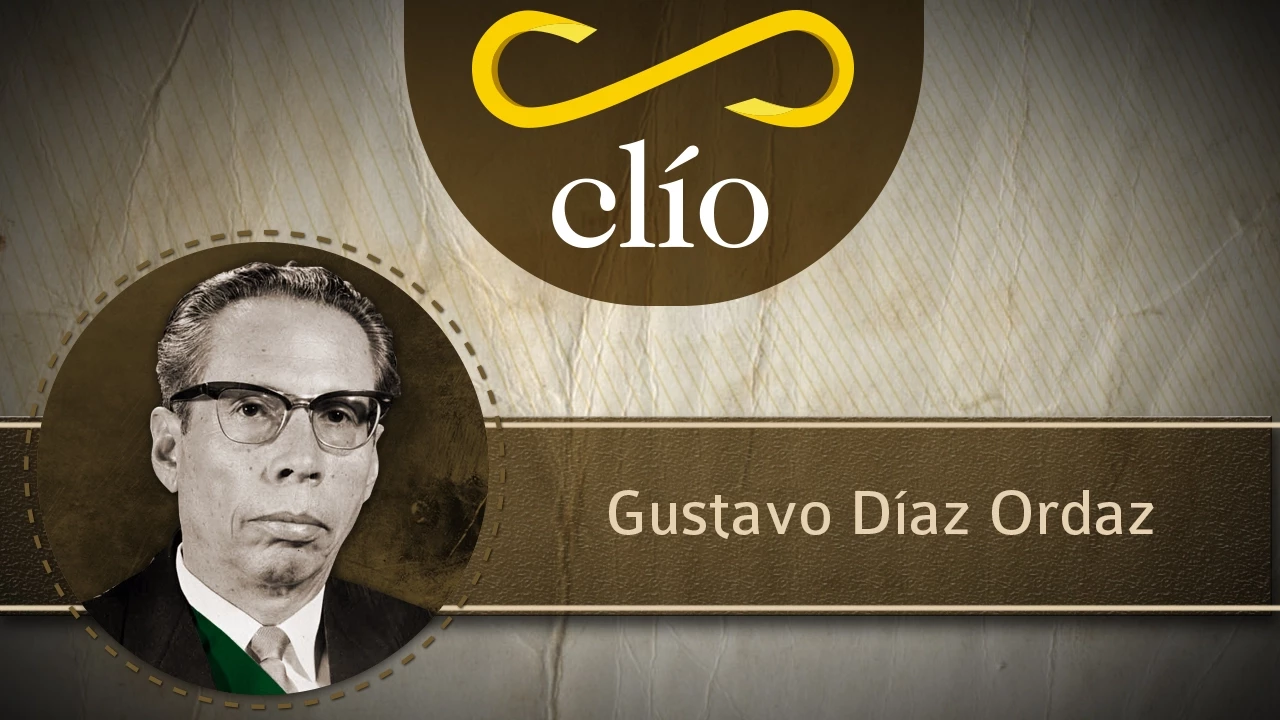
Minibiografía: Gustavo Díaz Ordaz
Gustavo Díaz Ordaz's Early Life
This section provides information about Gustavo Díaz Ordaz's early life, including his birth in Puebla on March 12, 1911, his family background, and his struggles with poverty.
Early Life and Education
- Gustavo Díaz Ordaz was born in Puebla on March 12, 1911.
- His father, Ramón, worked as a rural chief.
- His mother, Sabina Bolaños, seemed to favor his brother Ernesto over him due to his physical appearance.
- Despite wanting to enroll in the military school, he couldn't afford the fees and instead joined the Institute of Sciences and Arts of Oaxaca in 1926.
- As a student, he was serious, methodical, and somewhat arrogant. He disliked disorder and borrowed books since he couldn't afford them.
- His only distraction was playing basketball.
Career Development
This section highlights Gustavo Díaz Ordaz's career development from working at a law firm to holding various political positions.
Political Rise
- In 1938, Maximino Ávila Camacho recognized Díaz Ordaz's abilities and appointed him as the president of the Central Board of Conciliation and Arbitration in Puebla.
- He quickly rose through the ranks to become a magistrate and eventually reached the top judicial position in Puebla at just 30 years old.
- In 1942, Maximino Ávila Camacho allowed him to run for federal deputy of the first district of Puebla.
- Miguel Alemán Valdés supported Díaz Ordaz during his presidency (1946 -1952), leading to his appointment as Secretary of Government.
- He later became a senator and formed a duo with Adolfo López Mateos, who would become the President of Mexico in 1958.
Presidency and Political Challenges
This section focuses on Gustavo Díaz Ordaz's presidency and the challenges he faced during his time in office.
Ascension to Presidency
- In 1964, Gustavo Díaz Ordaz was elected as the President of Mexico for the six-year term from 1964 to 1970.
- His presidency was marked by his personal insecurities, conservative nature, love for order, and inflexibility.
- He led the country during a period of rebellion and liberation movements.
Complexities of Díaz Ordaz's Presidency
This section explores the complexities of Gustavo Díaz Ordaz's presidency, including his opposition to hosting the 1968 Olympic Games and his handling of financial matters.
Opposition to Olympic Games
- Gustavo Díaz Ordaz opposed hosting the 1968 Olympic Games due to their high costs.
- Personally honest but prone to anger, his personal traits were useful in managing finances but detrimental in domestic politics.
Conflict with Doctors
This section discusses Gustavo Díaz Ordaz's conflict with doctors over salary disparities between public hospitals and private institutions.
Salary Disparities and Protests
- A significant issue arose between doctors due to the large salary difference between public hospitals (Lynx 'Lista) and the Ministry of Health.
- The Association of Mexican Resident Doctors demanded rehiring after being dismissed by Hospital 20 de Noviembre.
- Diaz Ordaz did not tolerate pressure and eventually deployed riot police to remove the doctors from the hospital.
Media Suppression
This section highlights Gustavo Díaz Ordaz's suppression of the media and his intolerance towards criticism.
Media Control and Censorship
- In 1966, a newspaper mistakenly published two photos with incorrect captions, one including President Diaz Ordaz and another with monkeys.
- The newspaper was subsequently shut down.
- Diaz Ordaz had little compassion for dissenting voices and saw any movement against his government as potentially infiltrated by communism.
Student Protests and Tlatelolco Massacre
This section focuses on the student protests in Mexico during Gustavo Díaz Ordaz's presidency, leading up to the Tlatelolco Massacre.
Student Protests and Repression
- Students formed the National Strike Council (Consejo Nacional de Huelga) demanding an end to repression and punishment for those responsible.
- The protests escalated throughout the summer of 1968, culminating in a mass gathering at Tlatelolco Square on October 2nd.
- A military group known as Battalion Olimpia, under orders from the presidency, opened fire on the crowd from Chihuahua building.
- The army responded without knowing who they were shooting at, resulting in numerous casualties.
Responsibility Acknowledgment
This section discusses Gustavo Díaz Ordaz's acknowledgment of responsibility for the events surrounding the Tlatelolco Massacre.
Acceptance of Responsibility
- A year later, President Diaz Ordaz admitted his personal, ethical, social, legal, political, and historical responsibility for the decisions made during that time.
- He exempted his Secretary of Government and successor, Luis Echeverría, from any responsibility.