Reliability and Validity in Student assessment 1
Reliability and Validity in Student Learning Assessment
This presentation provides an overview of reliability and validity in student learning assessment. It discusses the definition of validity, the importance of covering all material, and the challenges of achieving complete validity in assessments.
Definition of Validity
- A valid assessment measures what it is supposed to measure.
- Example: Assessing students' understanding of writing a cohesive paragraph by asking them to write a paragraph instead of testing their knowledge about paragraph parts.
Importance of Covering All Material
- A valid assessment should cover as much material as possible, avoiding reliance on small and arbitrary samples.
- It should focus on important points and weigh them according to their significance in the assessed material.
Challenges in Achieving Complete Validity
- No assessment can be completely valid.
- Even with a highly accurate assessment (80% accuracy), there will still be false positives (students who pass but shouldn't) and false negatives (students who fail but should pass).
- Raising the passing grade may reduce false positives but increase false negatives without improving overall validity.
Ensuring Validity in Assessments
- Multiple assessments are necessary since no single assessment can be 100% valid.
- Using a variety of different approaches and types of assessments helps determine students' understanding.
- Different forms include case studies, presentations, portfolios, simulations, self-assessments, etc.
Reliability in Assessments
This section focuses on reliability in assessments, which refers to repeatability or consistency.
Definition of Reliability
- Reliability means that an assessment produces consistent results when repeated under similar conditions.
Conclusion
This summary covers the concepts discussed in the transcript, including validity and reliability in student learning assessment. It emphasizes the importance of covering all material in assessments and the challenges of achieving complete validity. Additionally, it highlights the need for multiple assessments to ensure validity and discusses the concept of reliability.
Reliability in Assessment Processes
This section discusses the different types of reliability in assessment processes, including inter-rater reliability, test-retest reliability, parallel forms reliability, and internal consistency. It also emphasizes the importance of inter-rater reliability in accreditation processes.
Types of Reliability
- Inter-rater reliability is when two different raters evaluate the same artifact and provide the same evaluation.
- Test-retest reliability refers to consistent results when a student is tested and then retested.
- Parallel forms reliability involves using equivalent forms of a test to ensure consistent measurement.
- Internal consistency focuses on testing the same material in different portions of the test.
Ensuring Reliability in Assessment
This section explores strategies for ensuring reliability in assessments, with a focus on inter-rater reliability. It highlights the use of pilot tests and rubrics as effective methods.
Establishing Inter-Rater Reliability
- Conducting a pilot or test trial before administering an assessment helps establish inter-rater reliability.
- Using rubrics can greatly enhance inter-rater reliability by providing clear criteria for evaluation.
- To establish inter-rater agreement, select artifacts with varying quality levels and have multiple raters grade them.
- Calculate the percentage of agreement between raters for each standard in the rubric.
Addressing Differences among Raters
- If there are significant variations in ratings among raters, it is important to discuss these differences.
- Faculty members can decide to revise the rubric or come to an understanding through discussion and clarification.
- Revising questions or rubrics may be necessary to achieve agreement among raters.
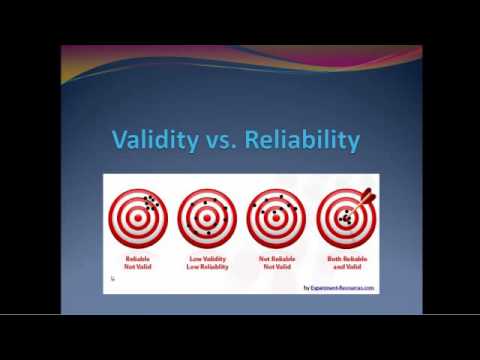
Validity vs. Reliability
This section explains the difference between validity and reliability in assessments and how they are interconnected.
Validity and Reliability
- Validity refers to whether an assessment measures what it intends to measure, like hitting the bull's eye.
- Reliability focuses on consistency, ensuring that the same results are obtained consistently.
- An assessment can be both valid and reliable when it consistently hits the target (bull's eye).
Summative and Formative Assessments
This section discusses the distinction between summative and formative assessments, their purposes, and their relevance to middle state standards.
Summative Assessment
- Summative assessments are final evaluations conducted at the completion of a course or module.
- They determine whether a student has passed by assessing overall mastery of the material.
- Examples include final papers, exams, or comprehensive assessments.
Formative Assessment
- Formative assessments provide ongoing feedback during classroom instruction.
- They help monitor student learning progress and guide instructional decisions.
- Detailed feedback is a hallmark of effective formative assessment.
New Section
In this section, the speaker discusses the importance of formative assessment for both students and teachers. Formative assessment helps identify areas of mastery and areas that need improvement. It also allows teachers to evaluate the effectiveness of their methods and activities.
Importance of Formative Assessment
- Formative assessment helps students identify parts they have mastered and areas where they need to rework the material.
- It allows teachers to evaluate the effectiveness of their methods and activities in helping students understand and incorporate new learning.
- Grades in formative assessment contribute to the feedback process, providing students with information on what they could have done better.
- Rubrics play a crucial role in formative assessment by providing clear standards for grading, making it more meaningful for students.
New Section
In this section, the speaker provides examples of rubrics and instructions on how to create them. Rubrics are sets of criteria and standards linked to learning objectives. They are used not only for assessing student performance but also for communicating about it.
Examples of Rubrics
- Rubrics consist of criteria and standards linked to learning objectives.
- They are used to assess and communicate about student performance.
- Rubrics help maintain consistency in grading by focusing on specific objectives rather than getting distracted by other factors like grammar.
- They foster understanding, indicating which parts students have mastered and which parts they still need to work on.
New Section
In this section, the speaker presents two examples of rubrics - one for fiction writing and another for a lab report. These examples demonstrate how rubrics can be used to assess different types of assignments.
Fiction Writing Rubric
- The rubric has three criteria: plot, setting, and characters.
- Each criterion has four levels of achievement.
- The rubric helps students understand which parts they are getting right and which parts they need to work on.
Lab Report Rubric
- The rubric consists of eight different standards for grading a lab report.
- Each standard has four levels of achievement.
- The lowest level represents minimal understanding, while the highest level indicates going above and beyond the requirements.
New Section
In this section, the speaker provides additional resources for creating and using rubrics. Links are provided to a critical thinking rubric and a step-by-step guide on creating rubrics.
Additional Resources
- Links are provided to a critical thinking rubric and a step-by-step guide on creating rubrics.
- The critical thinking website offers valuable insights into assessing critical thinking skills.
The transcript is already in English language.