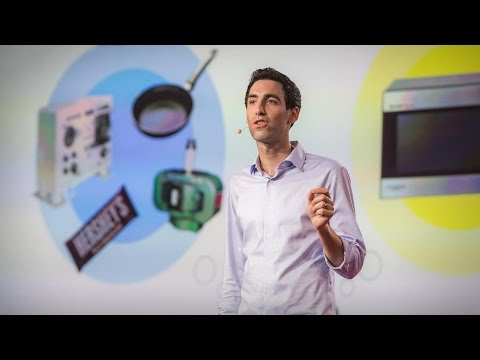
The jobs we'll lose to machines -- and the ones we won't | Anthony Goldbloom
The Future of Work: How Automation Will Change Jobs
Introduction to Yahli and Her Parents' Professions
- The speaker introduces their niece, Yahli, who is nine months old.
- Yahli's mother is a doctor and her father is a lawyer, highlighting the professional background of her family.
The Impact of Automation on Jobs
- By the time Yahli reaches college, her parents' jobs will likely be significantly different due to automation.
- A 2013 study by Oxford University found that nearly half of all jobs are at high risk of being automated.
Understanding Machine Learning
- Machine learning, a powerful branch of artificial intelligence, enables machines to learn from data and replicate human tasks.
- Kaggle operates at the forefront of machine learning, bringing together experts to solve critical problems in various fields.
Evolution and Capabilities of Machine Learning
- Initially applied to simple tasks in the early '90s like credit risk assessment and mail sorting.
- Recent advancements have allowed machine learning to tackle more complex challenges effectively.
Notable Achievements in Machine Learning
- In 2012, Kaggle challenged its community to create an algorithm for grading essays; winning algorithms matched human teachers' grades.
- A subsequent challenge involved diagnosing diabetic retinopathy from eye images; again, machines matched human ophthalmologists' diagnoses.
Limitations of Machines vs. Human Abilities
- Machines can process vast amounts of data quickly but struggle with novel situations they haven't encountered before.
- Humans excel at connecting disparate ideas and solving unprecedented problems due to our ability to think creatively.
Creativity as a Unique Human Trait
- The example of Percy Spencer inventing the microwave oven illustrates how humans can combine knowledge from different domains creatively.
- This capacity for creativity limits the types of tasks that machines can automate effectively.
Implications for Future Employment
- The future job landscape will depend on whether roles involve frequent tasks or require innovative problem-solving skills.
- While machines will increasingly handle routine tasks (e.g., grading essays), complex roles requiring strategic thinking will still need human input.
Conclusion: Embracing Challenges Ahead
- As automation grows, professionals must adapt by focusing on creative aspects that machines cannot replicate.
Turn any video into a summary like this
YouTube links, meetings, lectures. With transcripts, search, and chat.