Understanding Routing! | ICT#8
Understanding Routing in Computer Networks
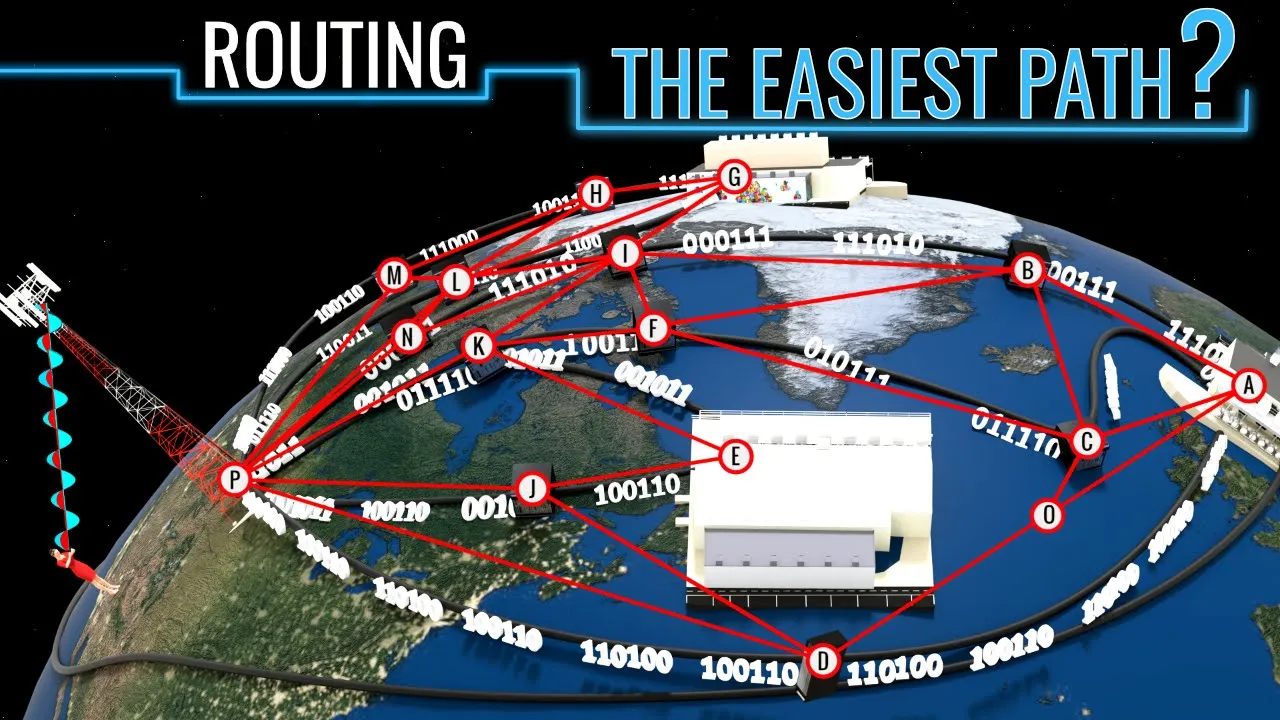
This section introduces the concept of routing in computer networks using an analogy of finding the most efficient path from a source to a destination, similar to navigating traffic from office to home.
The Concept of Routing
- Routing is essential for efficient data transfer from source to destination, analogous to choosing the best route in traffic.
- Two types of routing exist: static routing where routes are manually set and dynamic routing where routes adjust based on network changes.
The Link State Algorithm and Reliable Flooding
This part delves into the link state algorithm, focusing on Dijkstra's shortest path algorithm and reliable flooding as key components.
Dijkstra's Shortest Path Algorithm
- Developed by Edsger W. Dijkstra in 1956, this algorithm finds the shortest path between nodes in a network.
- It generates a table for each vertex, aiding in determining optimal paths within the network.
Reliable Flooding
- In link state routing, routers share complete topology information through link state packets to facilitate efficient data transfer.
Turn any video into a summary like this
YouTube links, meetings, lectures — with transcripts, search, and chat.