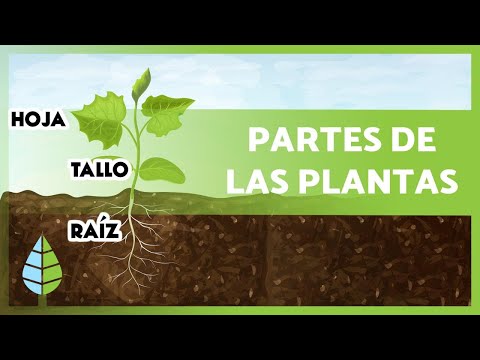
PARTES de una PLANTA 🌱 + sus FUNCIONES 🌸🍑
What Are the Parts of a Plant?
Introduction to Plant Anatomy
- The video introduces the basic parts of plants: roots, stems, fruits, flowers, leaves, and seeds. It aims to explain each part's functions in detail.
Understanding Stems
- The stem is defined as the aerial part of the plant that grows upwards against gravity. It can also be subterranean.
- Stems are categorized into two types: underground (e.g., tubers, rhizomes, bulbs) and aerial (e.g., climbing, creeping).
- The main functions of stems include supporting branches and transporting nutrients throughout the plant via sap.
Exploring Roots
- Roots are identified as the most crucial organ of a plant and develop first during germination. They can be classified based on anchorage type.
- Types of roots include contractile roots, stilt roots, epiphytic roots; they can also vary in shape (e.g., taproot vs. fibrous).
- Roots primarily absorb water and nutrients while stabilizing the plant structure in soil or other surfaces.
Do Plants Feel Pain?
- A question posed about whether plants feel pain leads to clarification that while they do not feel pain like animals do, they can communicate damage signals within themselves and to nearby plants.
What Are Leaves?
Leaf Structure and Classification
- Leaves are described as thin green organs growing from stems or branches. They can be classified based on their lifespan (perennial vs. deciduous).
- Additional classifications may consider leaf edges, venation patterns, petiole presence, or overall shape.
Functions of Leaves
- Leaves serve three primary functions: respiration by taking in oxygen at night; photosynthesis for energy production using sunlight; and transpiration for excess water release.
Understanding Flowers
Flower Characteristics
- Flowers are highlighted as the most visually appealing part of plants responsible for reproduction. Not all plants reproduce through flowers.
Flower Structure
- A flower consists of five main parts: calyx, stamens (male), pistils (female), filaments, and corolla. Stamens produce pollen necessary for fertilization.
What Are Fruits?
Fruit Formation
- Fruits protect seeds produced after pollination occurs in flowers. They come in various forms depending on species.
Functions of Fruits
- The primary role of fruits is seed protection while facilitating dispersal through animal consumption which aids propagation.
The Importance of Seeds
Seed Characteristics
- Seeds form inside fruits and vary widely in shape, color, size; some are edible.
Functions of Seeds