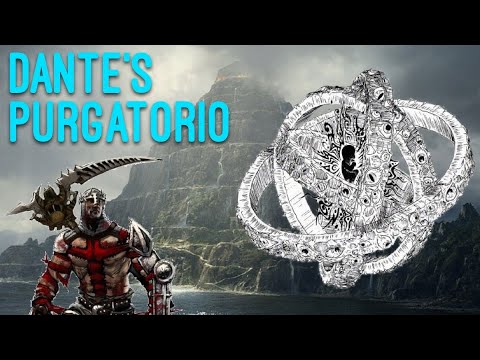
Dante's Purgatorio & The 9 Levels of Purgatory Explained
Dante's Purgatorio: An Overview
Introduction to Dante's Purgatorio
- The video discusses the second part of Dante Alighieri's "Divine Comedy," specifically "Purgatorio," and its seven levels of purgatory.
- It serves as a continuation from "Inferno," providing insights into Dante and Virgil’s journey through purgatory, the concept of purgatory in Catholicism, and the symbolism within the narrative.
Personal Reflection on Purgatorio
- The speaker expresses a preference for "Purgatorio" over "Inferno," citing its deeper storytelling and character development compared to the horror elements of hell depicted in "Inferno."
- Both sections are part of one work, but the speaker emphasizes that this distinction is not crucial for understanding.
Sponsorship Segment
- The speaker thanks viewers for their support and introduces Skillshare as a sponsor, promoting it as an online learning community with diverse classes.
- They share personal experiences using Skillshare to improve camera skills, highlighting its value for creative growth.
Recap of Inferno
- A brief recap is provided about "Inferno," where Dante and Virgil navigate through nine layers of hell to reach Mount Purgatory.
- The story begins at Mount Purgatory, located on the opposite side of Earth from hell, introducing unique celestial observations relevant to their journey.
Symbolism in Purgatorio
- The narrator notes that during Dante’s time, there was significant emphasis on seven virtues within Catholic doctrine—four cardinal virtues accessible to all and three spiritual virtues reserved for believers.
Purgatory and the Journey of Redemption
The Cardinal and Spiritual Virtues
- Dante references the four cardinal virtues: justice, prudence, temperance, and fortitude, alongside the three spiritual virtues: faith, hope, and love (or charity). This sets a moral framework for understanding sin and redemption in Purgatory.
Encounter with Cato
- As Dante contemplates the stars symbolizing personal change, he meets Cato. Virgil instructs Dante to kneel in reverence as Cato allows them to pass on their journey after being informed they were sent by Beatrice.
Cleansing Ritual
- Before ascending Mount Purgatory, Virgil performs a cleansing ritual for Dante at a riverside to wash away his sins—symbolic of baptism and renewal.
Contrast Between Realms
- A bright ship arrives carrying souls to the afterlife, contrasting sharply with the despair seen in Inferno. The angel leading this ship signifies hope and salvation through hymns sung by those aboard.
Recognition and Urgency
- Casella recognizes Dante from Florence; they share songs until Cato urges them to continue their ascent up the mountain. This moment highlights camaraderie amidst suffering but also emphasizes urgency in seeking redemption.
The Nature of Light and Shadows
First Impressions of Purgatory
- Upon entering Purgatory's daylight for the first time since Inferno's darkness, Dante notes that only he casts a shadow while others do not—a significant observation about life versus death.
Understanding Spiritual Bodies
- Virgil explains that shadows are tied to physical bodies; souls lack such limitations. This concept illustrates how spiritual existence transcends physical attributes yet retains some semblance of identity.
Philosophical Reflections
- During their discussion about shadows, Virgil comments on humanity’s endless questioning nature. He contrasts this with philosophers trapped in limbo who seek answers but remain ignorant due to their focus on knowledge over self-improvement.
The Layers of Purgatory
Excommunicated Souls' Suffering
- At the base of Mount Purgatory, Dante encounters excommunicated souls who must endure punishment proportional to their earthly sins—30 times longer than their period of excommunication.
Sub-layers Explained
- The initial part of purgatory is divided into sub-layers representing stubbornness or negligence towards repentance before death. Souls here reflect on missed opportunities for confession during life.
Examples of Stubbornness
- One soul named Bellequa shares his regret about repenting too late—he must spend his entire earthly lifespan on these shores as penance for his procrastination regarding salvation efforts.
Understanding Purgatory and Its Significance in Dante's Work
The Context of Purgatory
- Sordello, a 13th-century Italian poet, discusses the political landscape of Florence, predicting its downfall due to current leadership.
- The concept of purgatory is introduced, emphasizing that interpretations from the 1300s should not be conflated with modern Catholic beliefs.
Distinctions Between Hell and Purgatory
- Purgatory serves as a place for believers who need to overcome sins related to character flaws rather than violent acts.
- Unlike hell, where there is eternal suffering without escape, purgatory offers temporary punishments aimed at soul cleansing.
The Structure of Purgatory
- Souls in purgatory endure suffering but are ultimately allowed to ascend to heaven once they have been purified.
- There are pre-levels in purgatory where souls wait before judgment; these levels highlight the journey towards redemption.
Symbolism and Spiritual Virtues
- Virgil explains that no one can climb Mount Purgatory without sunlight, symbolizing Jesus Christ's role in salvation.
- During nighttime in purgatory, spiritual virtues oversee the souls while they sing hymns; only those too focused on earthly matters remain disconnected.
Ongoing Struggles and Divine Intervention
- Each night, an angel battles a serpent representing temptation; this ongoing struggle signifies the constant challenge against sin.
- The broken swords of angels symbolize the long duration of this battle until Judgment Day arrives.
Dante's Journey and Dreams
- Dante experiences his first dream involving a golden eagle that symbolizes divine aspiration but also warns of potential peril when approaching divinity.
- Upon waking, Dante finds himself at the gate of purgatory where an angel marks him with seven 'P's representing purification stages.
Steps Towards Salvation
- The three steps leading to the gate symbolize different states: marble (original purity), stone (corruption through sin), and red gemstone (redemption through Christ’s sacrifice).
Dante's Journey Through Purgatory
The Concept of Purgatory
- Dante must pass through seven layers of purgatory to remove the "peas" (sins) from his forehead, symbolizing his journey towards redemption and heaven.
- Each layer corresponds to one of the seven deadly sins, with a counter virtue present in that level. The ultimate goal is purification for entry into heaven.
Level One: Pride
- In the first level, pride is countered by humility; physical representations and biblical quotes illustrate this theme throughout the path.
- Souls on this level carry heavy stones representing their pride in life while reciting prayers, indicating a shift from despair in hell to a desire for betterment in purgatory.
- Notable figures depicted include King Saul and Arachne, showcasing Dante's blend of Greek mythology with biblical teachings. Carvings also depict prideful acts like Satan's fall and Nimrod’s tower.
Progression Towards Redemption
- As they near the end of this tier, more penitent souls sing hymns reflecting their progress towards purification, suggesting hope and improvement among them.
- After having a pea removed from his forehead, Dante feels lighter and recognizes how sin had burdened him without his awareness; he mimics the posture of those suffering as part of his penance for pride.
Level Two: Envy
- Upon entering the second level focused on envy, Dante notes that the path narrows further as they ascend—symbolizing increased difficulty as one approaches perfection.
- Voices expressing generosity replace envy; references include Orestes from Greek mythology and quotes from Mary emphasizing her virtuous nature as an embodiment of generosity.
- Souls here are blindfolded due to their envious nature in life; they now walk without sight as punishment for their past desires for others' possessions.
Interactions with Souls
Purgatory Insights: Envy and Wrath
The Nature of Pity and Prayer for the Dead
- The discussion begins with the idea that praying for the dead is a noble act, as it reflects a shift from piousness to pity.
- Hell is depicted with vivid imagery, including people boiling forever and being trapped in stone coffins, emphasizing the severity of their punishments.
Dante's Political Commentary
- Dante’s inquiries about Florence serve as a political commentary; he wrote this work after being exiled from his city.
- His longing for Florence adds depth to his journey through hell, showcasing both personal loss and broader societal critiques.
Lessons on Envy
- As they exit the tier of envy, voices recount Cain's story, illustrating how envy leads to destructive actions.
- Virgil explains that humans often perceive charity as a loss due to their earthly mindset, neglecting spiritual gains.
Understanding Wrath in Purgatory
- Upon entering the third level of purgatory (wrath), examples of meekness are presented through biblical figures like Mary and Stephen.
- The atmosphere is filled with dark smoke symbolizing confusion caused by wrath; Dante hears hymns amidst this chaos.
Free Will and Leadership
- A conversation between Dante and Marco raises questions about free will versus predestination in human behavior.
- Marco critiques how power (the sword) has become intertwined with spiritual leadership (the shepherd's crook), leading societies astray.
Reflections on Human Nature
- Unlike previous encounters where Dante criticized cities based on their politicians, here he engages in deeper philosophical discussions about governance.
Understanding Love and Desire in Purgatory
The Nature of Love
- As the sun sets, Virgil explains to Dante the concept of love, distinguishing between two types: natural love (a universal draw towards God and truth) and love of the mind (individual perceptions of love).
- Natural love is inherent in all humans, while love of the mind varies from person to person based on their desires and vices.
- Actions stem from these loves; for instance, pride arises when one loves oneself excessively, while envy emerges from desiring what others possess.
Structure of Purgatory
- Purgatory is divided into lower and upper sections. Lower purgatory consists of three tiers representing misplaced loves: pride, envy, and wrath.
- Misplaced love is deemed worse than broken love found in upper purgatory. Broken love indicates a misdirection rather than complete self-centeredness.
The Role of Desire
- Virgil elaborates that desire originates when the mind fixates on something for an extended period. Achieving this desire leads to joy but can also be misguided.
- Dante questions whether pursuing wrong desires dooms individuals to perpetual dissatisfaction. Virgil asserts that true righteousness involves exercising free will to reject impure desires.
Free Will and Righteousness
- Free will allows humans not only to stray from God but also to turn away from their own flawed desires, which is essential for moral character.
- The existence of impure desires provides a basis for judgment; without them, there would be no measure for righteousness or virtue.
Transitioning Through Purgatory
- The discussion highlights a significant theological concept regarding free will's balance with human nature—a theme prevalent throughout Christian theology.
- After leaving lower purgatory, Dante enters upper purgatory's first layer—sloth—where souls are punished by constant running as a counteraction to their previous laziness.
Symbolism in Dreams
- Dante experiences a dream involving two women: one beautiful trying to entice him and another ugly revealing herself as a siren. This symbolizes temptation versus reality.
- Virgil intervenes in the dream by defeating the siren, illustrating Dante’s struggle against deceptive allurements leading him astray.
Themes in Upper Purgatory
- In upper purgatory's final layers, souls exhibit misplaced zeal rather than outright vice; they strive toward goodness but falter due to excess or deficiency in their actions.
The Journey Through Purgatory: Layers of Greed and Gluttony
The Fifth Layer: Greed
- Dante notes the appearance of the angel of zeal, who wipes a "p" off his forehead as they enter the fifth layer, symbolizing purification.
- The layer is identified as greed (or avarice), where souls are punished for their excessive desire for wealth. Avarice involves actions to gain and keep wealth, while greed is simply wanting it.
- Souls in this layer lie bound on the ground, quoting Psalm 119, reflecting their humility and inability to rise until penance is complete. Dante meets Pope Adrian here, who emphasizes equality before God.
- As they walk, they hear a soul weeping over Mary’s poverty after Christ's birth. This highlights contentment with poverty as an opposite virtue to avarice.
- Hugh Capet, founder of the Capetian dynasty in France, discusses political betrayal against Florence. His historical connection adds depth to Dante's critique of contemporary politics.
The Mountain Shakes: Stadius' Introduction
- As they ascend further up the mountain, it shakes violently; angels sing Gloria in Excelsis Deo at each sinner's completion of penance.
- Stadius, a Roman poet from the first century AD, introduces himself and explains that he has been in this layer for 500 years awaiting entry into heaven.
- Stadius reveals that one can serve multiple sentences across different layers of purgatory; he had also spent time in earlier stages for another 500 years.
- This concept illustrates that souls endure extensive periods in purgatory based on their sins—Dante reflects on others like Arachne and Saul who faced even longer durations due to pride.
Emotional Encounters: Dante and Virgil
- Stadius expresses admiration for Virgil without realizing he is speaking directly to him. He shares how Virgil’s work inspired him deeply.
- Dante experiences mixed emotions—laughter and tears—as he witnesses Stadius’ excitement about meeting Virgil.
- When asked why he smiles amidst such serious discussions about sin and penance, Dante tries to contain his joy but ultimately shares his secret with Stadius about Virgil’s identity.
Ascending Together: Moving Towards Gluttony
- Upon revealing Virgil's identity leads to a humorous moment where Stadius attempts to embrace him out of reverence; Virgil gently rebuffs him.
- The trio continues their ascent towards the sixth layer—gluttony—marking a transition from themes of greed towards indulgence issues related to temperance.
Understanding Sins: Gluttony Explored
The Layers of Purgatory: Exploring Sin and Redemption
The Nature of Greed and Frivolity
- A renowned poet is discussed in relation to greed, with Sadia suggesting that his true sin was frivolous spending, which aligns closely with greed as both involve a love for material wealth.
- The poet's fear of publicly expressing his Christian faith leads to a discussion on sloth, highlighting the complexity of sins where multiple layers can apply.
Encounters in Limbo and Gluttony
- Dante and Virgil enter the gluttony layer, characterized by sweet-smelling trees that symbolize temperance, contrasting with gluttony through biblical examples like Daniel and John the Baptist.
- Forese, a Florentine acquaintance, explains their perpetual hunger for the fruit from these trees, representing unfulfilled desires during their penance.
The Role of Prayer in Purgatory
- It is believed that prayers from the living can expedite sinners' access to heaven; Forese’s shorter penance is attributed to his wife's prayers.
- Virgil notes that the trees represent the original sin's fruit from Eden, linking indulgence in food to one's final penance.
Physical Manifestations of Souls
- Dante observes that souls appear skinny or strong based on their spiritual fulfillment; those still serving penance lack power while those who have completed it appear robust.
- Stadius exemplifies this contrast as he has completed his penance and appears physically strong compared to others still suffering.
Transitioning into Lust: Final Layer of Purgatory
- As they approach the seventh layer (lust), Dante describes a narrow path surrounded by purifying flames where souls run back and forth without being burned.
- Unlike previous punishments involving heavy burdens or physical mutilation, lustful souls must walk through flames as part of their purification process before entering heaven.
Understanding Lust in Context
- Lust is portrayed as an easily committed sin; its proximity to heaven signifies its lesser severity compared to other sins like pride or envy.
The Journey Through Fire and the Gates of Eden
Crossing the Wall of Fire
- The trio, including Dante, Virgil, and Statius, begins singing "Blessed are the pure in heart" as they approach a wall of fire. This signifies a crucial moment in their journey.
- Dante feels terrified at the prospect of crossing through flames to reach heaven. Virgil reassures him that Beatrice awaits on the other side and promises not to leave him alone.
- As they walk through the fire, Dante expresses how hot it is but remains determined. Virgil recalls Beatrice's beauty to motivate Dante to push forward.
Dreams and Interpretations
- After exiting the flames, they decide to rest for the night. Dante dreams of Leah and Rachel from the Old Testament, symbolizing different life choices.
- The first dream features a golden eagle representing God’s divine power; it illustrates humanity's inability to handle God's direct presence without preparation.
- In his second dream, a siren tempts Dante while Virgil destroys this temptation, showcasing virtue overcoming vice.
Life Choices and Spiritual Growth
- Leah discusses two paths: one of work and another of meditation. This reflects on how humans must balance earthly practices with spiritual growth.
- The interpretation suggests that while God desires closeness with humanity (Dante), individuals must navigate life's temptations with guidance from virtues like those represented by Virgil.
Arrival at Eden
- They reach Mount Purgatory's summit where lies the Garden of Eden—the original paradise intended for humanity before sin entered.
- Virgil explains that only believers can enter this garden; thus he cannot accompany Dante further on his journey toward heaven.
Farewell Between Guides
- Fearful about being left alone, Dante is reassured by Virgil that he has been cleansed of sins and is now ready for his own path as a believer.
- In an emotional farewell, Virgil emphasizes that he has prepared Dante to surpass him in wisdom and leadership as he bestows upon him a metaphorical crown.
Reflection on Sacrifice
- The narrator reflects on how Virgil walked through fire not for himself but so that Dante would not face it alone—highlighting themes of sacrifice and mentorship.
- Despite initial intentions to critique Florence or its leaders humorously, there’s an emotional connection formed with Virgil’s character throughout their journey together.
Entering Paradise
The Journey to Eden: Dante's Encounter with Beatrice
The Nature of the Garden and Humanity's Connection
- The garden symbolizes an eternal pledge of peace, with its existence maintained by God's will. Everything within it, from flowers to water, reflects divine creation.
- Matilda explains that God cares for the garden daily, awaiting humanity's return. This garden is portrayed as the birthplace of humanity and a representation of perfection.
- Humanity’s original intent was to live in this perfect area without sin; however, free will led to corruption and suffering.
- The journey through hell and purgatory represents humanity's struggle to shed sin and regain access to the garden.
Symbolism in Dante’s Vision
- Dante observes a heavenly parade featuring seven glowing candlesticks, women dancing in groups symbolizing virtues, cherubim, and a chariot pulled by a griffin—blending mythology with biblical elements.
- A lady in green and red emerges from the chariot; her identity is revealed as Beatrice, marking a significant moment for Dante.
Emotional Reunion with Beatrice
- Upon seeing Beatrice, Dante experiences overwhelming emotions. She questions his right to weep before those who are happy in paradise.
- Beatrice embodies holiness throughout the narrative; her presence evokes deep feelings of love and regret within Dante.
Reflection on Sin and Redemption
- When confronted by Beatrice about his past choices since her death, Dante expresses remorse for pursuing earthly desires instead of living righteously.
- Beatrice intercedes on behalf of Dante after her death, asking God to guide him through hell and purgatory so he can achieve forgiveness.
The Significance of Forgiveness
- Beatrice emphasizes that she facilitated Dante’s journey because he strayed from a virtuous path. Her role mirrors Christ’s intercession for humanity.
- As they discuss sins at the edge of Eden, Dante realizes his past pursuits seem trivial compared to the infinite love present before him.
- This moment recontextualizes earlier encounters with sinners in Inferno; now standing at Eden's threshold, he faces similar feelings of despair regarding his own sins.
Dante's Journey Through Salvation
The Role of Matilda and the Virtues
- Matilda helps Dante confront his sins by dragging him through a river, leading to a moment where he forgets his past transgressions.
- A dance with four virtuous women symbolizes the cardinal virtues, guiding Dante closer to Beatrice, representing divine love.
Symbolism of the Griffin and Cardinal Virtues
- The reflection of a griffin as an eagle and lion in Beatrice's eyes signifies faith, hope, and love that lead Dante towards God.
- Statius accompanies Dante on this journey; his presence adds depth to the narrative as they witness significant symbolic events.
The Barren Tree and New Life
- A barren tree in a garden murmurs Adam's name; when connected to the chariot by the griffin, it blossoms, symbolizing redemption from sin.
- This connection alludes to Catholic tradition linking Jesus' crucifixion with the tree of knowledge from Eden.
The Chariot's Destruction and Church Symbolism
- As Dante falls asleep in the chariot, he dreams of an eagle attacking a tree while various creatures symbolize turmoil within the church.
- The vixen represents corruption within the church while a giant embodies governmental greed; their interaction illustrates conflict between state and church.
Prophetic Elements and Emotional Resonance
- Beatrice prophesizes that one day someone will come to defeat both corruption (the vixen) and power (the giant), marked by "510 and 5"—a mystery yet unsolved.
Dante's Purgatorio: A Journey of Forgiveness and Renewal
The Significance of the Rivers in Purgatory
- Dante and Statius, accompanied by Beatrice and the seven virtues, arrive at the second river, known as "You Know," which symbolizes forgiveness. This contrasts with the first river, Leith, which represents forgetfulness.
- Drinking from the river You Know allows sinners to remember their past sins while recognizing their purification. This is essential for souls ascending from purgatory towards heaven.
The Transformation of Dante
- After drinking from You Know, Dante reflects on his past sins but feels renewed and ready for ascension. The final lines of Purgatorio emphasize this transformation as he prepares to ascend to heaven.
- The speaker expresses gratitude for covering Purgatorio, noting it is a more compelling narrative than Inferno. They appreciate its depth despite acknowledging that Inferno has more layers focused on torture.
Emotional Resonance in Purgatory
- The concept of God tending to Eden daily evokes powerful emotions. It symbolizes hope for humanity's return home, highlighting themes of redemption and divine love.
- The speaker finds joy in discovering that purgatory is divided into tiers, similar to hell. This structure enhances their appreciation for Dante’s work beyond initial expectations.
Anticipation for Paradiso
- Excitement builds around reading Paradiso, especially after enjoying Purgatorio. There’s curiosity about how heaven will be depicted compared to hell and purgatory.
- Observations are made about the mirrored structure between hell and purgatory; as one descends into hell it becomes worse, while ascending through purgatory leads toward less severe punishments closer to Eden.
Reflections on Literature Engagement
- The speaker emphasizes a desire not to replace original literature with summaries or reviews but rather explore deeper themes like free will and dreams found within classic texts.
- Future content ideas are hinted at without specific promises due to previous experiences with delayed topics. There's an intention to continue exploring profound literary concepts moving forward.
Gratitude Towards Supporters
Gratitude and Milestones in Content Creation
Acknowledgment of Support
- The speaker expresses heartfelt gratitude to their top-tier patrons and subscribers, highlighting the significance of their support in reaching 1.07 million subscribers.
- They mention receiving the one million subscriber plaque on the day of filming, emphasizing a milestone achievement with an additional 70,000 subscribers already gained.
Future Content Plans
- The speaker reflects on their appreciation for continued support, stating they feel undeserving but grateful nonetheless.
- An unboxing video related to the one million plaque is mentioned as upcoming content for the second channel, which is not yet available but will be posted shortly.
Engagement with Community
- There will be a Q&A session featuring questions from Patreon members before its closure; this content will also be shared on the second channel known as Windygang.