Phylum Mollusca Part 4: Class Cephalopoda (Squids, Nautiluses, Cuttlefish, and Octopuses)
Cephalopods: Mysterious Marine Creatures
This section delves into the class Cephalopoda, highlighting their significance in human culture, historical myths, and modern pop culture. It also addresses misconceptions about their size and explores the debate over the largest invertebrate species.
Cephalopods in Culture
- Cephalopods feature prominently in various cultural tales worldwide, from ancient legends to modern pop culture references.
- Despite historical myths exaggerating their size, cephalopods are not as large as commonly believed. The debate continues on whether giant squid or colossal squid holds the title of the largest invertebrate.
Largest Invertebrates Debate
- The term "giant squid" encompasses multiple species within Architeuthidae family, with reported sizes up to 12-13 meters and 600 pounds. Colossal squids from Cranchiidae family are found only in southern oceans.
- Researchers dispute which species deserves the title of "largest invertebrate," with estimates suggesting colossal squids may reach 10-14 meters and weigh over 700 kg.
Exploring Cephalopod Anatomy
This section focuses on the anatomy and physiology of cephalopods, including their shells, body systems, appendages, and unique characteristics.
Shell Variations
- Different cephalopod species exhibit varied shell structures; nautiloids and ammonoids had heavy shells buoyed by gas chambers while modern Nautilus retains a lighter shell. Cuttlefish possess a small cuttle bone enclosed by the mantle.
Body Systems
- Cephalopods possess various body systems such as muscular, circulatory, digestive, reproductive, and nervous systems. Their muscular system aids locomotion through jet propulsion using a ventral siphon.
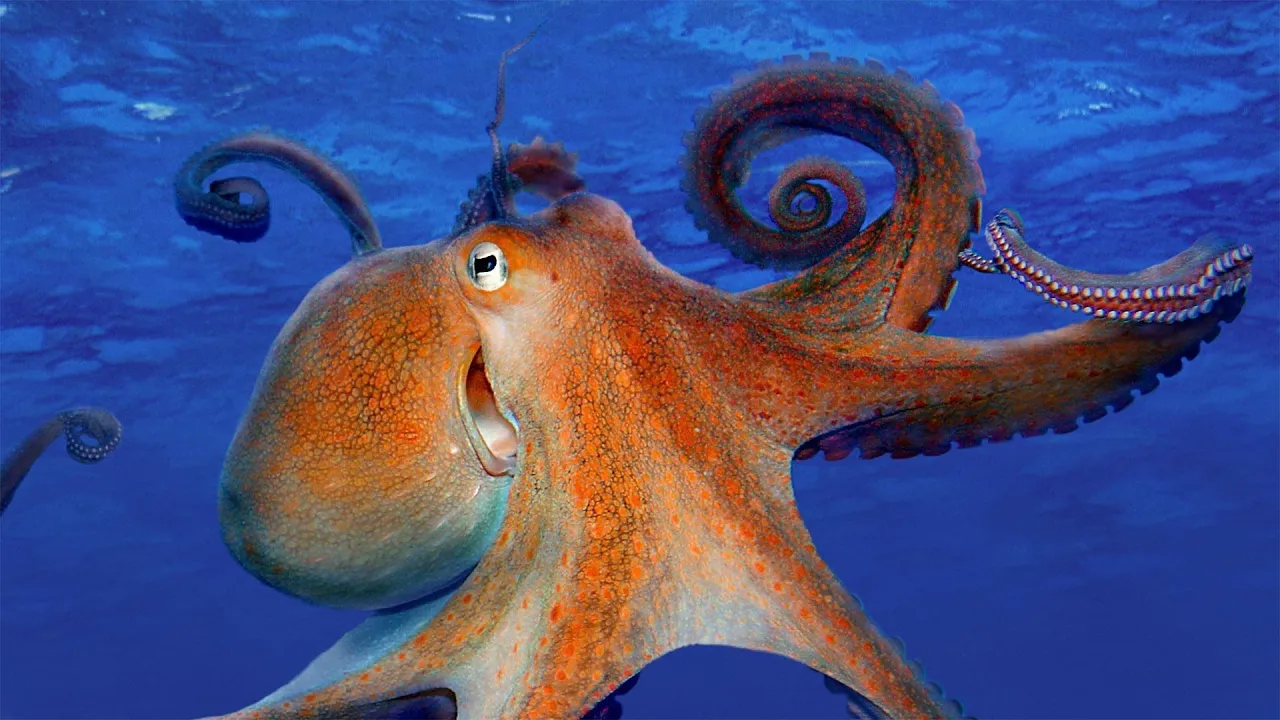
- Appendages differ among cephalopod species; nautiluses have cirri without suction cups while octopuses have eight arms but no tentacles. Squid and cuttlefish boast both arms and specialized tentacles for prey capture.
Morphological Adaptations
- Octopuses can change color and texture rapidly for camouflage due to hydrostats similar to arms' muscles. Squid use sucker ring teeth for prey capture while octopus suckers lack teeth but are muscular.
Anatomy and Physiology of Cephalopods
In this section, the anatomy and physiology of cephalopods are discussed, highlighting unique features such as their brain region, circulatory system, respiratory system, digestive system, integumentary system, reproductive system, nervous system, sensory organs, and defense mechanisms.
Cephalopod Brain Region
- The brain region in cephalopods is distinct from that in humans.
Cephalopod Circulatory System
- Cephalopods have a closed circulatory system unlike most mollusks.
Cephalopod Digestive System
- The digestive process involves a two-part beak and various digestive organs.
Cephalopod Integumentary System
- The skin of cephalopods serves protective and sensory functions.
Cephalopod Reproductive System
- Cephalopods exhibit dioecious reproduction with unique fertilization methods.
Cephalopod Reproduction and Life Cycle
This section delves into the reproduction and life cycle of cephalopods, highlighting their mating rituals, parental care behaviors, and unique characteristics.
Cephalopod Mating Rituals
- Male cephalopods engage in elaborate mating rituals involving color changes, movements, and chemicals to attract females.
- Competition among males for female attention can lead to aggressive behavior.
- Cuttlefish exhibit mate choice, with females preferring certain males over others.
Parental Care and Life Span
- Most cephalopods do not provide parental care; females lay eggs in clutches with protective coatings for embryo safety.
- Octopuses are an exception, with mothers staying with eggs to defend against threats at the cost of their own well-being.
- Female octopuses typically mate once and die shortly after their young hatch due to starvation.
Cephalopod Intelligence and Behavior
This segment explores the remarkable intelligence and behaviors exhibited by cephalopods, emphasizing their learning capabilities and complex interactions.
Learning Abilities
- Octopuses demonstrate exceptional learning abilities such as task observation leading to task completion.
- Cephalopods exhibit diverse behaviors like dreaming, problem-solving (e.g., escaping enclosures), tool use, mimicry, spatial learning, and communication through various means.
Cognitive Skills
- Cephalopods showcase cognitive skills through puzzle-solving tasks involving pushing or pulling actions, unscrewing lids of containers for food access, remembering solutions to puzzles, and adapting to different configurations.
Protection of Cephalopods
This part discusses legislative measures aimed at protecting cephalopods due to their intelligence levels in some countries while highlighting the lack of protection in other regions globally.
Legal Protection
- Some countries have enacted laws safeguarding cephalopods from consumption and harmful experiments based on their intelligence levels.
Global Status