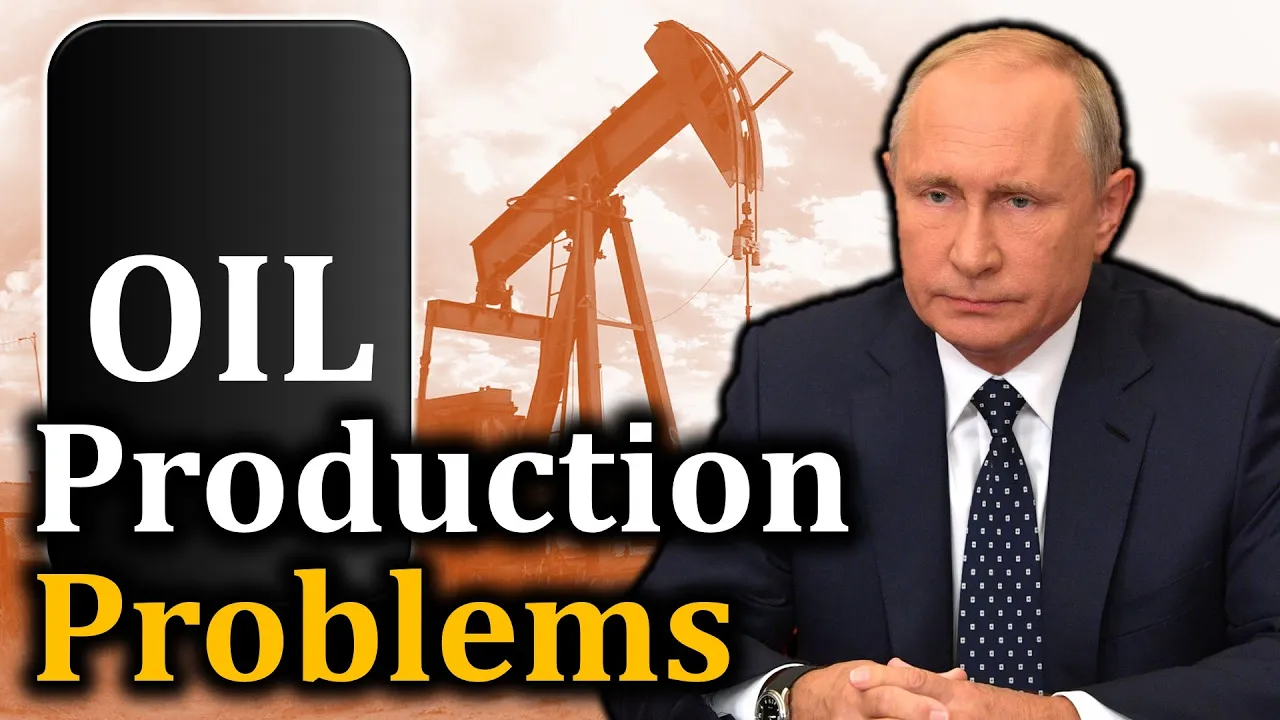
Russia's Declining Oil Capacity and the Deeper Problems of Cartel Politics
New Section
The discussion begins with Russia's decision to cut its oil output, sparking speculation about the reasons behind this move, focusing on two dominant theories.
Russia's Oil Output Cut
- When faced with two competing theories regarding Russia's oil output cut, analyzing the implications and outcomes can help determine the driving force.
- Deeper cuts by Russia than other OPEC countries suggest that the theory of OPEC supply cuts may not be accurate.
- Exploring why Russia might have hidden struggles with its oil industry and how it impacts its bargaining position within OPEC.
Oil Politics Overview
Delving into recent oil politics, discussing OPEC's output cuts, cartel behavior, and the impact on global prices.
Understanding OPEC Dynamics
- OPEC+ announced significant output cuts to implement cartel pricing strategies for maximizing profits.
- Explanation of monopolists' strategy to restrict supply for profit maximization compared to competition resulting in lower prices but less collective profits.
Russia's Oil Production Cuts
Analyzing Russia's gradual reduction in oil production and exploring theories behind these cuts.
Theories Behind Production Cuts
- Detailed breakdown of Russia's 471,000 barrel per day cut and its impact on global markets.
- Discussion on lost Russian capacity due to various factors including Ukraine's attacks on Russian oil infrastructure.
Historical Context: Soviet Union to Russian Oil Industry
Tracing the evolution of the Soviet Union's prosperous oil industry to challenges faced by the Russian oil sector.
Evolution of Oil Industry
- Reflecting on the Soviet Union’s prosperous era driven by high global oil prices and subsequent challenges leading to a shift in geopolitical dynamics.
Russian Oil Industry Challenges
The section discusses the challenges faced by the Russian oil industry due to market liberalization and external pressures.
Market Liberalization Impact
- In the 1990s, Russian oil production decreased significantly but later recovered close to peak Soviet era levels.
Western Response to War in Ukraine
- The ongoing war in Ukraine led to Western sanctions on the Russian oil industry, cutting off access to Western technological expertise.
Russia's Production Cuts Debate
- There are contrasting perspectives on whether Russia's production cuts are voluntary or due to infrastructure issues.
Implications of Cash Crunch
- Russia's cash crunch from wars drives impatience for new revenue sources, impacting decision-making in oil production.
Negotiation Analogy
New Section
This section discusses the dynamics of cartel agreements in the oil market and how renegade countries can disrupt these agreements for short-term gains.
Renegade Country's Profit Motive
- The temptation for a renegade country is to flood the market when the other party cuts production, leading to short-term profits but damaging long-term cartel stability.
- Renegade actions can kill cartel profits and result in lower long-term profits for all parties involved.
New Section
This part explores the impact of patience on enforcing cartel agreements and strategies to mitigate issues arising from impatient countries.
Patience in Cartel Agreements
- Cartel sustainability depends on a country's patience for long-term gains over short-term profits.
- Inpatient countries prioritize short-term benefits, affecting market pricing and overall profitability.
- Giving away a larger share of cartel profits can help alleviate issues caused by impatience, ensuring compliance within the agreement.
New Section
This segment delves into adjusting profit shares within cartels to maintain compliance and prevent renegade actions.
Adjusting Profit Shares
- Flexibility in profit division allows parties to incentivize compliance based on each country's priorities.
- Enhancing Russia's share discourages breaking the agreement despite potential impatience, ensuring stability within the cartel.
- Saudi Arabia's concession of larger profit shares to Russia maintains enforcement capability and prevents market flooding scenarios.
New Section
Here, the discussion centers around balancing profit shares within cartels to prevent market flooding and ensure compliance.
Balancing Profit Shares
- Saudi Arabia concedes larger profit shares to Russia to enforce compliance and prevent market saturation.
- Maintaining relative profitability under the cartel prevents unilateral actions that could destabilize oil prices.
New Section
This part analyzes Russia's output decisions within troubled capacity theory versus traditional cartel business theory.
Output Decisions Analysis
- Russia's output cuts align with troubled capacity theory rather than typical cartel behavior.
- Uncertainty about Russian capacity poses challenges for maintaining stable cartel prices due to doubts surrounding production motivations.