TEÓRICO 4 Anemia Megaloblástica
New Section
The discussion begins with a focus on megaloblastic or plastic anemias, emphasizing the regulatory mechanism of folic acid and vitamin B12. The conversation delves into neurological impacts related to these deficiencies and their association with developmental issues.
Megaloblastic or Plastic Anemias
- Neurological impact of folic acid and vitamin B12 deficiencies is highlighted, along with their relation to megaloblastic or plastic anemias.
- Discussion on the growth impact and disorders in populations, particularly children under five, due to nutritional deficiencies like anemia.
- Addressing public health parameters and the significance of nutritional elements such as folate, cobalamin, and iron in causing anemia.
New Section
The conversation shifts towards macrophage regulation in erythropoiesis and the role of essential nutrients like folate, cobalamin, and iron in anemia production.
Macrophage Regulation in Erythropoiesis
- Emphasis on the importance of essential nutrients like folate, cobalamin, and iron in causing anemia through inadequate intake.
- Introduction to macrophage's key role in biological processes related to cell proliferation and maturation.
- Discussion on how deficiencies of certain nutrients compromise protein synthesis and zinc levels affecting cell proliferation capacity.
New Section
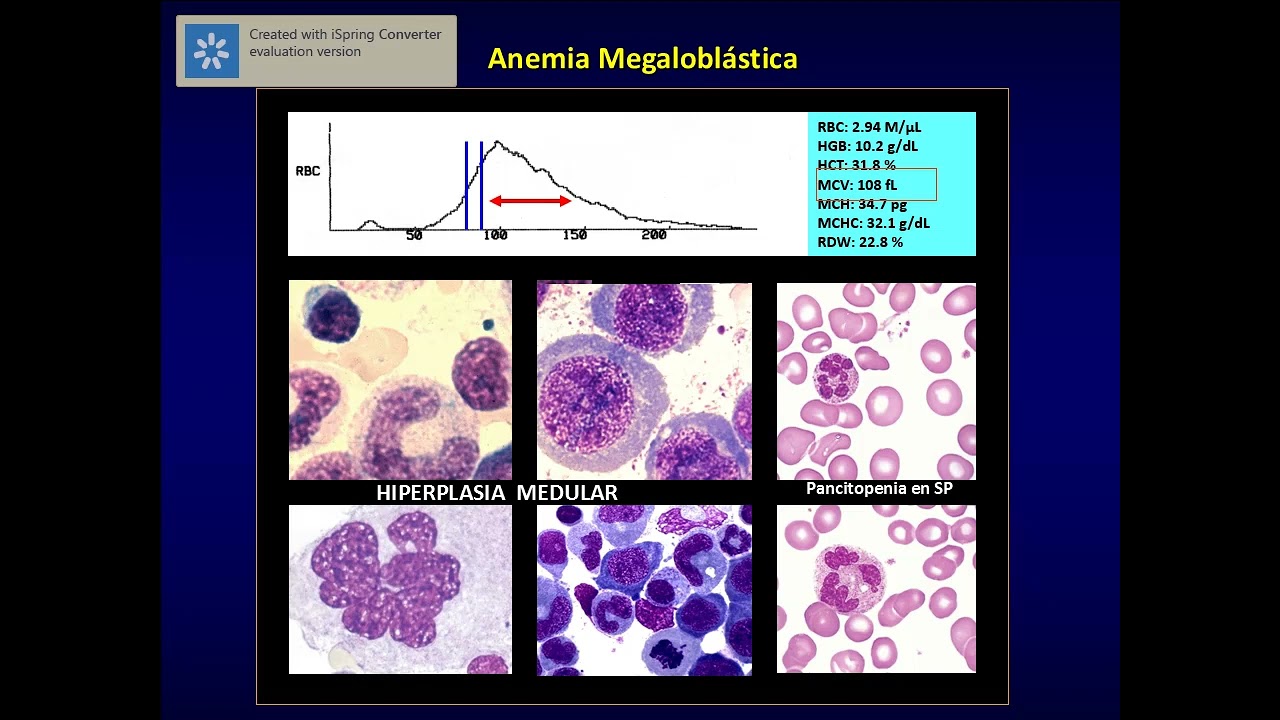
Detailed insights are provided into the characteristics of megaloblastic anemias due to vitamin B12 deficiency, highlighting medullary hyperplasia as a compensatory mechanism for reduced red blood cell mass.
Characteristics of Megaloblastic Anemias
- Explanation of medullary hyperplasia as a compensatory response leading to intramedullary destruction of cells.
- Description of typical features like enlarged cell size and abnormal morphology indicating clear pathological markers.
Understanding the Role of Folate and Vitamin B12 in Metabolism
The discussion delves into the intricate relationship between folate, vitamin B12, and metabolic processes, emphasizing their crucial roles in enzymatic reactions and biological functions.
Folate's Biological Function
- Folate alone is biologically ineffective; it needs to transfer its methyl group to vitamin B12 for enzymatic processes.
Impact of Folate and Vitamin B12 Deficiency
- Deficiencies in either folate or vitamin B12 hinder proper synthesis, leading to increased homocysteine levels.
- This elevation of homocysteine contributes to various health issues such as cardiovascular diseases.
Structural Insights on Folate
- 5-methyl tetrahydrofolate serves as a critical form of folate for enzymatic actions due to its unstable double bond.
- This instability allows for the release of the methyl group essential for metabolic pathways.
The Significance of Vitamin B12 in Metabolic Pathways
Vitamin B12 plays a pivotal role in metabolic pathways by facilitating the transfer of methyl groups and supporting enzymatic reactions crucial for cellular functions.
Vitamin B12 Characteristics
- Cobalamin (vitamin B12) contains cobalt, enabling it to form covalent or ionic bonds similar to hemoglobin structures.
- Its different oxidation states (cobalt 1, cobalt 2, cobalt 3) dictate its biological activity and role in enzyme inhibition.
Intracellular Functions of Cobalamin
- Cobalamin acts as a carrier within cells, transitioning between different oxidation states based on metabolic demands.
- The interplay between cobalamin forms influences enzyme activities and metabolic pathways.
Clinical Implications of Folate and Vitamin B12 Deficiencies
Deficiencies in folate and vitamin B12 have profound clinical implications ranging from hematological disorders to neurological complications.
Neurological Disorders Associated with Deficiencies
- Inadequate levels of these vitamins can lead to a spectrum of neurological disorders including autism spectrum disorders, depression, strokes, dementia, neuropathies, epilepsy, and schizophrenia.
- Hyperhomocysteinemia serves as a central factor linking these conditions to vitamin deficiencies.
Treatment Challenges
- Balancing hematological improvements with potential neurological deterioration poses challenges during treatment interventions involving folate or vitamin B12 supplementation.
- Discrepancies between hematological responses and neurological outcomes often spark debates among specialists regarding treatment efficacy.
Arrival of Vitamin B12 in Medical Practice
The discussion delves into the introduction of vitamin B12 in medical practice during the 1950s, its initial use alongside folic acid, and the varying responses observed in patients with megaloblastic anemia.
Introduction of Vitamin B12
- In the 1950s, vitamin B12 was introduced to medical practice when synthetic forms were not yet available.
- Initial treatments involved fortifying patients with megaloblastic anemia with folic acid alongside vitamin B12.
- Clinical observations revealed diverse responses among patients, some showing improvement while others experienced neurological deterioration.
Clinical Implications of Folate Deficiency
This segment explores the clinical implications of folate deficiency, particularly its impact on neurological conditions and epilepsy treatment.
Folate Deficiency and Neurological Disorders
- Folate accumulates significantly in cerebrospinal fluid and red blood cells, emphasizing its importance for neurological health.
- Anticonvulsant drugs can induce folate deficiency leading to megaloblastic anemia. Supplementing with folates may worsen epilepsy but protect against seizures in moderate deficiencies.
Folate Levels in Neurological Conditions
The discussion focuses on studying folate levels in various neurological conditions to understand their impact on disease progression.
Study on Folate Levels
- Research involving infants undergoing lumbar punctures revealed lower post-seizure folate levels in cerebrospinal fluid compared to normal levels.
- Children with febrile convulsions showed significantly reduced cerebrospinal fluid folate post-crisis without changes in plasma folate levels.
Experimental Findings on Folate Deficiency
This part discusses experimental findings related to folate deficiency and its effects on seizure duration and onset latency.
Experimental Observations
- Mice models demonstrated lower cerebral folate levels during induced seizures without affecting hepatic folate levels.
- Leukemic mice with low hepatic folate exhibited shorter seizure durations and delayed seizure onset compared to controls under provocation tests.
Metabolic Insights into Folate Depletion
The conversation delves into metabolic processes affected by folate depletion, elucidating how it impacts neurotransmitter regulation and metabolic pathways.
Metabolic Consequences
- Folate depletion may lead to glutamic acid exhaustion due to its role as a precursor. This phenomenon sheds light on previously perplexing hematological and neurological presentations.
Role of Folate in Metabolism
Exploring the role of folic acid within metabolic pathways crucial for cellular functions and genetic processes.
Function of Folic Acid
New Section
The discussion delves into the role of methionine in protein synthesis and its significance as a signal for initiating protein synthesis.
Methionine as a Signaling Molecule
- Methionine is highlighted not just for incorporating into the polypeptide chain but also as an initiator signal for protein synthesis.
- Methionine is recycled for further chains, particularly in ribosomes, showcasing its pivotal role in protein synthesis.
- Experimentation on animals revealed the impact of nitrous oxide blocking B12, leading to spinal cord degeneration and animal deaths except when supplemented with methionine.
- Clinical implications arise from B12 deficiency due to nitrous oxide inhibition, affecting DNA duplication and necessitating methionine preservation.
New Section
The conversation explores the consequences of insufficient B12 levels on methionine availability and subsequent impacts on DNA duplication and protein synthesis.
Impact of B12 Deficiency
- Low B12 levels hinder proper transfer of methyl groups, affecting methionine generation crucial for protein synthesis.
- Insufficient methionine leads to compromised DNA duplication, prompting anemia as a protective mechanism to maintain essential functions.
- Desperation arises to deliver methyl groups amid limited B12 availability, emphasizing the critical role of maintaining adequate nutrient levels.
New Section
The dialogue delves into how B12 and folic acid deficiencies influence metabolic pathways, impacting homocysteine methylation and central nervous system integrity.
Metabolic Pathways Interaction
- Deficiencies in B12 and folic acid elevate tetrahydrofolate reductase activity, influencing homocysteine methylation and safeguarding CNS function.
- Allocation of methyl groups towards CNS protection underscores the biological importance of preserving key organs like the brain during nutrient deficiencies.
New Section
The discourse shifts towards discussing biological circumstances within the central nervous system where recovery mechanisms may falter under oxidative stress conditions.
Biological Circumstances in CNS
- Under biological stress or oxidative conditions, recovery mechanisms may deviate from their intended function within the CNS.
Detailed Medical Analysis
The speaker delves into a detailed medical analysis, discussing various aspects such as anemia, vitamin deficiencies, and metabolic blockages.
Anemia and Metabolic Blockages
- Anemia characterized by hyperproliferative bone marrow with low reticulocytes indicates inadequate release of mature elements into the blood.
- Antibodies against intrinsic factor or gastric parietal cells contribute to certain types of megaloblastic anemia.
- Testing homocysteine and methylmalonic acid levels aids in identifying metabolic points of deficiency.
- Transfer of one-carbon groups dependent on vitamin B12 influences metabolic decisions.
Vitamin Deficiencies and Treatment Response
- A case study highlights a child with acquired microcephaly due to untreated vitamin B12 deficiency.
- Diagnosis through bone marrow aspiration reveals megaloblastic hyperplasia alongside severe vitamin B12 deficiency.
- Treatment with vitamin B12 shows cortical atrophy recovery, emphasizing the importance of timely intervention.
Neurological Implications and Growth Factors
- Severe vitamin B12 deficiency leads to significant neurological deterioration, impacting central nervous system function.
- Discussion on neuronal growth rates post-birth and implications for brain development in cases of nutrient deficiencies.
Case Study: Reversible Acquired Microcephaly
The speaker presents a case study on reversible acquired microcephaly, highlighting the importance of timely diagnosis and treatment.
Understanding Microglia and Neuronal Development
- Reversible acquired microcephaly is linked to vertical transmission issues affecting CD4 macrophages in the central nervous system.
Impact of Nutritional Deficiencies
- Addressing nutritional deficiencies promptly can prevent cognitive delays associated with acquired microcephaly.
Impact of Dietary Choices on Health
The discussion focuses on how dietary choices can impact health outcomes, particularly in cases involving strict vegetarian diets.
Dietary Influence on Health
- A case study illustrates the consequences of strict vegetarianism leading to severe vitamin B12 deficiency in children.
Treatment Challenges and Recovery Process
New Section
In this section, the speaker discusses the importance of fortification with folates in pregnant women to prevent neural tube defects.
Importance of Folate Fortification
- Folate fortification significantly reduces the rate of neural tube defects globally.
- Flour fortified with folates helps prevent deficiencies without needing large quantities.
- Deficiencies in vitamin B12 or folate can lead to neural system issues.
- Transfer of mono-carbon groups is crucial for preventing certain health issues.