Atomic theory | Matter | Physics | FuseSchool
The Evolution of Atomic Theory
Ancient Greek Concepts of Atoms
- The ancient Greeks theorized that matter could be divided into smaller units until reaching indivisible particles, which they termed "atomos," meaning indivisible.
John Dalton's Atomic Theory
- In the 1800s, John Dalton proposed five key principles about atoms:
- All matter is composed of atoms.
- Atoms cannot be subdivided into smaller particles.
- Atoms of the same element are identical; those of different elements differ.
- Chemical reactions rearrange atoms in compounds formed by bonding different elements.
Discovery of Electrons by J.J. Thomson
- J.J. Thomson expanded on Dalton's theory in the late 19th century by discovering electrons through experiments with cathode rays, revealing that atoms consist of smaller particles.
- He introduced the plum pudding model, depicting the atom as a positively charged sphere with electrons embedded within it.
Rutherford's Gold Foil Experiment
- Ernest Rutherford challenged Thomson’s model through his gold foil experiment using alpha particles, expecting them to pass through thin gold foil based on the plum pudding model.
- Unexpectedly, some alpha particles were deflected or repelled, leading to the conclusion that atoms have a small, dense nucleus containing positively charged subatomic particles.
Bohr's Model and Current Understanding
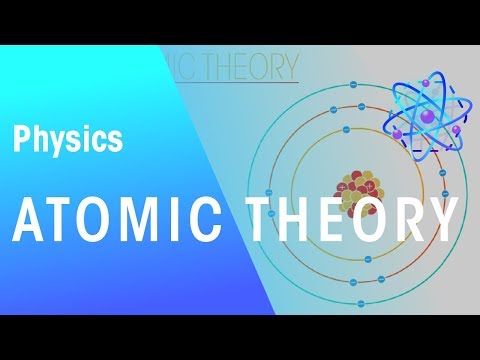
- Niels Bohr further developed Rutherford’s nuclear model by proposing that electrons occupy specific orbits around the nucleus, akin to planets orbiting the sun.
- This modern understanding describes an atom with a central positive nucleus orbited by negatively charged electrons at defined distances and energy levels.
Turn any video into a summary like this
YouTube links, meetings, lectures. With transcripts, search, and chat.