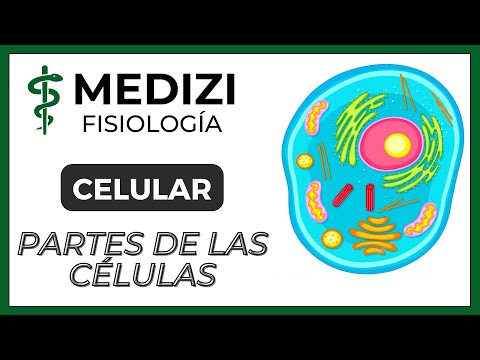
Fisiología Celular - La Célula, partes y funciones (IG:@doctor.paiva)
Introduction to Cellular Physiology
In this section, the instructor introduces the topic of cellular physiology, emphasizing the importance of understanding cell structure and function.
Generalities of Cells
- Cells are the structural and functional units of organisms, categorized into prokaryotic (archaea, bacteria) and eukaryotic cells (animal, plant, fungi, protists).
- Eukaryotic cells in humans contain DNA within the nucleus, unlike prokaryotic cells where DNA is dissolved in the cytoplasm.
- Components of a eukaryotic cell include the cell membrane, nucleus housing genetic material, cytoplasm, and organelles.
Cell Composition and Function
- Cells play a crucial role in forming tissues and organs; understanding their basic organization is essential for comprehending organ functions.
- Cells reside in interstitial spaces filled with fluid that nourishes them; this fluid interacts with blood plasma.
Cellular Components: Water and Ions
This section delves into the composition of cells regarding water content, ions present, proteins, lipids, and carbohydrates.
Cellular Composition
- Cells consist of 70-85% water; they also contain ions such as cations (e.g., sodium) and anions (e.g., chloride).
- Proteins make up 10-20%, lipids around 2% (mainly phospholipids), and carbohydrates approximately 1% in most cells.
Cell Membrane Structure
The discussion focuses on the structure of the cell membrane or plasma membrane.
Membrane Composition
- The cell membrane is a thin lipid bilayer preventing water penetration due to its lipid nature.
Fosfolipids and Membrane Structure
In this section, the structure of the membrane is discussed, focusing on phospholipids, cholesterol, and proteins that make up the membrane.
Fosfolipids in Membrane Structure
- Phospholipids form the membrane with two layers. The head contains phosphate while the tail consists of lipids. The ends of the membrane are hydrophilic, while the central part is hydrophobic due to lipid content.
Role of Cholesterol in Membrane Function
- Cholesterol in the membrane determines permeability by regulating the passage of water-soluble substances. It plays a crucial role in deciding which substances can pass through easily.
Proteins in the Membrane
- Two types of proteins exist in the membrane: integral proteins that penetrate into the membrane forming channels or pores, and peripheral proteins that only bind to its surface.
- Integral proteins can function as channels for water passage or enzymes facilitating metabolic reactions. They may also act as receptors. Peripheral proteins mainly serve as receptor components.
Carbohydrates on the Membrane Surface
- Carbohydrates present on membranes appear as glycoproteins or glycolipids. Glucose signifies carbohydrates while proteins indicate protein presence.
- These carbohydrates play various roles such as repelling objects with negative charges, aiding cell-cell adhesion, acting as hormone receptors like insulin, and participating in immune system reactions.
Understanding Cell Organelles
In this section, the discussion revolves around various cell organelles such as the endoplasmic reticulum, Golgi apparatus, lysosomes, and peroxisomes. The functions and interactions of these organelles within the cell are explored.
Endoplasmic Reticulum
- The endoplasmic reticulum is connected to the nuclear membrane and can be divided into rough and smooth types.
- It synthesizes proteins (rough ER) and lipids (smooth ER).
- The rough endoplasmic reticulum contains ribosomes responsible for protein synthesis.
- Its function is to manufacture new protein molecules for the cell.
- The Golgi apparatus works closely with the endoplasmic reticulum.
- It processes substances synthesized in the ER and packages them into vesicles for secretion or internal use.
Golgi Apparatus
- The Golgi apparatus is prominent in secretory cells like those in the pancreas.
- It forms lysosomes that aid in cellular digestion.
- It plays a crucial role in processing substances from the ER before releasing them via secretory vesicles.
- These vesicles transport processed substances out of the cell.
Lysosomes
- Lysosomes are organelles derived from the Golgi apparatus containing digestive enzymes.
- They facilitate intracellular digestion, recycling damaged cellular structures, and digesting unwanted substances like bacteria.
Peroxisomes
- Peroxisomes differ from lysosomes in origin and enzyme content.
Mitochondria, Cell Functions, and Cellular Movement
In this section, the discussion revolves around the functions of mitochondria within cells, emphasizing their role in energy production and cellular processes. Additionally, the importance of ATP in cell function and the dynamic nature of the cell's structure through the cytoskeleton are explored.
Mitochondrial Functions
- Mitochondria play a crucial role in detoxifying alcohol by utilizing oxidized enzymes to combine oxygen with hydrogen ions to form hydrogen peroxide, known as water peroxide. This process primarily occurs in hepatocytes or liver cells.
- The mitochondria are vital organelles responsible for various functions such as energy production (ATP), cellular respiration analogous to human lungs, self-replication due to containing DNA, and triggering programmed cell death (apoptosis).
- Within the mitochondria, there is an outer limiting membrane that is smooth and an inner limiting membrane separated by an intermembrane space where important processes like ATP formation take place independently due to mitochondrial DNA presence.
ATP Production Process
- Cells utilize substrates like carbohydrates (converted into glucose), fats (transformed into fatty acids), and proteins (broken down into amino acids) along with oxygen to produce energy through reactions like glycolysis converting glucose into pyruvic acid outside mitochondria contributing 5% of cell energy while 95% is generated intra-mitochondrially forming acetyl coenzyme A.
- Acetyl coenzyme A undergoes complex reactions within the mitochondrial matrix called Krebs cycle generating 36 moles of ATP along with water and carbon dioxide release akin to lung functions exchanging oxygen for carbon dioxide during respiration.
Cellular Functions Utilizing ATP
- ATP serves three primary functions within cells: facilitating ion transport across membranes via active transport mechanisms like sodium-potassium pump; aiding chemical compound synthesis requiring energy; enabling mechanical work such as muscle contraction through enzyme utilization powered by ATP.
Cytoskeleton and Cellular Structure
- The dynamic nature of cells is maintained by the cytoskeleton composed of microtubules essential for mitosis/meiosis, actin filaments involved in muscular physiology classes, and intermediate filaments like keratin providing structural support unlike our static skeletal system.
Nucleus Functionality and Cellular Movement
This segment delves into the nucleus's role as a control center housing DNA determining cellular characteristics and overseeing cellular reproduction through gene expression pathways linked with other organelles like endoplasmic reticulum.
Nucleus Operations
- The nucleus acts as a control hub containing significant amounts of DNA encoding genes dictating cellular protein traits influencing cytoplasmic features alongside regulating cell replication cycles directing genetic information flow from nucleus to endoplasmic reticulum for protein synthesis packaging via Golgi apparatus before external release resembling a factory model under nuclear command.
Genetic Information Flow
- Following genetic transcription within the nucleus creating messenger RNA molecules conveying genetic instructions towards endoplasmic reticulum where protein synthesis occurs based on these directives illustrating a coordinated process initiated by DNA commands translating into functional products dispatched externally similar to factory operations guided by nuclear directives.
Cellular Locomotion Mechanisms
- Two primary types of cellular movements beyond muscular actions include amoeboid motion involving pseudopods extensions for locomotion purposes not covered here but detailed in muscular physiology classes alongside ciliary movement utilizing specialized structures aiding cellular mobility discussed further elsewhere highlighting diverse locomotive strategies employed by cells beyond muscle-related activities.
Movimiento Celular y Cilios
In this section, the discussion revolves around cellular movement and cilia function in various parts of the body.
Movimiento Celular
- The cell creates pseudo feet on a tissue to facilitate movement, involving a mechanism of endocytosis and exocytosis.
- Cells exhibit whip-like movements known as anterograde and retrograde motions, primarily found in airway cells where cilia clean the respiratory system.
Turn any video into a summary like this
YouTube links, meetings, lectures — with transcripts, search, and chat.