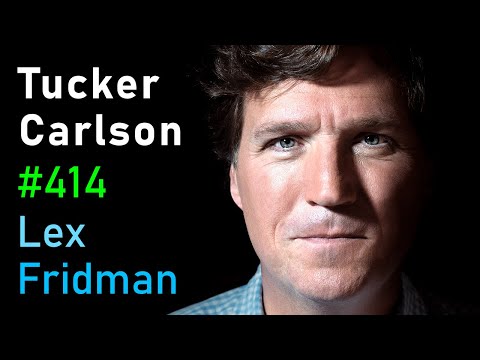
Tucker Carlson: Putin, Navalny, Trump, CIA, NSA, War, Politics & Freedom | Lex Fridman Podcast #414
Interview Overview
In this interview, Lex Fridman talks with Tucker Carlson about his experience interviewing Vladimir Putin and the importance of engaging in conversations with individuals holding diverse perspectives.
Tucker Carlson's Interview Experience
- Tucker discusses concerns about questioning Putin and US government control over questions.
- Lex explains his decision to interview Tucker despite criticism and emphasizes the value of engaging with various viewpoints.
- Lex shares his approach to asking questions genuinely to understand guests' ideas deeply.
- Lex addresses criticisms of not asking tough questions and highlights the aim of understanding rather than drama.
Impressions from Meeting Putin
- Tucker shares his initial impression of Putin as nervous and overprepared for the interview.
- Discussion on Putin's response during the interview regarding fears of preemptive attacks by NATO and avoiding direct answers.
Interview Dynamics
Interview Insights
The speaker discusses his experience and feelings before an interview with Vladimir Putin, highlighting his lack of nervousness and interest in Soviet history.
Pre-Interview Feelings
- The speaker was not nervous or afraid before the interview.
- He attributes his calmness to his age, belief in God, and interest in Soviet history.
- Being in historical locations like the Kremlin amazed him.
Personal Perspective on Life and Death
- The speaker reflects on his lack of fear of death at this stage in life.
- He values his family and enjoys life but is not afraid of dying.
Interview Goals
The speaker explains the goal of the interview was to provide more information to the public about global events, particularly regarding Ukraine and Russia.
Interview Objectives
- The main goal was to bring more information to the public.
- Emphasizes the importance of informing people about world events for them to form their opinions.
Perspective on War in Ukraine
The speaker shares insights on the war in Ukraine, emphasizing discrepancies between media narratives and reality.
War Analysis
- Criticizes American media for misrepresenting the war's dynamics.
- Highlights Russia's military capabilities compared to Ukraine's.
Media Influence on Public Perception
Discusses how media portrayal influences public perception of conflicts like the one in Ukraine.
Media Influence
- Points out how media shapes beliefs about who will win wars based on moral framing.
New Section
Discussion on the concept of winning for Ukraine with the help of the United States and the importance of defining terms like "win."
The Concept of Winning for Ukraine
- A nuanced discussion is needed to determine what winning looks like for Ukraine.
- Winning involves achieving peace, a ceasefire, determining land ownership, and involving the United States in negotiations.
- Emphasis on ensuring fairness in negotiations with leverage from the United States to avoid further casualties and profit-driven outcomes.
New Section
Personal perspective on war, power dynamics, and moral implications in conflicts.
Personal Perspective on War
- The speaker views war negatively as a human being and believes those in power should detest war to lead effectively.
- Criticism towards Western intervention impacting Ukrainian outcomes negatively by prioritizing profit over peace.
- Highlighting an interaction with Boris Johnson regarding interview fees compared to interviewing Putin for free.
New Section
Reflection on conducting an interview with Vladimir Putin and responses to criticism.
Interviewing Vladimir Putin
- Addressing feedback from Putin about interview style not being aggressive enough according to Western media standards.
- Expressing intent behind conducting an interview focused on global significance rather than personal agendas or confrontations.
The Impact of Sanctions on the US Economy
The speaker discusses how the behavior of the Biden administration and the US Congress, particularly sanctions, is accelerating the decline of the US dollar and leading to potential poverty in the United States.
Accelerated Decline of US Dollar
- The US economy is being negatively impacted by the actions of the Biden administration and Congress.
- Sanctions are hastening the process of currency devaluation, potentially leading to poverty in the United States.
Thoughts on Navalny's Death
The speaker reflects on Alexei Navalny's death in prison and criticizes American politicians for making assumptions without concrete evidence.
Reflection on Navalny's Death
- Expresses sadness over Navalny's death and highlights its tragic nature.
- Criticizes American politicians for making premature claims about Navalny's death without factual basis.
Speculations on Navalny's Death
The speaker discusses various speculations surrounding Navalny's death and emphasizes the importance of seeking truth in policymaking.
Speculations and Truth
- Raises doubts about attributing blame for Navalny's death without concrete evidence.
- Emphasizes the need for policymaking based on verifiable truths to avoid negative outcomes.
Political Freedom in Russia
The speaker addresses political freedom in Russia, highlighting concerns about opposition figures being imprisoned.
Political Freedom Concerns
- Expresses concern over imprisoning opposition leaders as a sign of limited political freedom in Russia.
New Section
The speaker discusses the presence of images of the king and his family in Jordanian buildings, indicating political insecurity.
Images of King and Family in Buildings
- In Jordan, pictures of the king and his extended family are displayed in every building, suggesting political insecurity.
- Cult of personality signifies personal insecurity and fear of losing power.
New Section
The speaker contrasts the lack of statues like Putin's with the absence of political freedom in Russia.
Lack of Political Freedom
- Absence of statues like Putin's indicates a lack of political freedom in Russia.
- Not a democratic country as perceived by Western standards.
New Section
The speaker reflects on his experience in Russia regarding freedom to express opinions without concerns.
Freedom to Express Opinions
- Speaker felt no concern expressing opinions during his time in Russia.
- Emphasizes relying on instincts for decision-making.
New Section
Discussion about legal advice received regarding potential arrest risks related to sanctioned violations.
Legal Advice on Arrest Risks
- Lawyers warned about potential arrest by US government due to sanctioned violations.
- Speaker rejects legitimacy based on being American and emphasizes freedom to speak with anyone.
New Section
Speaker recounts interactions with lawyers advising against certain actions due to potential consequences.
Advised Actions by Lawyers
- Lawyers advised against certain actions due to potential legal repercussions.
New Section
The speaker expresses concern about the focus on international issues over domestic ones and discusses surveillance by intelligence agencies.
Concerns About Surveillance
- The speaker emphasizes the importance of preserving freedom in the United States.
- Expresses surprise at people being more concerned about global issues than domestic ones.
- Mentions that everything is monitored all the time, according to sources familiar with secure communication channels.
- Acknowledges the impossibility of keeping texts or calls private from state actors or intelligence services.
Secure Communication Channels
The speaker discusses his research on secure communication channels before traveling and highlights the challenges of maintaining privacy in a surveilled environment.
Research on Secure Communication
- Investigated secure communication channels like Signal and WhatsApp before traveling.
- Learned from reliable sources that nothing is entirely secure, and all communications are monitored.
- Decided not to worry about lack of privacy due to constant surveillance but still took precautions with phones.
Privacy Concerns and Surveillance
The speaker shares experiences related to surveillance, privacy concerns, and changing phones for security reasons.
Privacy and Surveillance
- Experienced phone surveillance during a trip to North Korea leading to battery issues due to spyware.
- Discusses switching phones for better battery life despite reluctance due to cost implications.
- Expresses resignation towards being surveilled but condemns leaks by intelligence services affecting democracy.
Leadership Perspectives
The speaker provides insights on leadership, power dynamics, and moral considerations regarding world leaders.
Views on Leadership
- Criticizes simplistic views of leaders as purely good or evil, emphasizing shades of virtue among them.
- Argues against seeking power or wealth for its own sake as it compromises moral integrity.
What Makes a Good Leader?
The speaker discusses the importance of focusing on the practical effects of leaders' actions rather than their personalities or moral victories.
Evaluating Leaders
- Leaders should be judged based on the fruits of their behavior, such as the well-being of their family and country.
- Emphasizes measuring life expectancy, suicide rates, and societal prosperity as key indicators of leadership success.
- Criticizes prioritizing moral victories over tangible improvements in society, using Black Lives Matter as an example.
- Questions the effectiveness of movements like Black Lives Matter by examining data on gun violence post-movement.
Impact of Sanctions on Leadership
The speaker reflects on how sanctions can significantly impact a country's standard of living and government operations.
Effects of Sanctions
- Believes that levying sanctions has negatively affected the United States more than any other event in his lifetime.
- Shares insights from visiting Moscow post-sanctions, highlighting its surprising cleanliness and orderliness compared to Western cities.
Importance of City Metrics
The speaker emphasizes cleanliness, safety, and beauty as crucial metrics for evaluating a city's quality.
City Evaluation Metrics
- Argues that cleanliness, safety, and beauty are paramount when assessing a city's livability.
New Section
Discussion on the relationship between cleanliness, freedom of speech, and architectural design in dictatorships.
Cleanliness vs. Freedom of Speech
- In dictatorships, achieving cleanliness and architectural perfection is easier to showcase while suppressing freedoms.
- Acknowledgment that this discussion is not a defense of the Russian system but a critique of low expectations in society.
- Emphasizing the need for higher standards in society and not tolerating foreign invaders disrupting daily life.
- Crime is a choice made by leaders; advocating for higher expectations to create a clean and safe environment.
New Section
Reflection on crime rates, societal expectations, and personal experiences related to maintaining safety and freedom.
Crime Rates and Expectations
- Crime levels are influenced by societal tolerance; advocating for zero tolerance towards crimes like murder.
- Expressing sadness over people accepting deteriorating living conditions as a trade-off for perceived freedom.
- Personal experience with shock at contrasting living standards during travels and the importance of context in communication.
- Critique on sanctions' impact on Russia's supply chains and the unintended consequences affecting global economies.
New Section
Critique on geopolitical decisions impacting global economies, reflections on historical preservation, and societal standards.
Geopolitical Decisions Impact
- Questioning the rationale behind geopolitical decisions leading to unintended consequences like economic instability.
- Reflecting on historical preservation efforts in different societies as indicators of societal values worth emulating.
- Advocating for higher societal standards based on past achievements rather than accepting current deteriorations as progress.
New Section
Defending patriotism while critiquing societal complacency towards declining standards.
Patriotism and Societal Standards
- Defending calls for higher standards in society based on past successes rather than settling for current shortcomings.
- Asserting patriotism by challenging societal norms that lead to declining health and living conditions among citizens. []s
New Section
The speaker discusses the dominance of monopolies in the economy and the need for a return to a system that prioritizes the needs of Americans.
Monopolies and Free Markets
- Google is highlighted as a monopoly with 90% search dominance.
- The speaker advocates for a return to an old system that considered the welfare of Americans.
- There is a lack of consideration for people's well-being in the current system, emphasizing submission to AI.
- A humorous exchange about potential future changes due to central planning and societal shifts.
New Section
Discussion on capitalism, its evolution, and the importance of updating assumptions based on current realities.
Capitalism and Assumptions
- Acknowledgment of the success of the U.S. capitalist system but emphasizes the need for updated perspectives.
- Highlighting outdated assumptions about various aspects like immigration, economy, and tax systems.
- The advantage of direct perceptions over trusting unreliable sources like Wikipedia or distorted historical narratives influenced by AI.
New Section
Emphasis on firsthand experiences versus mediated information, particularly regarding perceptions about Moscow and Russia.
Direct Experience vs. Mediated Information
- Contrasting views on censorship in Russia and personal reluctance to move there due to potential repercussions.
- Reflection on being misled by false narratives during visits to Moscow, highlighting the importance of firsthand exploration for accurate understanding.
Introduction and Impressions of Kyiv
The speaker shares their positive impressions of Kyiv, highlighting aspects such as functioning supply chains, cleanliness, security, and the absence of crime.
Impressions of Kyiv
- The speaker notes that despite tanks in the streets, supply chains in Kyiv are operational.
- Restaurants are excellent, people can work, and life continues normally.
- Cleanliness and security are emphasized as remarkable features of Kyiv.
- Crime rate dropped to zero after citizens were armed following the "Texas strategy."
Challenges Faced and Personal Reflection
The speaker reflects on personal biases towards Slavic people and Muslims due to past propaganda exposure from news outlets.
Personal Reflection
- The speaker acknowledges harboring prejudices due to media influence but now sees through them.
- Expresses shame for previous bigotry towards Slavic people and Muslims influenced by media narratives.
Cultural Insights and Misconceptions
The speaker discusses cultural richness in Ukraine and Russia, challenging misconceptions about entire populations being labeled as evil.
Cultural Insights
- Speaker admires the depth of Slavic culture shared by Russia and Ukraine.
- Challenges the notion that an entire group is inherently evil based on ethnicity.
Freedom of Speech Discussion
A conversation unfolds regarding freedom of speech issues in different countries compared to the United States.
Freedom of Speech Debate
- Criticism towards lack of freedom of speech in various countries including Russia.
Criticism of Government and Press Freedom
Tucker discusses press freedom and government criticism, highlighting the lack of freedom in his country.
Critique on Press Freedom
- Tucker questions the criteria for press freedom and emphasizes the importance of practicing it. He mentions the absence of press freedom in his country.
- He expresses that people in the news business are afraid to tell the truth due to pressure and personal responsibilities.
- Tucker criticizes how a US citizen was thrown into prison by the Ukrainian government for criticizing them, highlighting the lack of accountability.
Freedom of Speech Challenges
The discussion continues on challenges faced in expressing opinions freely without repercussions.
Challenges in Expressing Opinions
- Tucker points out the restrictions on speaking against certain actions, mentioning losing one's job for questioning governmental decisions.
- He questions if true freedom exists when individuals fear consequences for expressing their opinions openly.
Freedom of Expression Standards
The conversation delves into societal norms regarding deviating from mainstream opinions and its impact on freedom of expression.
Societal Norms vs. Freedom
- The discussion touches upon societal acceptance of deviation from majority views and its implications on free speech rights.
- Tucker reflects on his experiences being fired for expressing his beliefs but acknowledges personal growth from such instances.
Jon Stewart Critique and Partisanship
Tucker recalls a critique by Jon Stewart regarding partisanship and reflects on his own political evolution.
Reflection on Critique
- Tucker recounts Jon Stewart's criticism towards him being a partisan figure, emphasizing his shift away from blind partisanship post-Iraq War realization.
New Section
In this section, the speaker discusses their perception of a particular individual and their views on politics.
Perception of an Individual
- The speaker finds the discussed individual uninteresting and unhappy. They do not take him seriously and perceive him as partisan.
- The individual is seen as bringing emotional intensity to political debates, leading to bitterness and disappointment.
- The speaker believes that focusing on political matters excessively detracts from more significant life questions.
- There is irony noted in being criticized by someone perceived as partisan when they themselves exhibit similar characteristics.
New Section
This part delves into a comparison between the speaker and Jon Stewart regarding their roles in media and politics.
Speaker vs. Jon Stewart
- The speaker criticizes Jon Stewart for not challenging entrenched power despite his role as a comedian.
- A past interaction with Jon Stewart is recalled where the speaker made remarks that he later regretted, highlighting differing perspectives on their roles.
Jon Stewart vs. Tucker Carlson Debate Analysis
In this section, Tucker Carlson reflects on his debate with Jon Stewart and discusses the perception of popularity influencing the outcome.
Reflection on Debate Outcome
- Tucker Carlson recalls a debate with Jon Stewart where popularity seemed to influence the perceived winner.
- Carlson suggests contests should be judged based on rules rather than popularity, reflecting on how media favoritism impacted the outcome.
- The reason for Jon Stewart being seen as the winner was attributed to personal attacks versus engaging ideas during the debate.
- Reflecting on personal attacks made by Stewart during the debate, Carlson acknowledges his own shortcomings and contrasts it with Stewart's behavior.
Views on Media Coverage and Political Debates
This section delves into contrasting views on political figures and their growth over time.
Contrasting Views on Jon Stewart
- Tucker Carlson expresses his opinion that Jon Stewart came off as arrogant during their past interactions but acknowledges potential growth in character.
- Discussion shifts to government actions regarding economy and war, highlighting the lack of substantial debates in media coverage.
Insights on International Relations and Sovereignty
Here, Tucker Carlson shares his perspectives on international relations, particularly concerning Ukraine and NATO.
International Relations Perspectives
- Expresses dissenting views on tax code unfairness and chaos caused by global conflicts like war in Ukraine.
- Advocates for a reasonable settlement in the war in Ukraine to avoid further escalation and emphasizes sovereignty for nations like Russia and Ukraine.
Analysis of Zelensky's Role in Geopolitical Affairs
This part focuses on Zelensky's role within geopolitical affairs involving Ukraine, NATO, Russia, and the United States.
Evaluation of Zelensky's Position
New Section
Discussion on Zelensky's actions and leadership during the crisis in Kyiv.
Zelensky's Leadership in Kyiv
- Zelensky is praised for staying in Kyiv during the crisis, contrasting it with other leaders' actions.
- The importance of a leader caring for their people like a father or officer is emphasized.
- Leaders are expected to show physical courage and not flee in times of crisis.
- Criticism towards leaders who run away from their responsibilities during critical situations.
New Section
Comparing Zelensky's decision to stay in Kyiv with other world leaders' actions.
Comparison with Other Leaders
- Comparing Zelensky's choice to stay in Kyiv with the US-backed leader of Afghanistan fleeing when Taliban came.
- Historical examples like Stalin not leaving Moscow during wartime are discussed as leadership standards.
- Speculation on Putin's expectations regarding Zelensky's response to the crisis.
New Section
Analysis of international involvement and implications on Ukrainian governance.
International Involvement and Governance
- Discussion on the role of the US State Department in the conflict between Putin and Ukraine, impacting Ukrainian governance.
- Critique on lack of negotiations facilitated by the US government despite international implications.
New Section
The discussion revolves around Putin's justification for continuing the war in Ukraine under the premise of denazification, with a critical analysis of the term and its implications.
Putin's Justification for War
- Putin justifies the war by claiming it is for denazification, which is criticized as a weak argument.
- The term "denazification" is discussed as an ad hominem attack without real substance.
- The conversation highlights that Nazism was specific to Germany and not a current movement in 2024.
- There is a consensus that Putin genuinely believes in his denazification narrative, despite its lack of grounding in reality.
Understanding Nationalism and Nazi Allegations
Delving into the historical context of Nazism, nationalism, and their relevance in contemporary political discourse.
Nationalism vs. Nazism
- The discussion explores how World War II history influences perceptions of Nazism in Russia and Ukraine.
- Drawing parallels between the use of "Nazi" as a political term in different contexts like racism.
- Distinguishing between neo-Nazis and Nazis in Ukraine, emphasizing their minimal influence on government policies.
Implications of War Justifications
Analyzing the impact of using denazification as a primary objective for continuing the war and its implications on peace negotiations.
Negotiating Peace
- Criticizing the impracticality of demanding denazification as a condition for ceasefire due to lack of clarity on identifying Nazis.
- Questioning the feasibility of negotiating with alleged Nazis and discussing potential ulterior motives behind using denazification rhetoric.
Communication Strategies and Misinterpretations
Reflecting on communication strategies employed by leaders during conflicts and their effectiveness.
Storytelling Challenges
- Critique on Putin's communication strategy during interviews regarding war justifications, highlighting missed opportunities to convey compelling narratives effectively.
New Section
Discussion on the impact of leaders staying in power for extended periods and the consequences of autocratic behavior.
Impact of Long-term Leadership
- Leaders staying in power for extended periods can lead to autocratic behavior.
- Term limits are essential to prevent leaders from becoming autocratic due to prolonged power.
- Criticism towards journalists and pivoting against disliked behaviors.
New Section
Discussion on challenges in communication and understanding different perspectives.
Communication Challenges
- Difficulty in understanding each other's perspectives leading to miscommunication.
- Examples of encountering extreme viewpoints that hinder common understanding.
New Section
Observations on Putin's health and personal interactions with him.
Observations on Putin
- Speculations about Putin's health and physical appearance.
- Assessment of Putin's physical condition based on personal observations.
New Section
Insights into off-camera conversations with Putin regarding peace negotiations.
Peace Negotiations
- Discussion on Putin's stance towards peace and negotiation efforts.
- Russia's attempt to join NATO as a sign of seeking peaceful resolutions.
New Section
Critique of past political decisions impacting international relations and conflicts.
Political Decisions Impact
- Criticism towards political decisions affecting alliances and conflicts.
What's the other explanation?
The speaker discusses reasons behind certain actions and the enrichment of individuals due to war.
Reasons for Actions
- NATO didn't accept Ukraine due to not meeting criteria, leading to speculation about motives.
- Mention of the military industrial complex and hive mind influencing decisions.
- Views shaped by past events like the collapse of the Soviet Union in '91.
- Difficulty in reassessing views and adapting to new realities.
The Influence of History on Decision Making
The impact of historical events on decision-making processes and perspectives.
Historical Impact
- Challenges in shifting focus from past threats to new economic challenges.
- Resistance to adopting new frameworks due to lack of imagination and flexibility.
World War II Influence on Geopolitical Thinking
Discussion on how World War II continues to shape geopolitical thinking.
Geopolitical Thinking
- World War II seen as a template for understanding global dynamics.
- Reference to Churchill, Chamberlain, Hitler shaping current geopolitical perceptions.
Challenges in Decision Making
Addressing challenges in decision-making processes influenced by historical events.
Decision-Making Challenges
- Emphasis on understanding history but not letting it limit perspectives.
Template Thinking in Politics
Critique of template-based thinking in political decision making.
Template-Based Thinking
- Criticism towards repetitive thinking patterns hindering good decision-making processes.
Adapting Strategies for Better Outcomes
Importance of adapting strategies based on context for successful outcomes.
Adaptive Strategies
New Section
In this section, the speaker discusses the importance of understanding motives and the challenges of getting honest answers in conversations.
Motives and Honest Answers
- The speaker emphasizes the significance of questioning motives in interactions.
- Acknowledges the difficulty in ensuring truthful responses from individuals.
- Compares seeking honesty to a bar fight with various approaches to communication.
- Highlights the value of listening attentively during conversations to interpret responses effectively.
New Section
This part delves into the impact of interviews on fostering dialogue and understanding between individuals.
Impact of Interviews on Dialogue
- Reflects on building trust through interviews, particularly with influential figures like Putin.
- Emphasizes the role of interviews in initiating conversations and promoting peace talks.
- Criticizes those who hinder open discussions by focusing on trivial matters rather than substantial dialogues.
New Section
Here, insights are shared about language barriers and effective communication strategies during interviews.
Language Barriers and Communication Strategies
- Discusses challenges faced due to language barriers during interviews, especially with foreign leaders like Putin.
- Stresses the importance of active listening as a crucial skill for effective communication despite language obstacles.
New Section
This segment focuses on logistical details and challenges encountered during high-profile interviews.
Logistical Challenges in Interviews
- Describes meticulous planning involved in managing technical aspects such as cameras, lighting, and translation services during interviews.
New Section
In this section, the speaker discusses the importance of visiting Moscow and forming personal assessments, even if not interviewing Putin.
Exploring Moscow
- Visiting Moscow after a while can reveal numerous previously unnoticed aspects.
- Encourages individuals to assess Moscow firsthand and draw their conclusions.
- Suggests spending time in Moscow, even without interviewing Putin, to gain insights into the society.
New Section
The conversation delves into the challenges of conducting an interview in a politically charged environment.
Navigating Political Conversations
- Discusses the societal restrictions and complexities faced when conducting interviews in politically charged environments.
- Highlights the need for careful consideration when engaging in political conversations during interviews.
- Emphasizes the unique dynamics of conducting interviews as opposed to being a political activist.
New Section
Insights are shared on preparing for an interview with specific focus on language considerations and strategic questioning.
Interview Preparation Strategies
- Shares advice on conducting interviews, especially when done in the native language, emphasizing thoughtful preparation.
- Reflects on approaching an interview with awareness of the interviewee's background and context to tailor questions effectively.
New Section
The discussion continues with anecdotes from past interviews and humorous insights into question preparation.
Anecdotes and Humorous Anticipation
- Recounts diligent note-taking habits before an interview as a preparatory measure.
- Shares a lighthearted anecdote about a potential humorous question that was contemplated but not asked during an interview.
New Section
The conversation shifts towards fame, attention, and its impact on individuals' perspectives and behaviors.
Fame and Attention Reflection
- Explores how popularity and attention can potentially cloud judgment and affect one's thinking process.
- Discusses personal strategies to maintain humility amidst public recognition through family support and nature appreciation.
New Section
Technology's influence on society is examined through observations about South Korea's societal challenges.
Impact of Technology in Society
- Raises concerns about technology's role in societal issues such as declining fertility rates and high suicide rates in South Korea. []s
[New Section]s
A critical discussion ensues regarding technology's impact on information accessibility versus misinformation proliferation.
Technology Influence Debate
- Challenges the notion that technological advancements have unequivocally enhanced knowledge dissemination or reduced ignorance levels among individuals over time.
The Importance of Societal Health
The speaker discusses the indicators of societal health, such as reproduction rates, life expectancy, and sobriety, and how they reflect the well-being of a society.
Factors Affecting Societal Health
- Society's health is reflected in its reproduction rates, life expectancy, and sobriety levels.
- The number of children a society has and their well-being are crucial indicators of societal health.
- Questions why South Korea faces challenges despite its advantages and parallels it to potential issues in the United States.
- Raises concerns about North Korea's population growth compared to South Korea's and questions the reasons behind it.
Impact of Technology on Society
The speaker reflects on the impact of technology on societal well-being by questioning decreasing life expectancies, declining birth rates, and substance abuse issues in modern times.
Technology's Influence on Society
- Questions why advancements in technology have not led to improved life expectancies or increased birth rates.
- Considers technology as a tool for enhancing scientific discourse but raises concerns about unresolved questions regarding its overall impact on society.
Evolution of Architecture in Modern Times
Discusses the evolution of architecture in modern times compared to historical structures and explores perceptions of beauty in different eras.
Evolution of Architectural Beauty
- Compares architectural beauty before electricity with modern digital aesthetics.
- Contemplates how industrialization may have impacted the quality and aesthetics of architectural creations.
The Impact of Technology on Society
The discussion delves into the advancements in technology surpassing historical feats, ethical considerations, and the potential consequences of technological progress.
Technological Advancements and Ethical Dilemmas
- Flying buttresses' construction complexity compared to modern technology.
- Consideration of unstoppable technological advancement.
- Ethical dilemma surrounding nuclear weapons development.
- Acknowledgment of the dual nature of technology - beneficial yet potentially destructive.
Ethics and Decision-Making in a Technological World
The conversation shifts towards decision-making in a world dominated by advanced technology, exploring moral dilemmas and realist perspectives.
Moral Decision-Making in a Technological Era
- Contemplation on using force to prevent AI from overpowering humanity.
- Moral dilemma scenario involving self-defense with firearms.
- Discussion on national responsibilities regarding technological advancements like nuclear weapons.
Balancing Progress and Ethics
The dialogue navigates through the balance between technological progress and ethical considerations, drawing parallels between historical events and current challenges.
Striking a Balance Between Progress and Ethics
- Reflection on past decisions to prevent catastrophic outcomes from technology proliferation.
- Deliberation on the terrifying potential applications of advanced technologies in malicious hands.
Wisdom Amidst Technological Advancements
The discourse emphasizes humility, wisdom, and self-awareness amidst rapid technological advancements to navigate complex societal landscapes effectively.
Embracing Humility for Wise Decision-Making
- Importance of acknowledging ignorance for wise decision-making amidst information abundance.
New Section
In this section, the conversation revolves around the concept of humility and personal experiences related to martial arts.
Personal Experiences in Martial Arts
- The speaker mentions practicing jiu-jitsu as a way to experience physical humbling through getting one's "ass kicked" in the martial art.
- Reflecting on past experiences, the speaker shares how being physically humbled in martial arts led to personal growth and self-awareness.
- The discussion delves into a specific text message regarding feelings towards Donald Trump post-election and the complexities of emotions at that time.
New Section
This part focuses on the speaker's involvement with claims of election fraud and his attempts to substantiate these claims.
Involvement in Election Claims
- The speaker discusses his efforts to investigate claims of election fraud made by the Trump campaign.
- Despite attempts to gather evidence, the speaker highlights challenges faced due to incompetence surrounding the claims.
New Section
This section covers an incident where misinformation was inadvertently spread during an investigation into alleged voter fraud.
Spreading Misinformation Incident
- The speaker recounts a situation where incorrect information about deceased voters was shared on TV, leading to a correction later on.
- Reflecting on receiving information from political campaigns, the speaker expresses skepticism due to past experiences with misinformation.
New Section
Here, the focus is on transparency, honesty, and personal reflections regarding truthfulness.
Transparency and Truthfulness
- The speaker acknowledges spreading disinformation unintentionally and facing criticism for it.
New Section
The importance of access to information for a functioning democracy and concerns about the upcoming election.
Access to Information in Democracy
- Unfettered access to information is crucial for a democracy .
- Lack of access to information undermines free elections .
Referendum on Democracy
- Views on Biden's capabilities and implications for democracy .
- Discussion on cognitive abilities and leadership qualifications .
New Section
Evaluating leadership qualities and concerns about current political choices.
Leadership Qualities
- Importance of speaking abilities for leaders .
- Concerns about the current president's capabilities .
New Section
Critique of political choices and the need for younger leaders in politics.
Political Choices
- Criticism of current presidential candidates' qualifications .
- Discussion on the failure of the political system .
New Section
Influence of money in politics and challenges to changing the system.
Money in Politics
- Impact of money on federal control and monopolies .
- Challenges in reforming the political system due to vested interests .
New Section
Legal challenges faced by politicians and implications for democracy.
Legal Challenges
- Critique of legal actions against politicians like Trump .
New Section
The discussion revolves around political issues, including real estate charges against a sitting president and the importance of preserving the political system.
Real Estate Charges and Political System
- The speaker discusses documents charges against a sitting president and expresses disbelief at the situation.
- Emphasis is placed on preserving a system that has functioned reasonably well for 250 years, regardless of personal political preferences.
Intelligence Agencies Discussion
The conversation shifts to comparing various intelligence agencies in terms of power and capabilities.
Comparison of Intelligence Agencies
- Mossad is highlighted as a sophisticated intelligence service despite being a small country.
- Different intelligence agencies are discussed in terms of global reach, communication interception abilities, with mention of NSA, Chinese, Israeli, and French agencies.
CIA Application and Views on Agency
Personal experiences with CIA application and views on the agency's role in domestic politics are shared.
CIA Application Experience
- The speaker applied to the CIA out of interest in living abroad and witnessing historical events but was rejected due to past drug use.
- Initial perception of CIA as outwardly focused on enemies shifted upon learning about its involvement in domestic politics like the Kennedy assassination.
Subversion of Democracy by Government
Concerns regarding government subverting democracy domestically and internationally are expressed.
Subversion of Democracy
- Criticism is directed towards government interference in democratic processes both domestically and internationally over time.
- The impact of corruption at the core leading to subversion of democracy is highlighted along with concerns about representative government principles.
Geopolitical Analysis - Israel-Palestine Conflict
A geopolitical analysis focusing on US aid to Israel, sovereignty, public sentiment, and regional dynamics is provided.
Geopolitical Analysis
- Critique is offered on US military aid to Israel potentially hindering long-term interests due to social media influence on public sentiment in the region.
New Section
Discussion on the concerns regarding Israel and American foreign policy leadership.
Concerns about Israel and American Foreign Policy
- Mentioned concerns about a coalition of countries against Israel due to its nuclear weapons and military capabilities.
- Highlighted worries about potential conflicts spreading across nations due to the lack of wisdom in American foreign policy leadership.
- Criticized American foreign policy leaders for past failures in Iraq, Libya, Syria, Afghanistan, Vietnam, and Korea.
- Questioned the effectiveness of American foreign policy in improving other countries and expressed doubts about Netanyahu's decision-making abilities.
Geopolitical Concerns and Leadership Critique
Discussion on geopolitical tensions in the Middle East and critique of American leadership.
Geopolitical Tensions and Leadership Critique
- Noted concerns from pro-Israeli Arabs regarding escalating tensions in the region due to absent American leadership.
- Criticized Nikki Haley's approach to leadership as weak, lacking knowledge, and promoting posturing over substance.
Importance of Global Perspective
Emphasis on the importance of gaining a global perspective for making wise judgments.
Gaining a Global Perspective
- Stressed the significance of expanding one's mind by exploring different perspectives for making informed decisions.
Interviewing World Leaders
Interest in interviewing world leaders for broader insights.
Interviewing World Leaders
New Section
The discussion revolves around the importance of curiosity, open-mindedness, and humility in learning from others.
Importance of Curiosity and Open-Mindedness
- Tucker expresses admiration for Rogan's genuine interest in learning from others.
- Rogan's approach to questioning unconventional ideas is highlighted as a positive trait that challenges groupthink.
- Comparison made between American media's conformity to groupthink and Rogan's independent thinking.
- Emphasis on Rogan's curiosity and open-mindedness as admirable qualities that extend beyond knowledge.
Successful Marriage and Humility
The conversation delves into the dynamics of successful relationships, personal growth, and the role of humility in acknowledging external influences.
Secrets to a Successful Relationship
- Tucker reflects on his enduring marriage, attributing its success to complementary changes over time.
- Discussion on rituals, communication, and personal growth contributing to a successful long-term relationship.
Role of Humility in Success
- Tucker emphasizes the importance of reality-based worldview over self-attribution for successes or failures.
New Section
The speaker discusses the distinction between people who believe they are God and those who acknowledge their limitations, emphasizing the importance of humility and a realistic worldview.
Belief in Being God
- People fall into two categories: those who believe they are God and those who know they are not.
- Atheists do not fit into the latter category as extreme stress often leads individuals to acknowledge a higher power beyond themselves.
New Section
The speaker reflects on an influential leader he admires for his humility and self-awareness, despite differing religious beliefs.
Remarkable Leadership Qualities
- The speaker praises MBZ, Sheikh Mohamed of Abu Dhabi, as the greatest leader he has encountered due to his acknowledgment of his limitations and foresight.
- MBZ's leadership is attributed to his grounded approach based on reality rather than false humility.
New Section
The speaker contrasts effective leadership with shortcomings in current political figures, highlighting the significance of humility in wisdom.
Contrasting Leadership Styles
- Criticism is directed towards America's leadership class for lacking capability and impressive qualities compared to exceptional leaders like MBZ.
New Section
The speaker discusses the pursuit of wealth and happiness, emphasizing the importance of creating meaningful things and having children for fulfillment.
Growing Up Among Wealthy People
- Being rich doesn't guarantee happiness.
- Warns against seeking money solely for its sake.
- Suggests that creating something beautiful is more fulfilling than pursuing wealth.
New Section
The speaker highlights the act of creation as the essence of life, focusing on the beauty of creating children.
Importance of Creation
- Life's purpose is to create, especially through acts like having children.
- Emphasizes that creating something beautiful is the most worthwhile endeavor in life.
- Mentions that creating children is enjoyable and not difficult.
New Section
The conversation shifts towards criticizing corporate America's influence on personal joy and discussing the speaker's vision for Tucker Carlson Network.
Critique on Corporate Influence
- Criticizes corporate America for denying people enduring joy by focusing on materialistic pursuits.
- Expresses disdain towards using technology to alter human brains permanently.
New Section
The speaker shares his lack of a grand vision for his career but expresses contentment with his current work and desire to continue it.
Vision for Career
- Acknowledges not having a specific vision for his career but enjoys what he does currently.
New Section
The speaker discusses the importance of considering the consequences of technological advancements and the responsibility that comes with power.
The Importance of Long-Term Thinking
- Technological advancements should be considered carefully to assess whether they bring a net gain or loss.
- Emphasizes the need for individuals to think long-term and consider the moral implications of their actions.
New Section
The speaker reflects on the lack of future-oriented thinking among those in positions of power.
Lack of Future-Oriented Thinking
- Calls for individuals in power to prioritize future generations.
- Criticizes leaders who do not demonstrate care for humanity and lack accountability in their personal lives.
New Section
The conversation concludes with reflections on leadership qualities and responsibilities.
Reflections on Leadership
- Questions the suitability of individuals in power based on their track record and values.
Turn any video into a summary like this
YouTube links, meetings, lectures. With transcripts, search, and chat.