4. Session 3 - How to build your 1st MVP
How to Build Your First MVP
Introduction and Overview
- The speaker greets the audience and checks audio clarity, indicating a casual yet professional atmosphere.
- The session will focus on building a Minimum Viable Product (MVP), addressing common misconceptions about its purpose and execution.
- Emphasis is placed on understanding why an MVP is necessary, drawing from personal experiences and research in the startup ecosystem.
Housekeeping Items
- Attendees are encouraged to turn on notifications for Slack and Google to improve communication regarding assignments and office hours.
- An assignment due tonight involves starting their MVP; collaboration among classmates is encouraged as they can provide valuable insights.
Founder School Summit Announcement
- Details about the upcoming Founder School Summit scheduled for June 20 in Miami are shared, highlighting its exclusive nature with limited capacity.
- The event operates on a meritocratic basis, ensuring that only the best participants receive invitations based on their performance and potential.
Opportunities at the Summit
- Attendees will meet top-tier founders and investors, gaining access to invaluable advice that could shape their entrepreneurial journey.
- A pitch competition will be held where top pitches can win $10,000 investments along with mentorship opportunities from experienced coaches.
Criteria for Invitation
- The selection process for invitations focuses heavily on team composition—ideally including a hacker, hustler, and relevant experience related to the problem being solved.
How to Build an MVP Effectively
The Mindset Shift Required for Success
- Emphasizes the need to treat business endeavors as experiments rather than fixed operations, encouraging constant iteration and customer engagement.
- Stresses the competitive nature of entrepreneurship, likening it to warfare where one must be aggressive and determined in pursuit of funding and success.
- Shares personal experience of having already achieved financial success, urging others to follow a structured approach rather than getting lost in random ideas.
- Highlights that understanding investor criteria is crucial; failure to secure funding should prompt self-reflection on one's approach rather than external blame.
Understanding the Purpose of an MVP
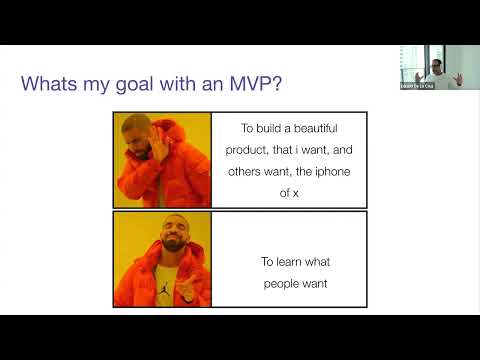
- Introduces the concept of Minimum Viable Product (MVP), clarifying that its primary goal is not perfection but understanding customer needs.
- Critiques the common misconception that MVP should be a beautiful or highly functional product, advocating instead for simplicity focused on learning what customers want.
- Warns against over-engineering products by illustrating how many entrepreneurs aim for perfection instead of starting with basic functionality.
Learning from Historical Examples
- Discusses how even successful products like the iPhone started with limited features, emphasizing that initial versions do not need to be perfect.
- Reminds listeners about early limitations in popular tech products, reinforcing that iterative improvement is key rather than aiming for immediate excellence.
Overcoming Fear in Product Development
- Addresses fears founders have about launching imperfect products, arguing that if customers abandon a flawed version, they were never truly engaged customers.
- Encourages embracing risk and acknowledges past mistakes made due to striving for perfection instead of focusing on essential functionalities.
Identifying Customer Needs Through Urgency
- Uses an analogy involving a person whose hair is on fire to illustrate how urgent needs dictate purchasing decisions; emphasizes creating solutions for desperate customers.
Understanding MVPs Through Real-World Examples
The Importance of Starting Small
- Emphasizes the need to think big but start small with available resources, as even imperfect solutions can lead to success.
Case Study: Airbnb's Initial MVP
- Describes the first version of Airbnb, which was a simple website without essential features like payment processing or map views.
- Highlights that the initial target audience was limited to attendees of tech conferences in San Francisco, showcasing a narrow ideal customer profile (ICP).
Identifying Customer Needs
- Discusses how the founders targeted their own needs for accommodation during conferences, illustrating the importance of solving personal problems.
- Notes that desperate customers are more willing to try new solutions, as evidenced by users sleeping on airbeds at tech events.
Overcoming Complexity in Product Development
- Addresses concerns about complex products needing extensive integrations and suggests that simplicity can still yield valuable insights.
Stripe's Approach to MVP Development
- Introduces Stripe’s early product as a basic API documentation site with manual backend processes using batch files for payment processing.
- Mentions that Stripe's ICP consisted solely of Y Combinator companies, allowing them to easily gather feedback from an immediate customer base.
Validation Before Legalities
- Stresses that validation should precede legal and administrative considerations; understanding customer needs is paramount before addressing compliance issues.
Engaging with Customers for Insights
- Encourages direct conversations with real customers rather than relying on surveys; emphasizes defining actual problems over superficial solutions.
Building and Testing Your MVP
How to Build a Lean No-Code MVP
Introduction to Jennifer's Scenario
- The speaker introduces a fictional character, Jennifer, who works full-time in commercial insurance and believes small businesses struggle to find good commercial insurance.
- Jennifer decides to talk to 10 small businesses to validate her concerns about the complexity of finding suitable insurance.
Key Insights from Research
- Through her discussions, Jennifer discovers that speed is more important than price for small businesses seeking quotes.
- She identifies real estate brokers as a segment most in need of quick insurance solutions due to their urgency and willingness to try new options.
Building the MVP Without Coding Skills
- The audience is engaged with questions about how Jennifer can build an MVP without coding skills; suggestions include using Google Forms or website builders like Squarespace.
- The speaker emphasizes that hiring someone is not the right approach; instead, building it herself is encouraged.
Implementation Strategy
- Jennifer creates a website using Squarespace and integrates a Google Form for visitors to fill out.
- After form submission, she manually matches small businesses with appropriate commercial insurance providers based on her industry knowledge.
Execution and Learning Process
- Within 24 hours of form completion, Jennifer sends users an email with three quotes from different insurers along with payment links.
- This process allows her to charge customers while maintaining confidence since they are already familiar with her through prior conversations.
Iteration and Feedback Loop
- Once launched, Jennifer learns from user interactions—understanding who pays and gathering feedback on their experiences with the quotes provided.
- The speaker asks if this workflow feels familiar, hinting at common user experiences in similar scenarios.
Real-Life Application of Concepts
- The speaker shares that this example was quickly put together over a weekend as part of practical learning; he emphasizes only sharing methods he has personally tested.
Audience Engagement: Sharing MVP Examples
MVP Development and Insights
Understanding MVP Creation
- The initial approach involved using pre-saved messages in WhatsApp for payments, where funds were deposited into individual accounts before payouts were made from a banking account.
- The team focused on understanding customer pain points before writing any code, leading to the development of their first Minimum Viable Product (MVP).
- They issued their first 100 debit cards through a no-code platform, demonstrating that significant financial backing isn't always necessary for MVP creation.
Challenges in Card Issuance
- Issuing a debit card typically requires substantial capital (around $2 million), but the team managed to do it with only $100 by leveraging innovative solutions.
- Chris shared his experience building SaaS platforms quickly using reusable components, allowing him to create front-end interfaces in under a week.
Key Strategies for Building No-Code/Low-Code MVPs
- Emphasized the importance of lean startup principles as outlined in Eric Ries' book, advocating for rapid iteration and learning cycles within two-week timeframes.
- Suggested mixing qualitative and quantitative data when measuring results post-MVP launch to gain comprehensive insights into user experiences.
Learning from MVP Experiences
- Highlighted the necessity of gathering feedback from at least 10 to 30 users to ensure statistically significant results during testing phases.
- Encouraged entrepreneurs to reflect on lessons learned from their MVP experiences, adjusting strategies based on real-world feedback.
Targeting the Right Audience
- Discussed how startups should start small with their Ideal Customer Profile (ICP), which may evolve over time as they grow.
- Explained the adoption curve theory, emphasizing that most products initially attract innovators rather than mainstream consumers.
Common Pitfalls in Startup Strategy
- Warned against targeting mainstream audiences too early; instead, focus on innovators who are more likely to engage with new products.
- Shared personal experiences about targeting immigrant populations and facing challenges due to a lack of innovators within that demographic.
Understanding Customer Engagement Through Direct Interaction
The Importance of Physical Presence in Customer Interactions
- The speaker shares personal experiences of distributing flyers on the streets to engage with customers directly, emphasizing the value of face-to-face interactions.
- They argue against relying solely on surveys or Zoom calls, stating that these methods lack the depth and authenticity of in-person conversations.
- The speaker suggests finding alternative venues to meet customers, such as coffee shops near conferences, to facilitate direct engagement.
- Highlighting that 87% of communication is nonverbal, they stress the importance of real-life interactions for gathering comprehensive feedback.
- Engaging with users in a low-pressure environment allows for open discussions about their experiences and needs without a sales agenda.
Validating Product Interest and User Feedback
- After launching an MVP (Minimum Viable Product), it's common for potential users to express disinterest; however, this feedback is crucial for product development.
- To test user interest effectively, introducing "artificial friction" in the purchasing process can help gauge willingness to pay and validate product demand.
- The speaker discusses different currencies beyond money—such as attention—and how platforms like YouTube leverage this concept successfully.
- Iterating on the MVP before charging users helps refine understanding of customer preferences and pricing strategies based on their responses.
- Regardless of whether users say yes or no, each interaction provides valuable insights into market needs and user behavior.
Overcoming Challenges in Startup Development
- Many young founders often make excuses regarding timelines for product readiness; however, adaptability is key to success in startups.
- Founders should prioritize learning over safety; those who focus on learning will find ways to engage with customers earlier in the process.
- The startup journey presents unique challenges that test personal limits; recognizing these challenges can empower founders to address them effectively.
- It's essential not to delay MVP development due to perceived perfectionism; quick iterations are more beneficial than lengthy build cycles.
Understanding No-Code and Low-Code Tools for Startups
The Importance of Overcoming Rejection
- Discusses the human psyche's relationship with rejection, emphasizing its significance in personal growth and entrepreneurship. The speaker shares personal experiences of making excuses to avoid facing rejection.
Overview of No-Code and Low-Code Tools
- Introduces a variety of no-code and low-code tools available for building applications, highlighting their affordability and accessibility for startups.
- Mentions specific platforms like Bubble, Squarespace, and Webflow as user-friendly options for website creation. Emphasizes a connection with Webflow due to past collaborations.
Building Functional Applications
- Suggests using Google Sheets as a database tool alongside other low-code options like Airtable for creating workflows or CRMs.
- Describes how to create a CRM tailored for lawyers in Latin America by combining various tools (e.g., Squarespace front end with Retool backend).
Automating Processes
- Highlights the use of Google Forms and Typeform for intake processes, noting that automation can be achieved through Zapier to streamline operations.
- Provides an example where Zapier connects multiple actions based on user interactions, showcasing its potential in automating business processes.
Payment Solutions and MVP Development
- Discusses payment solutions such as Memberstack (for subscriptions with Webflow) and Stripe as effective methods for handling transactions.
- Addresses common queries about developing MVPs (Minimum Viable Products), stressing that different startup types require tailored approaches.
Startup Business Models Explained
- Recaps three primary startup business models responsible for most unicorn companies: Marketplace, SaaS (Software as a Service), and Transactional models.
- Uses examples like Airbnb, DoorDash, and Uber to illustrate marketplace models while explaining the simplicity behind operational algorithms.
Practical Application Examples
- Shares insights on building task management tools using platforms like Asana or Notion, emphasizing manual backend processes when necessary.
- Discusses creating specialized task management tools aimed at architects by leveraging existing templates from Notion or Airtable.
Revenue Generation Strategies
MVP Development Strategies
Importance of a Lightweight MVP
- The speaker emphasizes the need for a lightweight Minimum Viable Product (MVP), suggesting that it can be as simple as a website or a PowerPoint deck.
- Many entrepreneurs mistakenly focus on building complex hardware instead of starting with a minimal version to test their ideas.
Leveraging Existing Solutions
- When developing hardware, it's beneficial to utilize existing solutions and adapt them to your specific use case, rather than reinventing the wheel.
- The speaker illustrates this by comparing sensors used in different industries, advocating for adaptation over innovation when testing concepts.
Learning as the Ultimate Currency
- The key takeaway is that learning from customer feedback is more valuable than user numbers or revenue; rapid iteration based on lessons learned is crucial.
MVP Testing and Feedback Loop
- Participants are encouraged to start their MVP development immediately, aiming for completion within a week to begin testing with peers.
Visual Prototyping Tools: Figma's Role
- A question arises about using Figma for visual prototypes without functionality. The speaker notes its effectiveness depends on the target audience and product type.
- For example, Linker Financial used Figma to create simulations for credit unions, demonstrating how design-heavy tools can effectively communicate potential products.
Payment Integration Considerations
- A participant seeks advice on integrating payment systems into their MVP. The speaker suggests delaying payment features until after initial user feedback has been gathered.
- Emphasis is placed on launching an MVP with basic functionalities first and iterating based on user interactions before adding complexity like payments.
Philosophical Reflections on Founders' Journeys
Understanding the Evolution of Payment Systems
The Shift from Traditional Banking to Modern Solutions
- The speaker discusses the evolution of customer payment systems, highlighting how platforms like Venmo have simplified transactions by allowing users to connect their bank accounts directly.
- A comparison is made between past banking practices and modern solutions, emphasizing that previously users had to provide account numbers and wait for deposits, which could take days.
- The emergence of Plaid is introduced as a solution developed by ex-consultants who recognized the inefficiencies in traditional banking methods and sought to streamline user experiences.
- The speaker notes that in 2012, banks lacked APIs, prompting Plaid's founders to reverse engineer existing banking systems to create a more efficient connection process for users.
- Despite legal challenges from major banks like Chase and Bank of America due to their rapid growth without formal agreements, Plaid became essential in the fintech ecosystem.
Legal Considerations vs. Market Validation
- The discussion highlights that Plaid did not have any commercial deals with banks during its early growth phase but still managed to thrive due to market demand.
- The speaker emphasizes the importance of validating a product before ensuring legal compliance, suggesting that market traction can sometimes outweigh strict adherence to regulations.
- An anecdote illustrates how prioritizing validation over legal concerns can lead startups toward success; however, caution is advised against outright illegal actions.
Insights on Startup Collaborations
- A new startup utilizing chatbots for database connections is mentioned; despite lacking certain features currently, they demonstrated potential through an impressive demo video.
- Conversations with this startup revealed mutual interest in future partnerships despite current limitations regarding API integrations and functionalities.
- The speaker reflects on previous sales experiences at SAP where products were often sold without complete functionality or customization due to logistical constraints across teams.
Presentation Techniques and MVP Development
Effective Use of PowerPoint and Prototyping Tools
- The speaker discusses modifying screenshots in PowerPoint to create a clickable presentation, which effectively sold ideas. They emphasize the importance of visual aids in presentations.
- Live demos can fail; thus, using screenshots to simulate real systems is a common practice. This method allows for effective communication without technical complications.
- The speaker notes that even large companies like AWS use PowerPoint as a starting point for creating screens, demonstrating its effectiveness in convincing customers before actual development begins.
- Figma and similar tools are seen as valid alternatives to traditional methods like PowerPoint, with big companies willing to invest in ideas presented through these non-technical means.
Lessons Learned from Early Mistakes
- A participant shares their experience of making mistakes during their first year, offering insights into what not to do when developing products or services.
- The KISS (Keep It Simple, Stupid) principle is highlighted regarding Minimum Viable Product (MVP) development. Questions arise about when to upgrade an MVP based on metrics such as traction and usage.
User Engagement Strategies
- An example involving a prototype launched by someone named Jennifer illustrates the process of gathering user feedback from small businesses over several weeks.
- Engaging users manually through Zoom calls is recommended to guide them through the product's features and ensure they understand how to use it effectively.
Analyzing Feedback for Iteration
- After initial user engagement, it's crucial to analyze qualitative data from conversations and quantitative data on user interactions. This helps identify areas for improvement.
- Understanding why some users did not engage while others did provides valuable insights that can inform future iterations of the product.
Transitioning from MVP1 to MVP2
- If enough users find value in MVP1, it may be time to introduce payment options. Even minimal charges can significantly change customer relationships by establishing trust.
- The excitement of receiving initial payments signals validation of the business model. This transition typically takes about a month after launching the first version.
Follow-Up with Non-users
The Importance of Optionality in Product Development
Embracing the Possibility of Failure
- The speaker emphasizes the necessity of considering the option to abandon a project, stating that it is crucial to keep this possibility in mind during product development.
- Reflecting on past mistakes, they share how they often overlooked the idea that a product might not be viable, even after significant investment.
- They argue that having the freedom to walk away from a project fosters objectivity and prevents forcing solutions where they don't fit.
- Without optionality, entrepreneurs may waste time trying to make an unsuitable product work instead of recognizing when it's time to pivot or stop.
- The right mindset involves viewing every outcome as an opportunity for learning, whether positive or negative.
Navigating Corporate Relationships
- A participant shares their dilemma about working with a corporate client while ensuring their product remains applicable to other potential clients.
- The speaker references "Moby Dick," illustrating how startups can become overly focused on satisfying one corporate client's specific needs at the expense of broader market applicability.
- They advise validating that other corporations face similar challenges before committing resources solely to one client’s requirements.
- Engaging with multiple corporates helps ensure that solutions developed are relevant across different contexts rather than tailored exclusively for one entity.
- The importance of saying no is highlighted; custom solutions can lead startups away from their core mission and into consulting roles.
Progress Through Challenges
- The speaker reassures participants that facing friction in development signifies progress and adaptation rather than failure.
Legality and Market Strategies in Development
Discussion on Legal Approaches to Market Entry
- The conversation highlights the complexities surrounding the legality of market strategies, particularly referencing how GPT's approach with developers was somewhat controversial due to legal ambiguities.
- There is an acknowledgment that while companies may not legally permit certain uses, developers still engage with these tools, raising questions about compliance and ethical use.
Reflections on Shared Experiences
- The speaker expresses gratitude for the interactive nature of the discussion and emphasizes the value of shared anecdotes among participants.
- A reminder is given regarding homework submissions, indicating a collaborative environment where feedback is encouraged.
Communication Issues Addressed
- A participant raises concerns about communication problems related to event invitations, highlighting potential gaps in information dissemination within the group.